Portuguese
  Spanish


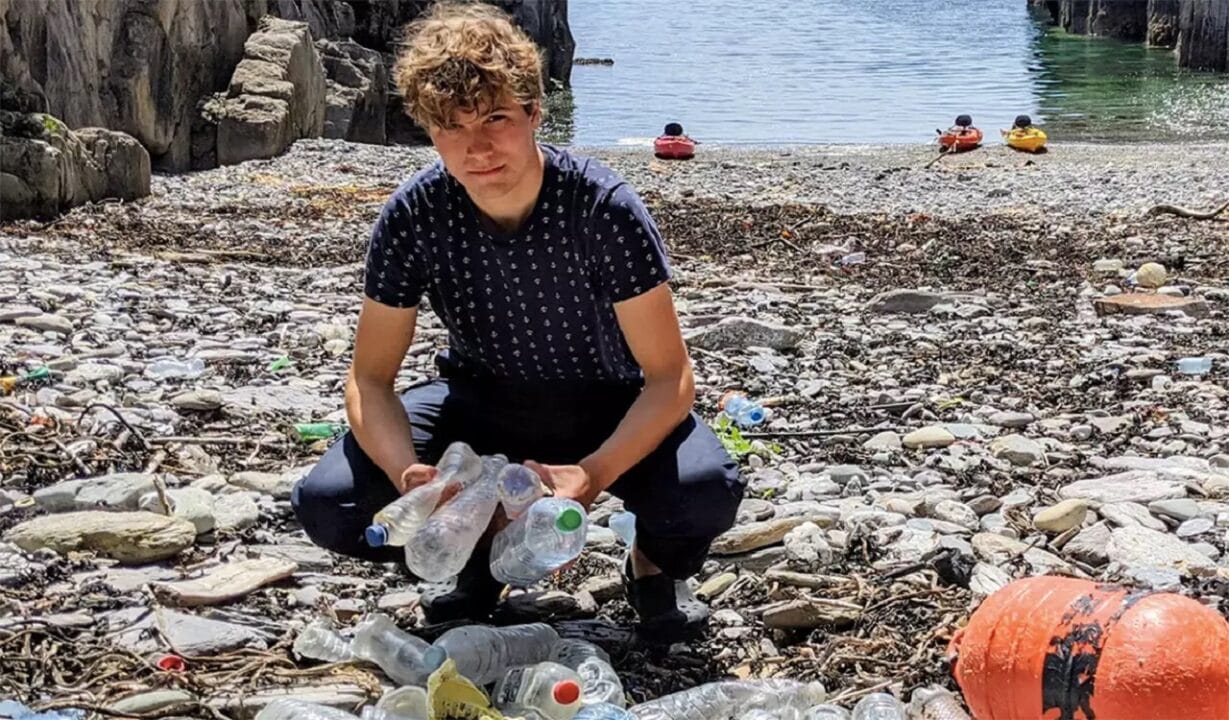

Young Irishman Creates Innovative Technology to Remove Microplastics from Oceans, with Potential to Solve the Problem in Just Two Years.
The young Irish inventor Fionn Ferreira has developed an innovative solution to combat microplastic pollution in the oceans. Using a compound known as ferrofluid, Ferreira created an effective method that employs magnets to attract and remove these small harmful particles from the water.
Invention Promises to Eradicate Microplastics from Oceans in Two Years
The results collected by Ferreira were impressive, with an efficiency rate of 87%. His invention won an award at the Google Science Fair, earning the Irish inventor the first prize and a scholarship of US$ 50,000. Ferreira’s invention is not limited to laboratory tests.


The inventor is working on a device that uses the same magnetic extraction method to capture microplastics from the oceans in pipes, making it possible to implement in homes and ships. By selling this type of device within two years, the inventor hopes to tackle the growing problem of microplastic pollution in the oceans. The presence of plastics in the ocean is a serious environmental issue.
-
16-Year-Old from Brazil’s Sertão Wins Young Scientist Award for AI Predicting Rainfall with 94.5% Accuracy to Aid Farmers

-
Netherlands Reports First Child Euthanasia Case Since Rule Expansion for Minors

-
Brazilian Innovator Survives Homemade Submarine Dive in Paraty Despite Hatch Leak and False Oxygen Alarm
-
China Develops Custom 140-Ton Electric Mining Truck with 770 kWh Swappable Battery, Deploys 290 Units in Xinjiang’s Largest Zinc Mine



It is estimated that around 10 million tons of plastic, including microplastics, are dumped into the oceans every year. Once in nature, this waste takes over 400 years to decompose.
With the expected increase in plastic production, the situation may worsen even further. In addition to posing a visible threat to animals, such as getting caught in larger pieces of plastic, microplastics in the ocean cause more insidious damage.
It is worth noting that they are present not only in the oceans but also in freshwater bodies, such as rivers and lakes. These particles are consumed by aquatic animals and eventually make their way into our food, raising concerns for human health.
Advantages of Ferreira’s Invention
Although there is still much to discover about the effects of microplastic consumption in the ocean, studies indicate associations with diseases such as cancer, fetal malformation, heart attacks, oxidative stress, inflammation, and respiratory problems.
Additionally, these small pieces of plastic can become pathogenic vehicles, expanding the risk to human health. Given these problems, solutions like those developed by Ferreira are crucial to reducing consumption and contamination by microplastics in the ocean.
In addition to generating significant benefits for human health, the large-scale implementation of this technology invented by Ferreira would have positive repercussions on quality of life and public health costs as a whole. It is a promising approach to tackling one of the greatest environmental challenges of our time.
It is noteworthy that scientists have found microplastics in the most remote regions of the ocean, from the deepest waters of the Mariana Trench to the Arctic and Antarctic, and the entire marine ecosystem is contaminated.
The plastic typically ends up in the oceans via rivers after being washed into the sewers by rainwater or blown by the wind into puddles that flow into rivers and eventually to the ocean.
Understand How the Irish Method Works
Ferreira’s method consists of mixing magnetized iron oxide and vegetable oil, creating a substance that attracts plastic particles. This “liquid magnet” collects microplastics that can be removed from the water by magnetism.
It is worth mentioning that a student from Santa Catarina won an international award with the invention of a filter that removes microplastics from water. Gabriel Fernandes Mello was the first Brazilian to win the Stockholm Junior Water Prize, which recognizes initiatives that improve water quality. The young man competed with 32 students from around the world.