





 Portuguese
  English
  Spanish
 3 min of reading
  0 comments


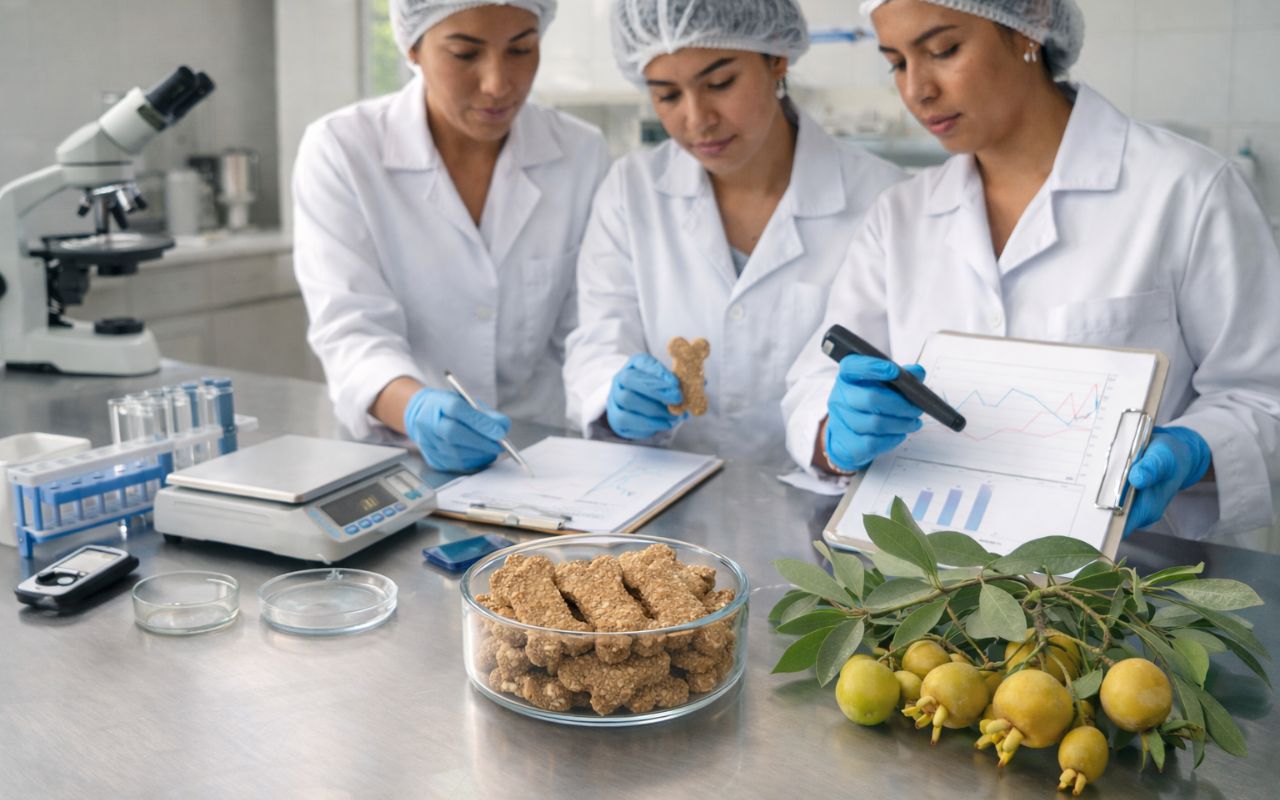
Udesc Research Reveals That Cookie Made with Guabiroba Leaves May Help Control Blood Sugar and Cholesterol. Tests Indicated 14% Reduction in Total Cholesterol.
A cookie developed from guabiroba leaves showed promising results in helping to control blood sugar and cholesterol. The study was conducted by researchers from the State University of Santa Catarina (Udesc) at the Pinhalzinho campus in Western Santa Catarina.
The research involved laboratory analyses and animal testing, which indicated improvements in metabolic markers and an average 14% reduction in total cholesterol.
The work is part of master’s and doctoral programs at the institution and will undergo new stages before any application in humans.
-
A 400-meter colossus powered by natural gas has just set sail from Shanghai to Europe, carrying over 24,000 containers. It is the world’s largest dual-fuel container ship and can cross the planet without refueling even once.

-
A new study overturns the central idea we learned about planets and suggests that Earth is the exception rather than the rule; most rocky worlds in the galaxy may not have a core or mantle, just a single turbulent fluid extending to the center.
-
Scientists reanimated a 48,500-year-old virus in the laboratory that had been frozen in the Siberian permafrost since before the extinction of the Neanderthals, and it was still capable of infecting living organisms after tens of millennia dormant in the ice.
-
The oldest nuclear aircraft carrier still in operation in the world is currently on Brazilian soil making its final journey before retirement, and two American military planes landed in Salvador and Fortaleza to support the mission.



The initiative reinforces the potential of regional biodiversity in creating functional foods.
Functional Cookie Emerges from Studies on Native Plant
Although guabiroba was already known for its properties, especially regarding the fruit, there had been few scientific investigations on the plant’s leaves.
This gap motivated the research group to deepen their studies.
The work was conducted at the Bioprocess Laboratory of Udesc Oeste.
The research is part of Cristiane Tremea’s master’s program and Vanessa Ruana Ferreira Silva’s doctoral program, under the guidance of Professor Aniela Pinto Kempka.
According to the team, the focus was to identify bioactive compounds capable of influencing parameters related to blood sugar and cholesterol.
How Was the Cookie Prepared to Help Control Blood Sugar and Cholesterol?
The experimental phase began in early 2023, when guabiroba leaves were collected for analysis.
After collection, the material underwent a careful selection and dehydration process to ensure quality before extracting the natural compounds.
To obtain the substances of interest, the researchers used the infusion technique, similar to making tea, a method that allows for the concentration of the plant’s bioactive components.
This plant extract then became the basis for the new formulation.
Subsequently, it was incorporated into the dough of a cookie with an enhanced nutritional profile, enriched with proteins such as gelatin and quinoa, as well as ingredients that ensure stability and palatability.
After being shaped and baked, the product was ready for the testing phase.
For 28 days, the cookie was offered to the animals participating in the study.
As reported by the researchers, consumption occurred normally, without rejection, which demonstrated good acceptance throughout the experiment.
Results Reinforce the Cookie’s Potential for Metabolic Health
The analyses indicated positive modulation of markers linked to glycemic control, especially in the medium and long term. This means that the cookie may help control blood sugar over time.
Additionally, an average reduction of 14% in total cholesterol was recorded in the evaluated animals. These data suggest that the product may act as an ally in cardiovascular health.
The doctoral thesis also investigated the mechanisms of action and biological activities of the species Campomanesia xanthocarpa, the scientific name for guabiroba, expanding the understanding of its effects.
Next Steps Before Reaching Human Consumption
Despite the positive results, the researchers warn that further studies are necessary.
The next phase involves deepening the identified mechanisms and, in the future, conducting clinical tests in humans.
Until then, the cookie should not be considered treatment or a substitute for medication.
It is, for now, an experimental product within the academic environment.
The project will continue in Udesc’s graduate program, with participation from new students and researchers.
Public Science and Valuation of Biodiversity
In addition to the scientific results, the study highlights the role of public universities in producing knowledge with social impact.
The research received institutional support from Udesc and funding from the Foundation for Support of Research and Innovation of the State of Santa Catarina (Fapesc).
By transforming a native species into an object of scientific investigation, the work also strengthens the appreciation of regional biodiversity.
Thus, the development of the cookie demonstrates how local ingredients can pave the way for innovative solutions that could help control blood sugar and cholesterol in the future, always based on scientific evidence.
Source: ND+








-

1 person reacted to this.