Portuguese
  Spanish


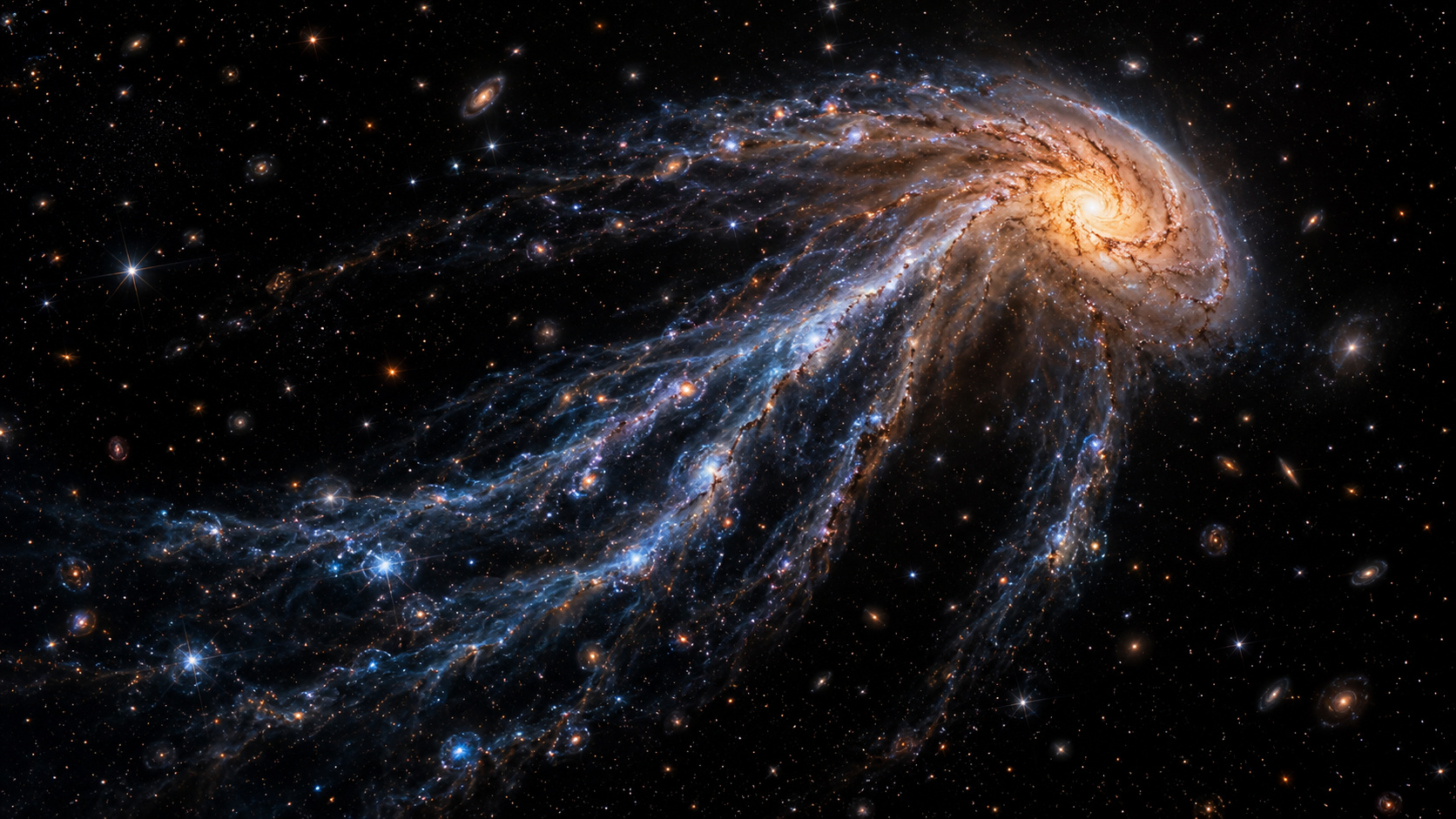
A study submitted to the Astrophysical Journal proposes that most rocky planets in the galaxy do not have the layered structure we know on Earth, with a metallic core, silicate mantle, and atmosphere. In the so-called sub-Neptunes, the most common type of exoplanet found so far, the extreme pressures and temperatures of the interior cause iron, silicate, and hydrogen to mix into a single homogeneous fluid. If the model is correct, Earth with its defined core would be the exception, not the rule among rocky planets.
The internal structure of planets we learned about in school may be wrong for the vast majority of worlds that exist in the galaxy. A new scientific paper available on arXiv and submitted to the Astrophysical Journal proposes that sub-Neptunes, the most common category of exoplanet cataloged to date, do not have separate metallic cores or silicate mantles. Instead of the layered structure that characterizes planets like Earth, these worlds would have an interior composed of a single homogeneous fluid of iron, molten silicate, and hydrogen, mixed under temperature conditions above 4,000 degrees Kelvin.
The discovery, if confirmed, reverses the paradigm: Earth ceases to be the standard model for rocky planets and becomes the exception. Sub-Neptunes, which are larger than Earth but smaller than Neptune, represent the most abundant type of planet in the Milky Way, and the possibility that their interior is radically different from what classical models predicted has profound implications for astrophysics, planetary geology, and the search for habitable worlds.
Why sub-Neptune planets might not have a core

The classical theory of planet formation predicts that denser iron sinks to the center and forms the core, while lighter silicate floats and creates the mantle. On Earth, this process worked perfectly. But the study’s authors point out that under the extreme pressures and temperatures inside larger planets, hydrogen, molten silicate, and iron become completely miscible, meaning they cease to exist as separate phases and transform into a single mixture.
-
One of the most devastating El Niños in modern history did not only bring heat: amidst droughts, destroyed crops, and lack of supplies, 50 million people died across three continents, and scientists see in this past a brutal warning for a hotter planet.

-
EcoFlow’s Portable Fridge Offers 43 Hours Off-Grid, Reaches -25°C, App-Controlled, Solar-Powered for Camping and RV Adventures
-
Vietnamese Inventor Overcomes Debt and Develops Agricultural Robot Sold in 15 Countries
-
3,000 Sheep Maintain 900 MW Solar Farm Transforming Texas Fields into Energy for Data Centers



The threshold is surprisingly low: if a planet accumulates more than about 1% of its mass in hydrogen, the entire interior becomes this turbulent and homogeneous mixture. No core. No mantle. Just a single fluid extending for thousands of kilometers to the planet’s center. For planets with less than 1% hydrogen, like Earth, the separation into layers occurs normally.
What the model explains that previous ones couldn’t
The researchers’ proposal solves two problems that traditional models of planetary internal structure did not explain well. The first is the so-called “radius gap,” the scarcity of planets with intermediate sizes between super-Earths and sub-Neptunes that the Kepler and James Webb telescopes have mapped. According to the classical layer model, there should be a continuous distribution of sizes, but in practice, there is a gap.
The second problem is the relationship between the radius of planets and their orbital period. Traditional models did not accurately reproduce how the size of sub-Neptunes varies with distance to the star. The miscible interior model, with hydrogen slowly bubbling out of the rock as the planet cools over hundreds of millions of years, explains why young planets appear more bloated than predicted.
The hydrogen that bubbles from within planets
In the proposed model, young sub-Neptune planets store a substantial fraction of hydrogen in their miscible interior. As the planet cools over hundreds of millions of years, the hydrogen “bubbles” slowly out of the iron and silicate mixture, releasing into the atmosphere in a process that gradually alters the planet’s size and density.
This mechanism produces an observational signature that can now be tested with the James Webb Telescope and future transit surveys of very young stars. If planets tens of millions of years old are found with larger radii than predicted by layer models, it will be strong evidence that the miscible interior is real and that most rocky planets in the galaxy function radically differently from Earth.
What still needs to be proven about these planets
The authors themselves acknowledge significant limitations. The model is based on theoretical extrapolations about the behavior of hydrogen, silicate, and iron under conditions that cannot yet be reproduced in the laboratory, although high-pressure experiments are approaching these extreme conditions. The internal thermal balances of the planets are uncertain, and the statistical approach of the study starts from the observed population of exoplanets and works back to physics, rather than predicting in advance how the planets should be.
The central claim, however, is bold and testable: the most common type of planet in the galaxy may not resemble Earth at all on the inside. The familiar concept of a dense metallic core at the center of each rocky planet may be the exception rather than the rule. If the study is correct, Earth is not the standard model of planets, but rather the strange world.
Did you imagine that most rocky planets might not have a core or mantle? What surprises you more: the mixture of iron with hydrogen, the idea that Earth is the exception, or the fact that the answer might come from James Webb? Tell us in the comments.