






 Portuguese
  Spanish




The Minister of Transport, George Santoro, confirmed at the Brazil-Italy Connection Forum that Italian companies in the railway sector have already shown concrete interest in participating in concession projects in Brazil. The event, held in São Paulo by Times Brasil, brought together authorities and business leaders from both countries to discuss investments in infrastructure, legal security, and the developments of the Mercosur-European Union agreement. Santoro highlighted that Brazil currently has the largest portfolio of road and railway concessions in the world and that the private sector has surpassed the public sector in participation in transport investments.
Brazil is experiencing a moment where the global competition for foreign investments makes each strategic partnership more valuable, and Italy is positioned as one of the main allies in this scenario. The largest road concession company in Brazil already belongs to an Italian group, and the Brazil-Italy Connection Forum showed that the interest goes beyond highways. Minister George Santoro stated that talks are underway with Italian companies in the railway sector to participate in concession projects in Brazil, including the supply of inputs, rolling stock, and line operation.
The event in São Paulo took place at a moment of convergence between the advancement of the Mercosur-European Union agreement and Brazil’s need to attract foreign capital to finance the largest infrastructure concession portfolio in the world. Santoro emphasized that Brazil is the fifth largest in terms of cargo volume transported globally and that logistics define the price and productivity of the entire Brazilian economy, from agricultural commodities to proteins and minerals.
What Italy Already Controls in Brazil’s Infrastructure

The Italian presence in Brazil’s infrastructure is not a future promise, it is a consummated fact. The largest highway concession company in the country belongs to an Italian group, a position that places Italy as a long-standing strategic partner in the Brazilian transport sector. The relationship goes beyond historical immigration and advances in innovation, services, technology, and large-scale investments.
-
Eco Invest Auction Aims to Unlock $10 Billion in Investments, Focusing on Green Fertilizers, Critical Minerals, Batteries, and AI for Clean Industry in Brazil

-
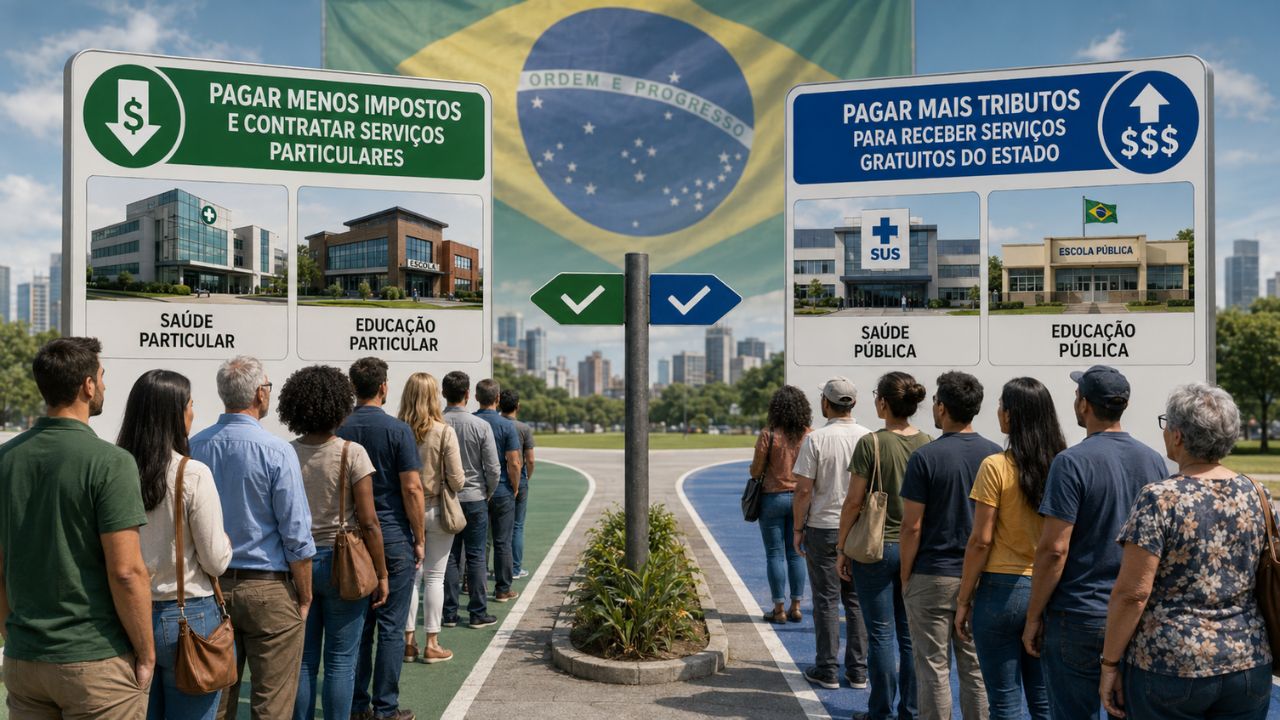
Half of Brazilians Prefer Lower Taxes with Private Health and Education, While 44% Opt for Higher Taxes for State-Provided Services, Datafolha Survey Reveals

-
Brazil’s Most Expensive Toll Rises to R$ 40.60 on Route from São Paulo to the Coast, Nearly Matching Bus Fare to Santos

-
As Brazil Expands Social Welfare, Survey Reveals 40% Blame Poverty on Laziness, While 58% Cite Lack of Opportunities




The Brazil and Italy Connection Forum was attended by representatives from the legal profession and the Italian Supreme Court, demonstrating that the interest is not only commercial but also legal. Santoro highlighted that the presence of Italian legal authorities at the event helps to show the world that Brazil’s regulatory frameworks, contracts, and concession bids follow international standards, complying with rules already used in Europe.
The railway sector as the next frontier for Brazil
The minister was direct in confirming that Italian railway companies are in talks to participate in projects in Brazil. The opening of 500 new international markets provided by the Mercosur and European Union agreement makes the relationship with Italy even more relevant, especially in supplying rolling stock and inputs for the Brazilian railway expansion.
Brazil plans to launch the new National Logistics Plan in June, which for the first time will include state planning beyond the federal government. The railway sector is one of the pillars of this plan, with concessions planned for strategic links between producing regions and export ports. For Italian companies with experience in high-speed railways and freight transport, the Brazilian market represents a scale opportunity that few countries offer.
The shift between public and private sectors in Brazil
One of the most relevant pieces of information presented by Santoro at the forum was that last year, the private sector surpassed the public sector in participation in Brazil’s infrastructure and transport investments. This reversal marks a structural change in how the country finances and operates its infrastructure, with concessions and public-private partnerships gradually replacing the direct state investment model.
For Italian investors, this change is positive because it increases predictability and reduces the political risk associated with projects dependent on government budgets. Santoro stated that Brazil’s path is to increasingly bring in private investors, both in federal and state projects, and that permanent international roadshows are being held to attract cheaper foreign capital to finance infrastructure expansion.
What the Mercosur and European Union agreement changes for Brazil


The trade agreement between Mercosur and the European Union, still in the ratification phase, opens a frontier of 500 new international markets for Brazilian products and services. According to Santoro, the agreement “still has a long way to go, but there is no doubt that it will transform the European Union and also Brazil.” The commercial integration facilitates the flow of investments, reduces tariff barriers, and creates a more uniform regulatory environment.
For the infrastructure sector, the impact is concrete: European companies gain facilitated access to bids and concessions in Brazil, while Brazilian exporters find more favorable conditions in the European market.
Italy, with its expertise in road concessions, railways, and heavy engineering, is positioned to capture a significant share of this new flow of investments that the agreement promises to unlock.
Did you know that the largest road concession company in Brazil is Italian? Do you think Italy should invest more in Brazilian railways, or does the country need to resolve internal issues first? Share your thoughts in the comments.


