Portuguese
  Spanish


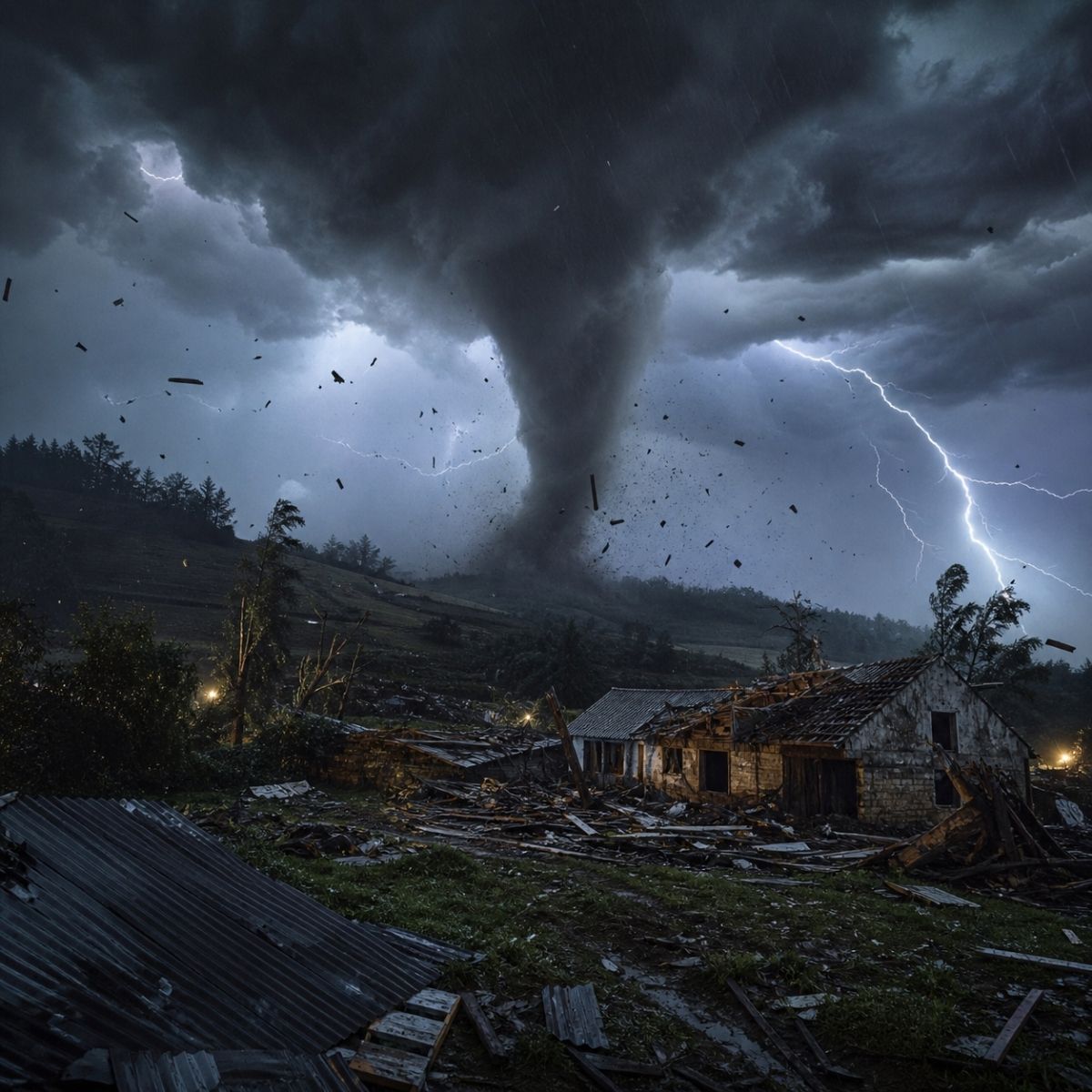

Ronaldo Coutinho confirmed that damage in São Joaquim in the Santa Catarina Mountains was caused by a weak to moderate tornado with intense winds, rain, and lightning for 30 minutes that ripped off roofs and destroyed crops, while Piter Scheuer points to El Niño’s influence on the phenomenon that hit the municipality this Saturday (2).
A tornado hit São Joaquim, in the Santa Catarina Mountains, during the early hours of this Saturday (2) and left a trail of destruction that meteorologist Ronaldo Coutinho confirmed to ND Mais as the work of the most violent storm nature produces. The tornado was classified on the weak to moderate scale, but this classification does not diminish the damage the phenomenon caused in just a few tens of minutes: crops were devastated, houses were unroofed, billboards were torn down by the winds, and the city’s roads suffered damage that exposes the vulnerability of a mountainous region that does not usually associate its climatic reality with phenomena of this magnitude. The strong storm combined intense winds with heavy rains and lightning for approximately 30 minutes, a short interval that was enough to transform the landscape of rural and urban areas of the municipality.
What makes this tornado particularly concerning is what it reveals about the climate in the coming months. Meteorologist Piter Scheuer told ND Mais that the storm that generated the tornado was influenced by the initial activity of El Niño, an oceanic-atmospheric phenomenon that warms the Pacific waters and alters climate patterns across the planet, and which historically intensifies extreme events in Southern Brazil. If the tornado in São Joaquim is a sample of what El Niño can cause in its initial stage, the following months require increased attention from residents, rural producers, and civil defense authorities throughout the region.
How the tornado formed in the Santa Catarina Mountains
-
Pennsylvania Mine Creates Ice in Summer Heat and Melts in Winter, Turning a Mountain Crevice into a Reverse Natural Refrigerator

-
China Accelerates Global Expansion of Robotics: From Smart Vacuums to Industrial and Humanoid Machines, Millions Exported to Over 150 Markets
-
Polar Air Mass to Hit Brazil: Temperatures to Plummet in Nine States, Near Freezing in the South with Frost Risk Until Monday
-
Chinese “dark factories” produce electric cars 24/7 with minimal human intervention, as Zeekr assembles 800 units daily, raising concerns in Brazil.





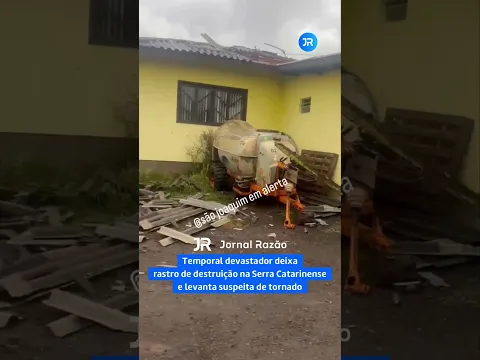

Tornado confirmed in São Joaquim in the Santa Catarina Mountains after destroying crops and ripping off roofs. El Niño could intensify extreme events in the South. Understand.
The formation of a tornado depends on a specific atmospheric combination that is not always predictable in advance. The phenomenon is born when there is a sudden reduction in pressure within a convective system, a process in which warm, less dense air rises rapidly, is cooled in the upper layers, and forms heavy clouds that are primarily responsible for intense rainfall. The sudden change in pressure causes the air to begin rotating around points where the pressure is lower, and the increasing rotation creates a cone shape that extends from the base of the cloud towards the ground.
When this rotating cone reaches the surface, the event is officially classified as a tornado. In the case of São Joaquim, the tornado touched down with an intensity that Coutinho classified as weak to moderate, a range already capable of ripping roofs off light constructions, felling trees, and destroying exposed crops, but which does not reach the devastating potential of higher degrees that can raze solid structures and cause deaths. The Santa Catarina Mountains are not a region traditionally associated with this type of phenomenon, which means that local infrastructure and population preparedness to deal with a tornado are limited compared to areas that face the event more frequently.
What the tornado destroyed in São Joaquim during the early hours
The damage caused by the tornado spread across rural and urban areas of São Joaquim. In the fields, entire crops were devastated by the winds accompanying the phenomenon, a loss for producers in the Santa Catarina Mountains that adds to an already difficult year marked by climatic instabilities that affected harvests and now culminate in the destruction caused by a tornado no one expected. Producers who lost crops will have to account for damages that may take months to recover, and the proximity of winter reduces the possibilities of immediate replanting.
In the urban area, unroofed houses and torn-down billboards make up the scene the tornado left behind. The force of the winds was enough to remove coverings from buildings and project advertising structures over distances that demonstrate the phenomenon’s power even in its milder classification. City roads also suffered damage with debris accumulation, fallen trees, and erosion caused by the combination of wind and intense rain, a condition that hindered access for rescue teams in the first hours after the tornado and demonstrates the need for contingency plans for events that previously seemed unlikely in the region.
What El Niño has to do with the tornado in the Santa Catarina Mountains
The connection between the tornado in São Joaquim and El Niño is the element that transforms a localized event into an alert for all of Southern Brazil. El Niño warms the surface waters of the equatorial Pacific Ocean and causes changes in atmospheric circulation patterns that, in Southern Brazil, translate into increased rainfall, a higher frequency of severe storms, and more favorable conditions for the formation of extreme phenomena like the tornado that hit the Mountains. Piter Scheuer pointed out that El Niño’s initial activity already influenced the storm that generated the tornado, indicating that the oceanic phenomenon is operating at a stage that affects the regional climate even before reaching its peak intensity.
If El Niño confirms its strength in the coming months, Southern Brazil could face a season of more intense extreme events than usual. Historically, years of strong El Niño in Southern Brazil are marked by floods, landslides, gales, and storms that cause billions in damages and human losses, and the tornado in São Joaquim serves as a warning that the atmosphere is already configured to produce these events with above-normal frequency and intensity. The preparation that mountain and coastal cities need to make is not just for the winter cold: it is for the instability that El Niño potentiates in every frontal system that crosses the region.
What residents of the South should do given the risk of new episodes like the tornado
The confirmation of a tornado in a region that does not usually record the phenomenon requires a reevaluation of risk perception by the population. Residents of the Santa Catarina Mountains and other regions of the South need to incorporate into their routine preparation for climatic events the possibility of phenomena that previously seemed exclusive to other latitudes, and this includes identifying safe areas within the home to shelter during severe storms, keeping essential documents and items accessible for rapid evacuation, and monitoring meteorological alerts with the same attention they dedicate to frost forecasts. The tornado that swept São Joaquim proves that the Mountains are not immune to events that transform the landscape in minutes.
For rural producers, protecting crops against phenomena like tornadoes is a challenge that requires investment in infrastructure and insurance. Open-air crops are the most vulnerable to winds accompanying this type of storm, and diversifying planting areas can reduce the risk of total loss when a concentrated event hits a specific region of the property. The tornado in São Joaquim is a reminder that the climate does not ask permission to change and that El Niño may just be starting to show what it holds for Southern Brazil this season.
And you, have you ever witnessed a tornado or severe storm in the Santa Catarina Mountains? Do you think cities are prepared? Leave your opinion in the comments.