






 Portuguese
  Spanish
  3 min of reading
  1 comment


UK Company Announces Innovative Project for Nuclear Energy Generation. Learn How Floating Nuclear Power Plants in the US Will Operate.
Sustainable technology is constantly advancing, and renewable energy sources like floating solar panels and offshore wind turbines are already part of the energy matrix in various countries. Now, a UK company plans to take this innovation even further by planning to deploy floating nuclear power plants in the United States by the mid-2030s. This new approach promises to expand energy generation safely and efficiently, using advanced reactors that operate without the need for frequent refueling. In this article, we will explore how these plants will be developed, their benefits, and the challenges for implementing this technology.
US Nuclear Energy Program Will Unlock US$ 2.6 Trillion Market
Core Power announced a civil maritime nuclear program based in the United States as part of a project that will enable energy generation at Floating Nuclear Power Plants in the US (FNPPS) on a global scale.
According to Core Power’s CEO, Mikal Bøe, during a company summit in Houston, Texas, this nuclear energy program, called Liberty, will unlock a US$ 2.6 trillion market. Considering that 65% of economic activity occurs on the coast, it will allow nuclear energy to reach new markets.
-
Helicopter Drops 180 Tons of Sand and Gravel on Swedish River to Revive Ecosystem Damaged by Decades of Exploitation

-
Brazilian Company Launches Retro Smartphone with 48 MP Camera, T9 Keyboard, and Privacy Features for Social Media-Free Use

-
Self-Taught Chinese Farmer Builds 5-Ton Submarine from Scrap, Launches It in Anhui River
-
Invisible Induction Technology Enables Wireless Power for Blenders, Coffee Makers, and Air Fryers, Reducing Countertop Cables



The name of the initiative for the floating nuclear power plants in the US refers to the Liberty ships used in World War II, which were mass-produced in the US and played a vital role in the Allies’ victory in the Battle of the Atlantic.
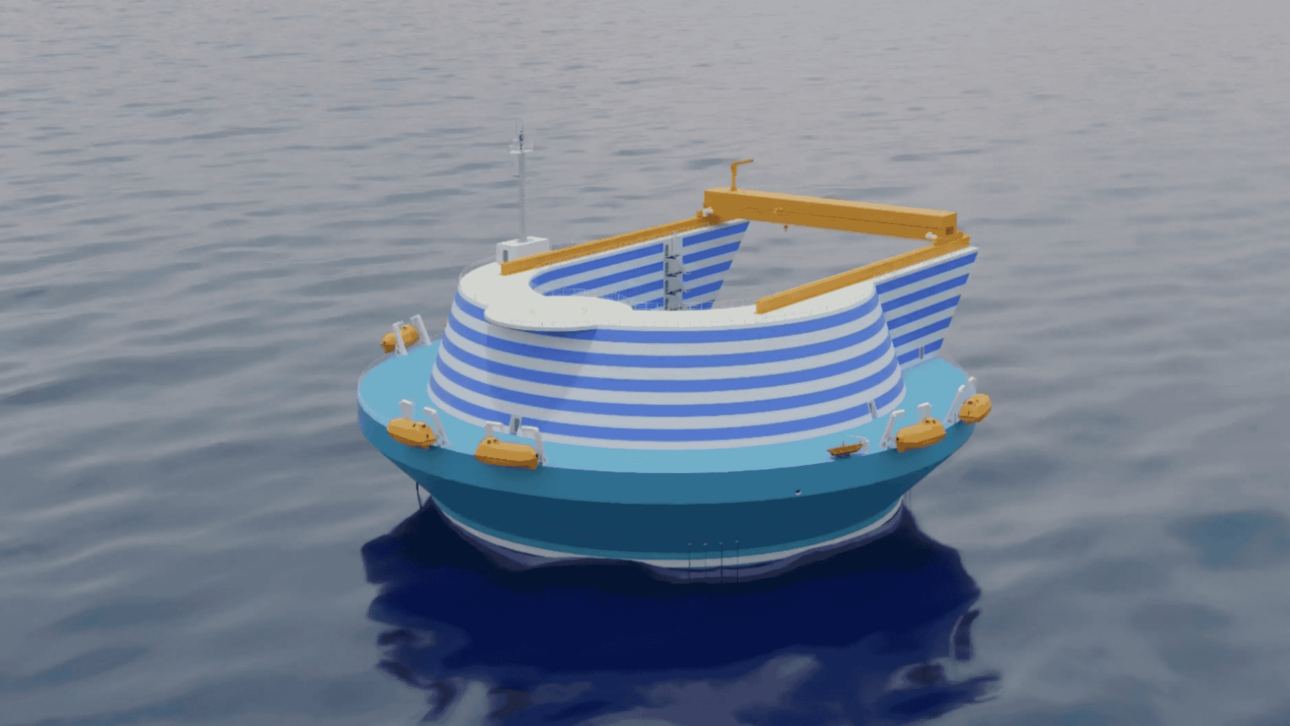
The new plants from the UK company are the result of improvements on a project developed for the first time in the 1950s based on a compact molten salt reactor. The process uses fluid fuel in the form of fluoride or chloride salt, replacing solid fuel used in most reactors.
Floating Nuclear Power Plants in the US Will Have Capacity for 175 GWh per Unit
According to the company, this method for generating nuclear energy burns up to 100 times more uranium compared to traditional techniques, reducing neutron losses and being operated continuously without the need for refueling, while possessing safety systems that prevent incidents like Fukushima.
The modules will be generated in shipyards using construction concepts already known due to the qualified labor force. They will be produced as power plants that can be docked at ports and coastal locations. Each of the floating nuclear power plants in the US will have the capacity to generate up to 175 gigawatt-hours of clean electricity per year and supply power to ships, equipment, and port vehicles.
The company, which has offices in London, England, Washington, the US, and Tokyo, Japan, will start receiving orders for the nuclear power plants starting in 2028. The first phase of the project will focus on the development of the modules, while the second phase will prioritize safe licensing processes and export control.
Partnerships for the Project
At the same time, Core Power reported that it will help develop international safety and security standards by working alongside the International Atomic Energy Agency and the International Maritime Organization to develop a civil liability convention for nuclear-powered ships.
It is worth mentioning that Core Power is not alone in this endeavor and has partnered with renowned companies for the project of floating nuclear power plants in the US. Glosten will be responsible for the design of the barges and regulatory support.
Glosten’s CEO, Morgan Fanberg, emphasized that the FNPPS represent a viable solution to decarbonize the maritime sector. The company has also partnered with Westinghouse to integrate the eVinci microreactor into the FNPPS. This compact reactor has few moving parts and can generate from a few kilowatts up to 5 megawatts of energy, making it ideal for maritime applications.





❤️Aqui você pode colocar seu rosto em qualquer vídeo ou foto) Por favor, avalie-o ➤ Ja.cat/gosea