Portuguese
  Spanish


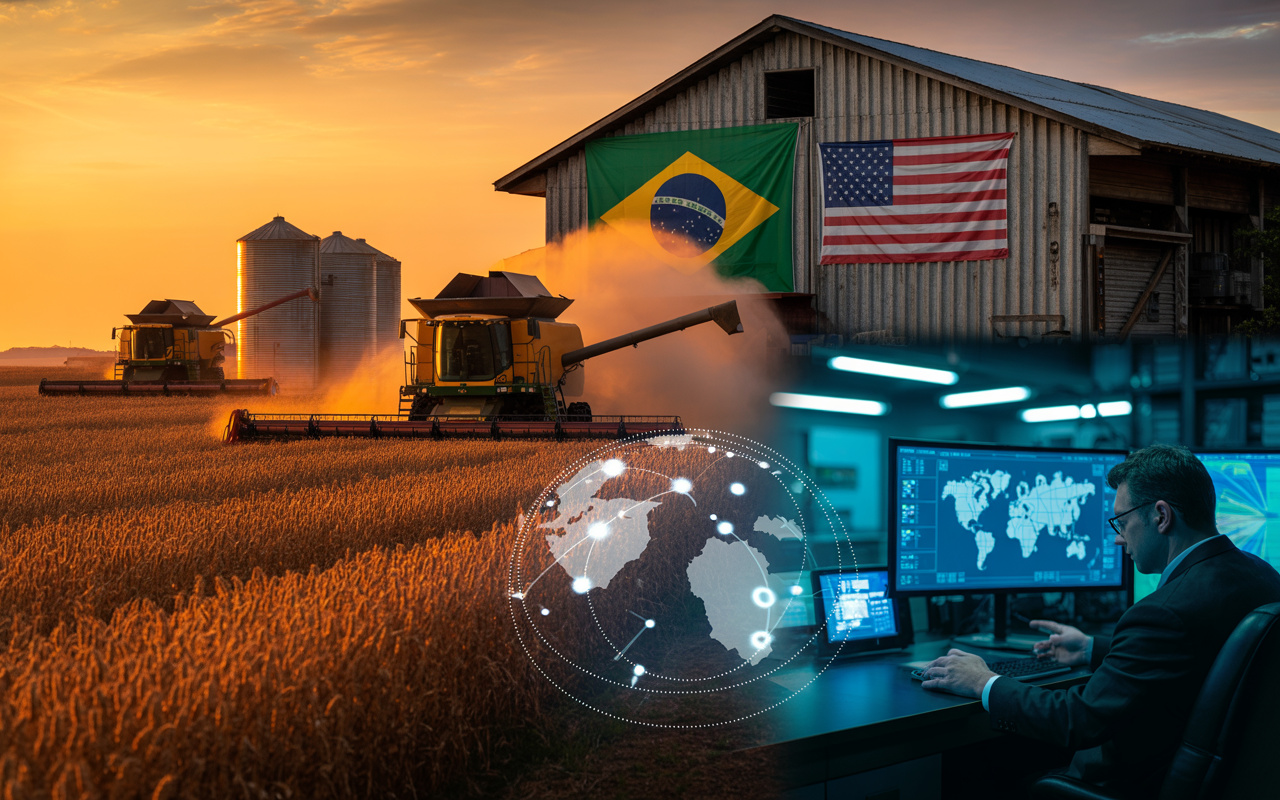

USA Triggers Section 6705 of the Intelligence Act of 2026 to Investigate Chinese Investments in Brazilian Agriculture and Their Geopolitical Impacts.
Few people noticed, but a silent movement approved in the United States Congress at the end of 2025 placed Brazilian agribusiness at the center of a geopolitical dispute involving Washington and Beijing. In the text of the Intelligence Authorization Act for the 2026 fiscal year, a specific section — Section 6705 — establishes that the US government should thoroughly evaluate Chinese investments in Brazilian agriculture, their strategic motivations, and the potential risks to global supply chains and food security.
This is not a symbolic resolution: it has been incorporated into one of the most sensitive laws in the US federal machinery, which governs the budget and the missions of intelligence agencies. It is the first time that the US Congress has formally recognized Brazilian agribusiness as a relevant vector in a global dispute and as a potential instrument for power projection by the People’s Republic of China.
Journalistic sources that monitored the proceedings emphasize that the report required by Section 6705 will need to be prepared by the Director of National Intelligence (DNI), in coordination with the State Department and the Department of Agriculture (USDA), and submitted to Congress within 90 days after the law is enacted, with a non-classified portion for public debate.
-
A company from SC that moves R$ 125 billion in agribusiness is integrated into an international group, maintains its headquarters and jobs in Chapecó, and is preparing to expand software for cooperatives, grain companies, and industries while targeting new markets without leaving the western region of Santa Catarina.

-
Producer receives news and had to cull almost the entire herd, bounced back with the help of compensation, and is now producing 450 liters of milk per day in SC.

-
Quail Eggs Reveal a “Secret Code” on Their Shells Explaining Unique Patterns and Colors

-
Rare Tropical Fruit Canistel, with Egg Yolk Color and Caramel Flavor, Gains Interest from Researchers and Small Producers in Brazil


Why Brazilian Agriculture Entered Washington’s Radar
The answer starts with scale. Brazil is now one of the largest producers and exporters of animal protein, soy, corn, coffee, sugar, and cellulose in the world.
On the other hand, China is the largest buyer of these products, accounting for significant portions of Brazilian agricultural exports. The connection between the two countries is not limited to buying and selling but includes financing, logistics, and mediation.


The US began to pay close attention to this arrangement at a time when China advances its food security strategy, defined by the Chinese Communist Party as a national priority.
For Washington, this has implications in a sensitive area: global supply chains, regarded by the White House, the Pentagon, and Congress as critical infrastructure, along with energy, semiconductors, and telecommunications.
What Section 6705 Really Specifies
Section 6705 does not create sanctions or trade restrictions. It mandates a strategic mapping. According to descriptions released by the press, the report should evaluate three major dimensions:
Chinese Investments in Brazilian Agriculture, including any stakes in logistics, storage, and processing.
Impacts on global markets and supply chains, focusing on prices, dependencies, and systemic risks.
Implications for the food security of the US and its allies, examining vulnerabilities that may arise from an excessive concentration of production and influence.
There is an additional component: the report needs to distinguish what constitutes normal economic cooperation from what may have strategic intent, following the analytical pattern applied in recent years to technology, energy, and critical infrastructure.
China and Brazilian Agribusiness
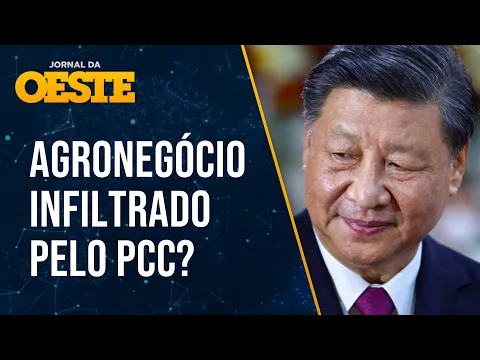
To understand why the US Congress mobilized, one must observe China’s behavior over the past 15 years.
The country increased its agricultural imports from Brazil, expanded certified slaughterhouses, opened lines of financing, stimulated trade agreements, and diversified its commodity suppliers. From a Chinese perspective, this reduces dangerous external dependencies — primarily on the US.
From the US perspective, however, this movement has another reading: as part of agricultural production aligns with a dominant external demand, other markets may lose influence. This becomes relevant in a scenario where food security is treated as a strategic issue within Chinese doctrine itself.
Reactions in Brazil and the Diplomatic Weight of the Agenda
The news of the inclusion of Section 6705 in the Intelligence Act echoed in the Brazilian press and generated divergent reactions among analysts.
Some viewed it as a simple geopolitical monitoring, while others saw a potential harbinger of trade tensions between Brasília, Washington, and Beijing.
For the Brazilian government, the situation requires balance. The country exports enormous volumes of soy, beef, chicken, and corn to China, while simultaneously maintaining historical relations with the US in defense, technology, and investments. In a polarized environment, every move is interpreted as alignment.
Food Security as a New Geopolitical Frontier
The most relevant point of Section 6705 may be the recognition that food security has definitively entered the list of strategic dispute topics between the two largest economic powers on the planet. If energy was the center of geopolitics in the 20th century, food and water are beginning to gain that role in the 21st century.
By placing Brazilian agribusiness and, consequently, China within the scope of US intelligence, the US is declaring that the dispute is no longer limited to semiconductors, 5G, rare earths, or oil. Grains, proteins, and agricultural logistics now belong to the same playing field.
A Report That Could Redefine Agendas
When the report is published, even with classified sections, it may influence:
• administrative agendas in Washington,
• debates in the US Congress,
• diplomatic lines with Brazil,
• trade negotiations with China,
• and the global perception of risk in agricultural supply chains.
The content could also provide ammunition for distinct viewpoints. For some, it may reinforce the idea that Brazil has global bargaining power, being a key player among blocs. For others, it may raise concerns about excessive dependence on a single buyer, a criticism that some Brazilian economists have made for years, especially in the case of soy.
The fact is that Section 6705 has converted a debate that was restricted to agribusiness and foreign trade specialists into a matter of intelligence and national security in the US. This changes the political weight of the agenda and places Brazilian agribusiness in a strategic space that only technology and energy occupied before.
The rivalry between the US and China now has a new field: Brazilian agribusiness, and the consequences of this are just beginning to be mapped.