





 Portuguese
  English
  Spanish
  4 min of reading
  0 comments


New fishing regulation updates the list of exotic and allochthonous species with authorized capture and transport, clarifies rules that caused doubts among fishermen, strengthens environmental monitoring in the main river basins of the region, and maintains strict restrictions for native fish, sport fishing, closed season, and proof of fish origin
The new fishing rule in Goiás came into effect on May 28 and updated the list of exotic and allochthonous fish with authorized capture and transport in the state. According to the State Department of Environment and Sustainable Development (Semad), these species can be transported without size or quantity restrictions. However, fishermen must comply with all other requirements provided by law.
Moreover, as clarified by Semad, exotic species originate from other countries or continents. Meanwhile, allochthonous species are Brazilian but do not naturally belong to the river basin where they were introduced. Thus, the update seeks to correct doubts that arose during the application of the previous regulation and, at the same time, strengthen environmental monitoring.
Native fish remain prohibited for transport
On the other hand, the new regulation maintains the prohibition on the transport of captured native fish. Nevertheless, consumption remains allowed in the fishing sites themselves, such as boats, ranches, camps, banks, riverside towns, and hotel boats.
-
On just 36 hectares in the Northwest of Minas, the producer known as Sô Neném claims to earn up to 15,000 reais per week solely from the market, combining a vegetable garden, dairy and beef cattle, corn silage, and fish farming on a small diversified property.

-
Couple harvests giant tomato weighing almost 1 kg: Fruit of the oxheart variety weighed 978 grams, more than three times the average, and was grown without chemical fertilizers in an area of only 36 m².

-
Senar inaugurates an unprecedented Rural Professional Training Center (CFPR) to qualify the workforce in the field in Hulha Negra (RS)
-
A Kenyan company co-founded by a Chinese individual is transforming agriculture in Kenya by connecting small farmers directly to reliable markets, paying immediately for the harvest, and reducing post-harvest losses by up to 70%, in a model that combines technology, logistics, and practices inspired by China.


Additionally, according to Semad, consumption and capture remain limited to up to 5 kilograms of fish per fisherman. Similarly, the minimum and maximum sizes defined for each species must be respected. According to the Manager of Environmental Monitoring and Intelligence at Semad, Amandha Rezende, the measure aims to reduce the excessive removal of fish from aquatic environments and, consequently, contribute to the preservation of natural stocks.
Closed season and subsistence fishing follow specific rules
Meanwhile, the closed season for piracema remains between November 1st and February 28th in the river basins of Araguaia-Tocantins, Paranaíba, and São Francisco. During this period, amateur fishing, ornamental fishing, and underwater fishing remain prohibited.

At the same time, the new regulation formalizes the concept of subsistence fishing. Even during the closed season, this modality remains allowed exclusively for domestic consumption. However, the sale, exchange, and any form of commercialization of the fish remain prohibited. Additionally, the limit remains up to 5 kilograms per fisherman per day.
Sport fishing remains authorized only in the catch and release system
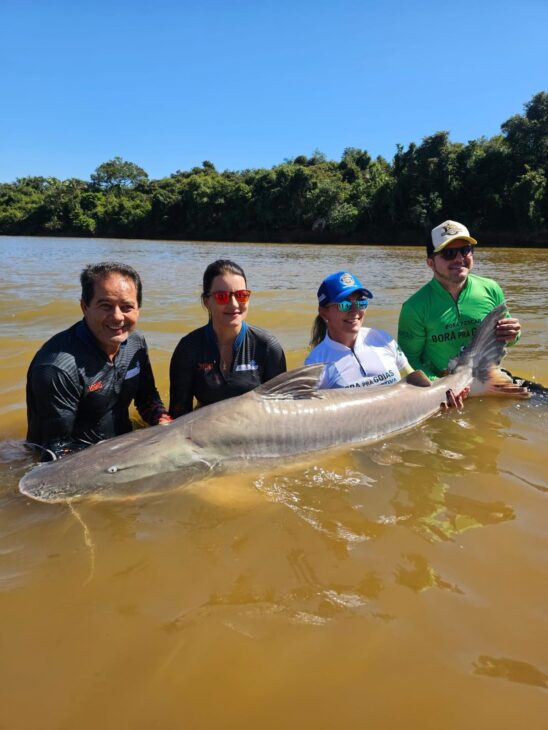
In turn, sport fishing and guided fishing remain authorized only in reservoirs and exclusively in the catch and release modality. In these cases, the use of barbless hooks remains mandatory.
Furthermore, the captured fish must be immediately returned to the water. Therefore, retention, transportation, and consumption of the specimens remain prohibited. To engage in any modality provided for in the regulation, the fisherman must carry an identification document and a valid fishing license.
Even though some categories are exempt from the issuance fee, the license remains mandatory for inspection purposes. Exempt from payment are retirees, men over 65 years old, women over 60 years old, indigenous people, quilombolas, and minors under 18 years old.
Inspection gains new requirements for species identification
In addition to changes regarding capture and transportation, the regulation establishes new requirements for inspection. Thus, the captured fish must remain whole, with head, fins, scales, and skin preserved.
In this way, agents will be able to correctly identify the species and verify compliance with the legislation. Additionally, the transport of native fish must be accompanied by documentation proving its origin.
When the product is purchased from a commercial establishment, proof must be provided through the Electronic Invoice (NF-e). For exotic and allochthonous species with authorized capture, a valid fishing license may serve as proof of origin.
Permitted equipment and practices that remain prohibited
At the same time, the normative instruction continues to authorize equipment such as hand line, simple rod, rod with reel, rod with baitcasting reel, and speargun used in underwater fishing.
However, the use of artificial breathing equipment remains prohibited in this modality. Similarly, practices that alter the natural behavior of fish, such as the use of bait, feed, and other methods intended to concentrate schools of fish, remain prohibited.
Furthermore, the release of exotic, hybrid, allochthonous, or genetically modified species in natural environments in Goiás also remains prohibited.
Authorized species vary according to the river basin
According to Semad, the list of species with permitted capture and transport varies according to the river basin. In the Araguaia-Tocantins Basin, fish such as tambaqui, tambacu, tilapia, Nile tilapia, rainbow trout, black bass, pangasius, pintachara, real pintado, and various species of carp are included.
In the Paranaíba Basin, the authorization covers species such as pirarucu, pirarara, blue peacock bass, butterfly peacock bass, matrinxã, tambaqui, tambacu, tilapia, pangasius, cachara, corvina, and armored catfish, among others provided for in the regulation.
Finally, in the São Francisco Basin, the list includes tambaqui, tambacu, Nile tilapia, pirarucu, pirarara, giant trahira, blue peacock bass, butterfly peacock bass, rainbow trout, matrinxã, corvina, pintachara, and real pintado.
Thus, the update of the regulation seeks to clarify rules, strengthen enforcement, and ensure greater protection of native fish stocks. At the same time, the regulation more precisely defines which exotic and allochthonous species can be captured and transported by fishermen.
Reader, in your opinion, do these new rules manage to balance the preservation of rivers with the activity of fishermen?






Be the first to react!