Portuguese
  Spanish


Action Announced This Saturday (3) Includes Airlift and Heightens Political and Military Tension in the Region
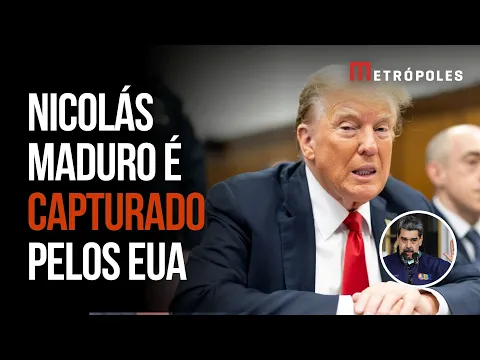
The operation of the United States in Venezuela took on an unprecedented dimension this Saturday (3), with the confirmation of a large-scale attack and the capture of Nicolás Maduro.
The withdrawal of the Venezuelan president occurred via air along with his wife. The couple’s destination was not disclosed.
The episode was also marked by explosions in Caracas, reports of low-flying aircraft, and power outages in parts of the capital, increasing uncertainty about the next steps of the Venezuelan government.
-
Chinese Nuclear Submarine Launches Simulated Warhead Missile in Pacific, Heightening Regional Tensions Amid Naval Drills with Russia Near Qingdao; New Zealand and Papua New Guinea Warn of Persistent Chinese Military Presence

-
Ayatollah Ali Khamenei’s Funeral Draws 15 to 20 Million in Tehran, Calls for Revenge Against Trump After Joint Israel-U.S. Attack

-
U.S. Establishes Permanent Embassy in Jerusalem, Reigniting International Debate Over Israel’s Capital
-
The world has nearly 12,000 nuclear warheads, with the majority held by the United States and Russia; see the figures for China, France, and the United Kingdom.


What Happened and Why It Caught Attention
Donald Trump declared that American forces carried out a large-scale attack on Venezuelan territory and captured Nicolás Maduro.
The information includes Maduro’s withdrawal from the country via air, accompanied by his wife, in an action conducted with the support of American security forces.
The absence of details about the location where Maduro was taken heightened the atmosphere of instability and opened the door for immediate reactions within Venezuela.

Explosions in Caracas and Immediate Impact in the Capital
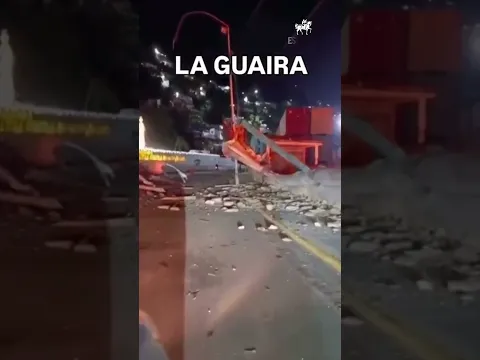
A series of explosions hit Caracas early this Saturday (3). At least seven explosions were heard in around 30 minutes.
Residents reported tremors, the sound of aircraft, and panic in the streets, with a sense of insecurity in different neighborhoods.
Parts of the city were left without electricity, with the greatest impact near the La Carlota air base in the south of the capital.
Response of the Venezuelan Government and Emergency Declaration
The Venezuelan government issued a statement claiming that the country was under attack and called on social and political forces to activate mobilization plans.
The text mentions the signing and the order for implementation of a decree declaring a State of External Commotion across the national territory.
The message also speaks of an immediate reaction, referencing armed struggle, and uses the term imperialist aggression to characterize the offensive.
Dispute Over Resources and Accusations of Regime Change
The Venezuelan statement claims that the American operation aimed to seize strategic resources, particularly oil and minerals.
The government describes an attempt to impose a colonial war and force a regime change in the country.
Caracas declared that it reserves the right to exercise legitimate defense and called on governments of Latin America and the Caribbean to mobilize in solidarity.
Escalation Since August and What May Happen From Now On
Pressure on the Venezuelan government increased in August, when the U.S. raised the reward to US$ 50 million for information leading to the capture of Nicolás Maduro.
During that period, there was a reinforcement of military presence in the Caribbean Sea, initially presented as an action against international drug trafficking.
In November, Trump and Maduro spoke on the phone, without progress. In the same month, the U.S. classified the Cartel de los Soles as a terrorist organization and attributed the leadership of the group to Maduro.
From this scenario, Maduro’s capture and the attacks in Caracas put Venezuela at a turning point, with the risk of new military measures and immediate political reaction.
The withdrawal of the president and the declaration of emergency create a highly tense environment, with direct reflections on internal stability and the country’s relations with neighboring governments.