Portuguese
  Spanish


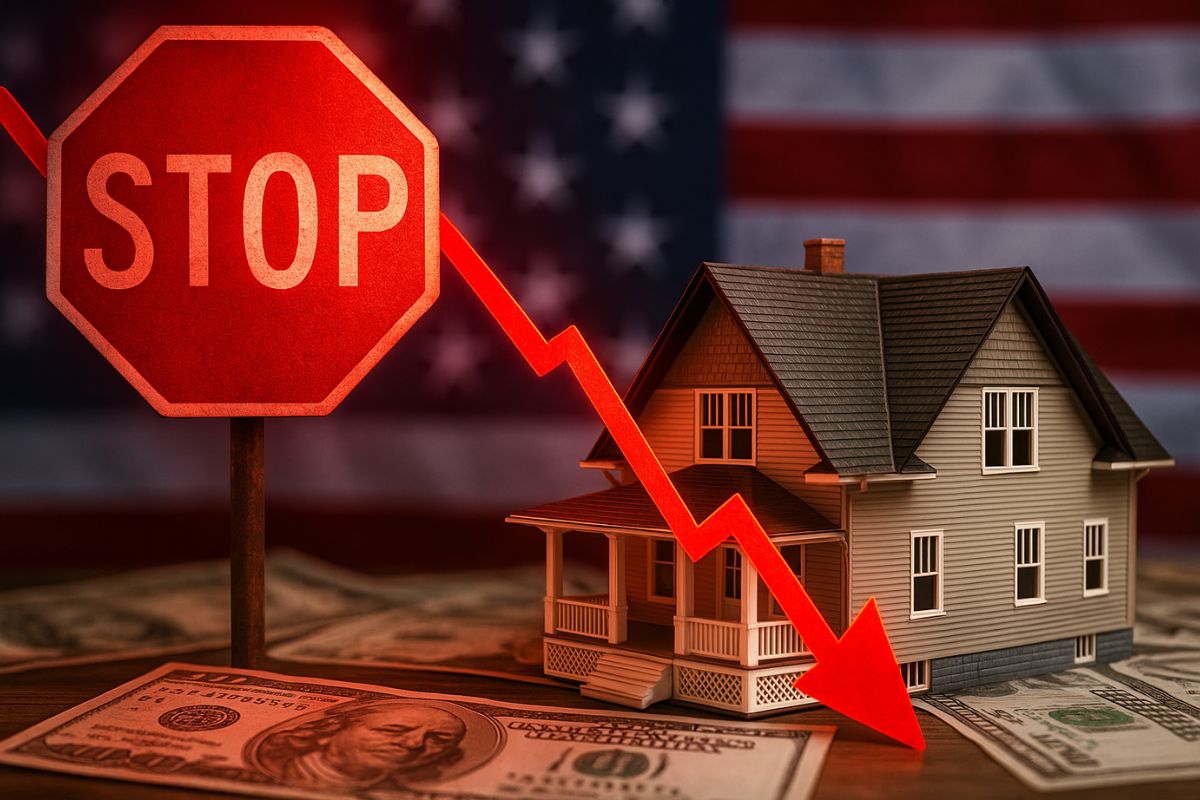

Red Flag Has Already Lasted Four Years; Vacancy Above 8% in States Like Florida and Texas and 608 Thousand New Units Put Pressure on Rental Prices
The real estate market in the U.S. is experiencing a period of fragility that has already lasted four years. According to economist Nanda Guardian, the housing demand index created to measure the health of the sector has been negative since 2021 and has recently returned to the same level seen in 2008, during the crisis that shook the global financial system.
Although there has not yet been a mass liquidation of properties, the signs of imbalance between supply and demand are already visible. Increasing inventories, high vacancy rates in some states, and declining confidence among builders show
that the sector has lost momentum and could become a relevant factor in the American economic cycle.
-
Audit Reveals 80% of Ghost Employees in Rio Government Departments, Leading to Over 4,000 Dismissals and Saving the State $3.3 Million Monthly

-
Former Shoe Factory Worker Turned Entrepreneur Opens 19th Tool Store, Projects $230 Million Revenue, Expands to São Paulo
-
Father Founded Arezzo in a Belo Horizonte Garage; Son, as CEO, Merges to Form “Azzas 2154” with Over 30 Brands, 2,000 Stores, and a $110 Million IPO
-
At 21, he used a $40,000 family loan to start a stationery brand in Brazil; today, BRW earns $48 million annually, has 20,000 sales points, and holds 11 patents, including a highlighter with lip gloss to appeal to teens.


Indicators Show Consistent Retraction
The NAHB builder index, which measures sector confidence, recorded 32 points in June and 33 in July.
Any value below 50 indicates pessimism, and the current situation reflects high interest rates, with 30-year mortgages close to 7%.
At the same time, the prices of lumber, a key input in construction, are in free fall, suggesting a slower pace of new projects.
The Housing Demand Index mentioned in the study, which combines median price, new home sales, building permits, and months of supply, has shown continuous retraction since 2021. In 2024, it reached –1.5 standard deviations, a level similar to that of the housing crisis in 2008.
This indicator does not point to an immediate collapse, but signals increasing saturation in the residential sector.
High Vacancy and Pressure on Rentals
In the states of Florida and Texas, where there has been significant migration in recent years, the vacancy in multifamily residential buildings has already exceeded 8%.
This excess is the result of the delivery of 608 thousand new units in 2024, the largest volume in four decades.
The practical effect is pressure on rents: landlords who cannot maintain full occupancy reduce prices, forcing competitors to do the same.
This movement may help combat inflation since rent carries a significant weight in the American consumer price index.
However, for real estate investors, the combination of high vacancy and pressured prices represents a risk of declining profitability and increased delinquency in financing related to concentrated developments.
Differences Between Market Segments


The American real estate market, however, is not homogeneous. The office sector has been undergoing a prolonged crisis for at least four years, exacerbated by remote work, but accounts for less than 10% of the total market.
On the other hand, data centers, driven by investments in artificial intelligence, are experiencing the opposite scenario: in Virginia, rents increased nearly 20% in one year, supported by over US$ 400 billion in capex from large technology companies.
This heterogeneity shows that while there is fragility in the residential sector and in offices, there are expanding niches that may cushion some of the slowdown.
What Could Accelerate Deterioration
For now, mortgage delinquency remains low, preventing a mass liquidation of properties.
The majority of debtors are older and have established wealth, unlike the profile of indebtedness in credit cards and vehicle leasing, where an increase in delays is already being observed.
The risk, according to analysts, lies in the so-called wealth effect: if the stock market falls sharply and unemployment rises, many homeowners may be forced to sell properties, exacerbating the pressure on prices.
In this scenario, the red flag that has already lasted four years could evolve into a broader crisis.
The real estate market in the U.S. is far from the collapse of 2008, but the alerts are clear: low confidence from builders, excess supply in some states, and increasing vacancy in residential buildings.
Meanwhile, niches like data centers show resilience and even expansion.
Do you believe that the U.S. real estate market is heading toward a new crisis like that of 2008 or is the current scenario just a temporary correction?
Leave your opinion in the comments.