






 Portuguese
  Spanish


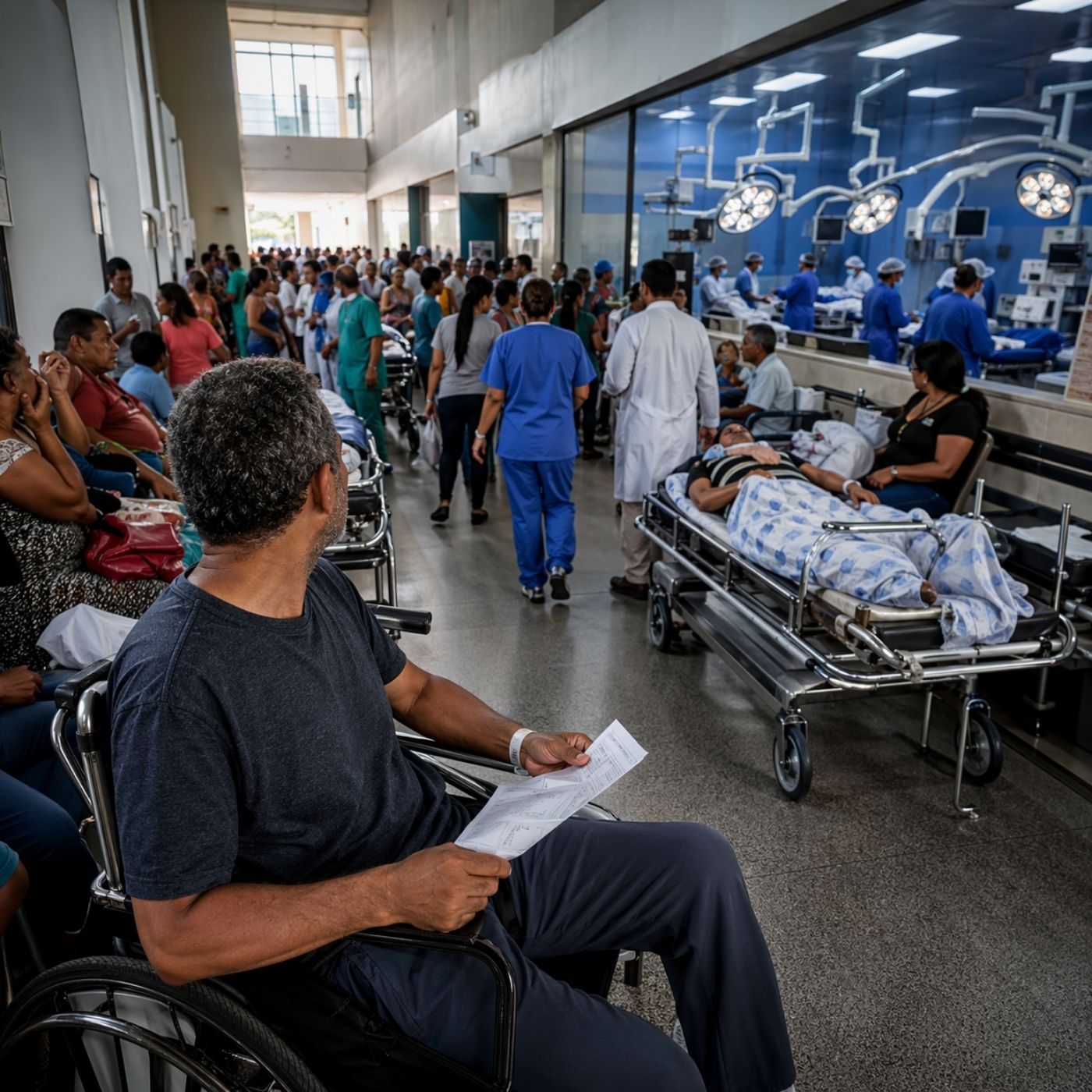

SUS expands budget, registers historical record of elective surgeries and maintains programs to reduce waiting times, but still coexists with insufficient structure, delays in specialized care and a reality where consultations, exams and surgeries often do not arrive in time for the patient needs
The SUS enters 2026 with a federal budget of R$ 271.3 billion, above the R$ 254.1 billion of 2025, and also carries the result of 14.7 million elective surgeries performed in 2025, a number regarded as a historical record. In reach and coverage, the Brazilian public system remains among the largest in the world. Nevertheless, the increase in resources and production has not been sufficient to eliminate a problem that remains at the center of the patient experience: excessive waiting for consultations, exams, and surgeries.
This contradiction draws attention because it exposes the gap between the size of the system and the response delivered at the front line. Brazil has a universal model, essential for millions of people, but continues to face long queues, crowded corridors, hospital overcrowding, and a structure that does not keep up with the entire demand. In practice, patients continue to encounter delays that, in many cases, weigh more than the initial diagnosis itself.
What the numbers show about the size of SUS today
The SUS continues to be a giant system in coverage and resources. The federal health budget projected for 2026 reaches R$ 271.3 billion, an amount higher than the R$ 254.1 billion recorded in 2025. This growth reinforces the weight of public health within the structure of the State and shows that the country continues to increase the amount of money allocated to the sector.
-
China Tightens Control on Antimony, Driving Prices from $22,000 to Nearly $40,000 per Ton as U.S. Rushes to Bolster Strategic Reserves

-
BlackRock Freezes $1 Billion in Brazilian Renewable Energy, Impacting 1.5 GW of Planned Projects and Highlighting Investor Concerns Over Infrastructure Bottlenecks Cutting Up to 25% of Solar and Wind Generation
-
Labor Shortage: Despite Record Average Salary, 90% of Brazilian Bar and Restaurant Owners Struggle to Hire Key Roles Like Sushi Chefs and Head Cooks

-
Supermarket Deli Counter Attendants in Brazil Could Earn Over $2,100 Monthly by 2026, Plus Benefits Package


At the same time, the system showed a significant result in elective surgeries. In 2025, there were 14.7 million procedures, a historical record attributed by the government to queue reduction policies. This data is relevant because it shows the capacity for large-scale mobilization, but it also reveals the size of the bottleneck that still needs to be addressed.
Why the record of surgeries did not eliminate the drama of waiting times
The very existence of a National Queue Reduction Program already indicates that the pent-up demand remains high. The program was created to expand access to elective surgeries, complementary exams, and specialized consultations, that is, precisely in the areas where the wait weighs most heavily on the patient.
Even with the record number of procedures, the need to maintain and expand the initiative shows that the problem is far from a definitive solution. The number is impressive, but it does not end the daily difficulty of those who depend on the SUS to obtain specialized care in a timeframe compatible with the progression of the disease.
What changes for the patient when the SUS time does not keep up with the disease time
At the forefront, the consequence of the delay is direct. Appointments with specialists, more complex exams, and surgeries do not always happen when the clinical situation requires. And the disease does not wait. It progresses while the patient awaits a spot, a referral, or the approval of a procedure.
This delay does not only represent discomfort. In many cases, it means worsening health status, loss of quality of life, and greater risk for those who are already fragile. That is why the wait within the SUS has become one of the most sensitive points in the discussion about efficiency, access, and the real capacity of the system to respond.
The beds that help explain overcrowding
The hospital structure is one of the central pieces of this equation. According to the data cited in the database, Brazil had 2.5 hospital beds per thousand inhabitants in the most recent data available from the World Bank based on WHO. For a country with over 200 million inhabitants and strong pressure on the public system, this number helps explain why overcrowding continues to be a recurring issue.
In practice, fewer beds mean less capacity to absorb hospitalizations, surgeries, and prolonged care during times of high demand. This helps to understand why scenes of patients on improvised stretchers, crowded hallways, and prolonged waits continue to repeat in different units across the country.
What international comparison reveals about the problem
When the comparison is broadened, the contrast becomes clearer. The database cites that many developed countries operate with greater availability of beds and networks better prepared to absorb hospitalizations, surgeries, and prolonged care. This does not eliminate challenges in these systems but shows a more robust installed capacity.
Brazil also appears with 9.14% of GDP spent on health in the most recent data from the World Bank and WHO, a percentage that may seem relevant at first glance. The problem is that the aggregate indicator does not tell the whole story by itself. OECD countries combine high spending with more installed capacity, greater average efficiency, better timely access, and superior results in care and quality.
Why spending a lot has not yet translated into timely care
The major impasse lies precisely in converting financial effort into results perceived by the population. The country mobilizes significant resources, increases the budget, and maintains specific programs to tackle the queues, but still transforms this investment into performance below what is necessary for millions of Brazilians.
This helps to explain the main contradiction of the SUS. The system is essential, civilizational, and prevents a much greater social collapse, but its execution still fails at various points in the care line. Citizens see the budget grow, but continue to face delays, overcrowding, and access barriers when they need it most.
Why the SUS remains essential even with so many bottlenecks
Recognizing the problems does not diminish the importance of the system. Without the SUS, the scenario would be dramatically worse for the population that depends on the public network. The system continues to be the foundation of care for millions of people and one of the largest universal health structures in the world.
At the same time, the relevance of the model does not erase the limits of its functioning. What the current situation reveals is that size, coverage, and budget alone are not enough. For the patient, what matters is being able to get an appointment, exam, surgery, and hospitalization quickly enough to prevent the disease from progressing while the queue remains stagnant.
What is at stake in Brazilian public health in 2026
The year 2026 begins with more money projected in the budget and the weight of a recent historical record in elective surgeries. But it also begins with an evident challenge: to transform scale and investment into a real response for those waiting for care.
In the end, the portrait of Brazilian public health is that of a large, indispensable system that is still insufficient to deliver, regularly, the response time that patients need. The country covers a lot, invests a lot, and accomplishes a lot, but the SUS user continues to wait too long in an area where waiting too long is almost never a detail.
In your opinion, is the biggest problem of the SUS today the lack of structure, the delays in queues, or the difficulty of turning budget into timely care?


