Portuguese
  Spanish



Uruguay, Former Brazilian Province, Became a Refuge for Billionaires Thanks to Tax Exemption, High HDI, and a Lifestyle That Combines Political Stability, Security, and the Luxury of Punta del Este
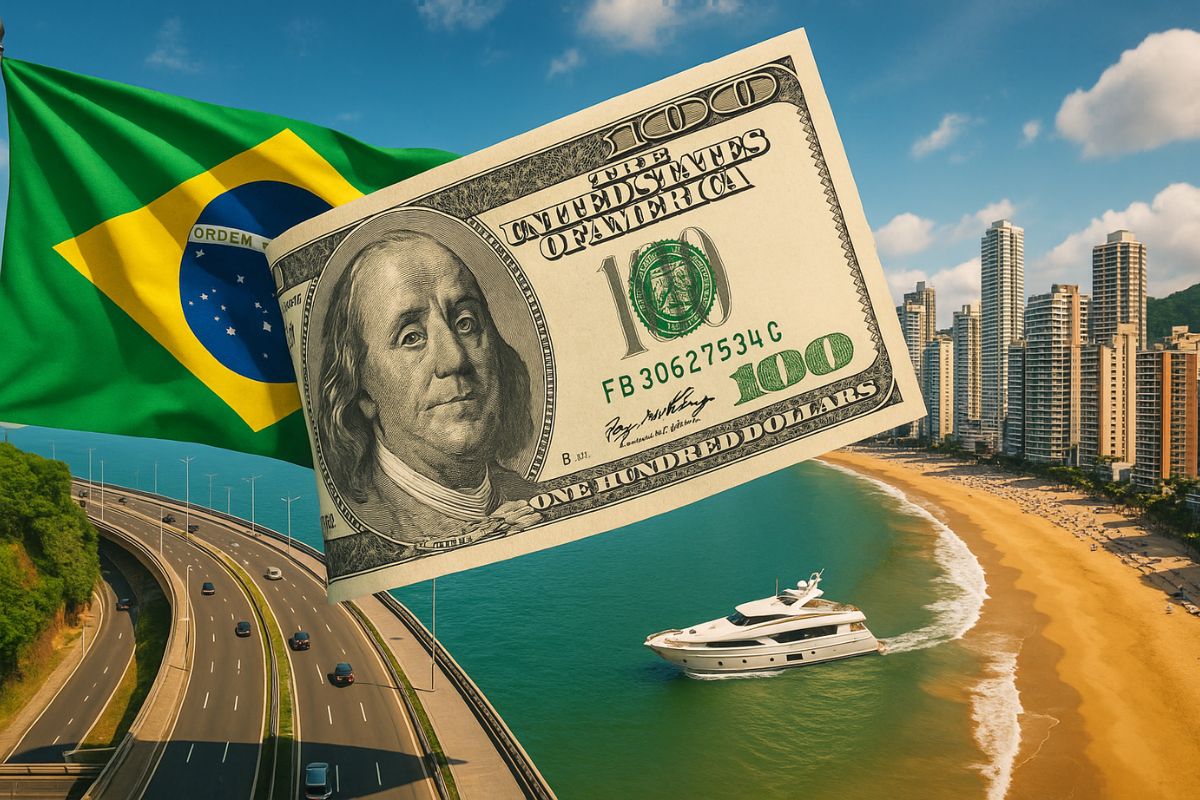
The former Brazilian province that once fought for independence now leads a quiet economic revolution. Uruguay, with just over 3.4 million inhabitants, has become one of the most sought-after destinations for billionaires and large investors, attracted by favorable tax policies, a high standard of living, and rare institutional stability in South America.
Since 2020, the Uruguayan government has adopted aggressive measures to attract foreign capital, offering income tax exemption on investments for 11 years for those who invest in the country or purchase high-end properties. This strategy has transformed the country into a financial and cultural haven, with Punta del Este establishing itself as the most luxurious resort on the continent.
An Economic Model That Attracts the Super-Rich
The Uruguayan tax program is one of the most competitive in the southern hemisphere.
-
College Dropout Turned Window Cleaner Builds $1 Million Cleaning Business with Subscription Model After 18 Years of Door-to-Door Work

-
North Korean Soldier Risks Crossing One of the World’s Most Dangerous Borders, Detained in South Korea

-
Stingless Bee Honey from Brazil Can Cost Up to $120 a Liter, Surprises with Flavors of Wood, Citrus, and Even Cheese
-
Woman Claims to Have Spotted a Technical Pattern in Recent FIFA Tournaments, Predicts Possible World Cup Winner


Foreigners can establish tax residence by investing as little as US$ 500,000 in real estate or US$ 2.2 million in local businesses, in addition to staying in the country for only 60 days a year.
For more than a decade, they remain exempt from taxation on income earned abroad, and after that, they pay a fixed rate of 12%.
This policy has attracted magnates from Latin America and Europe. Marcos Galperín, founder of Mercado Livre, and David Vélez, CEO of Nubank, have already moved part of their operations to the country.
Both cite the combination of public safety, infrastructure, and legal predictability as decisive factors for the move.
Uruguay has become synonymous with stability in a region marked by volatility.
Quality of Life and Indices That Rival European Countries
The appeal of Uruguay goes beyond taxation.
The country ranks 48th in the global Human Development Index (HDI), with a score of 0.862, classified as “very high.”
It also leads the happiness ranking in South America, according to the UN, surpassing neighbors like Chile, Argentina, and Brazil.
These indicators reflect solid education, low inequality, and universal access to health and efficient public services.
The sense of safety on the streets, urban cleanliness, and digital governance reinforce the image of a modern and reliable country.
For those seeking stability and discretion, it is a new Latin American Monaco, but with a Portunhol accent.
Punta del Este: Showcase of Luxury and Symbol of the New South American Elite
At the heart of the Uruguayan coast, Punta del Este is the epicenter of this new landscape.
The resort blends cinematic beaches, sophisticated architecture, and exclusive nightlife, attracting millionaires, artists, and entrepreneurs from around the world.
On one side, Praia Mansa, with calm waters and blue sea; on the other, Praia Brava, known for the sculpture “La Mano,” a postcard of the country.
Here, luxury properties, international resorts, and gated communities with European standards concentrate, in addition to one of the largest private marinas in Latin America.
The Beverly Hills of Punta del Este district is home to mansions surrounded by pine trees and galleries like the Ralli Museum, which exhibits Latin American art and maintains free entry part of the year.
The city is the visual translation of Uruguay’s new economic power.
Gastronomy, Culture, and High-End Tourism
The Uruguayan charm also reveals itself in culture and gastronomy.
The traditional parrilla — beef grill — is a national symbol, as is the chivito, a gourmet sandwich that combines steak, cheese, and ham in versions ranging from classic to contemporary.
Gastronomy has become a pillar of tourist attraction, alongside wines and rural routes that combine luxury and simplicity.
In addition to the beaches, Colônia do Sacramento, a city recognized as a world heritage site by UNESCO, preserves cobblestone streets and colonial mansions that evoke the Luso-Spanish past.
Casapueblo, a work by artist Carlos Páez Vilaró, has become one of the most photographed places on the continent.
The slow, sophisticated, and sustainable lifestyle reinforces Uruguay’s status as one of the most balanced countries in the post-pandemic era.
From Brazilian Province to Stable Power
The current Uruguayan success gains even more symbolism when looking back at the past. Between 1821 and 1828, the country was officially a province of the Empire of Brazil, under the name Cisplatina Province.
After conflicts with Argentina and Portugal, Uruguayans proclaimed independence and consolidated a stable political model, based on solid institutions and respect for legality.
Almost two centuries later, what was once a disputed territory has now become a reference for prosperity and quality of life in Latin America.
The contrast between its colonial past and present economic high standards reinforces the country’s transformation trajectory.