






 Portuguese
  Spanish
  4 min of reading
  0 comments



China’s Army Report Details Strategies to Hack U.S. Naval Systems, Overload Radars, and Infiltrate Essential Communication Networks in Possible Future Conflicts.
In recent years, the rivalry between China and the U.S. has escalated to increasingly concerning levels. The recent revelation of a specific list of U.S. naval targets, disclosed by the Chinese Army, adds a new chapter to this dispute. According to reports, the list details how the People’s Liberation Army (PLA) could neutralize U.S. maritime forces in a future conflict scenario.
While alarming, this disclosure offers important insights into the advancement of China’s electronic warfare strategies and their possible global impacts. But what does this list really mean? And how could it affect the military balance in the Pacific?
What Is the Target List Disclosed by the Chinese Army?

The report, published in the state magazine Defence Industry Conversion, was prepared by Mo Jiaqin, an electronic countermeasures specialist from the People’s Liberation Army. The list includes U.S. naval radars, sensors, and communication systems as main targets.
-
Israel finds Hezbollah militarized tunnel over 200 meters long under village, with 4 missile launch shafts, 12 chambers, anti-tank missiles, drones, and weapons depots at a depth of 25 meters.

-
Ukraine launches largest drone attack on Moscow since 2022, Russia claims to have intercepted nearly 200 aircraft near the capital, Kapotnya refinery targeted again, and offensive reignites alert about war reaching the Russian energy heart just a few kilometers from the Kremlin.

-
Truck drivers, freight, and fines from 2022 take center stage in politics: Chamber approves MP with amnesty, mandatory tracking by CIOT, million-dollar penalties, and new minimum wage for those who spend more than 24 hours on the road.

-
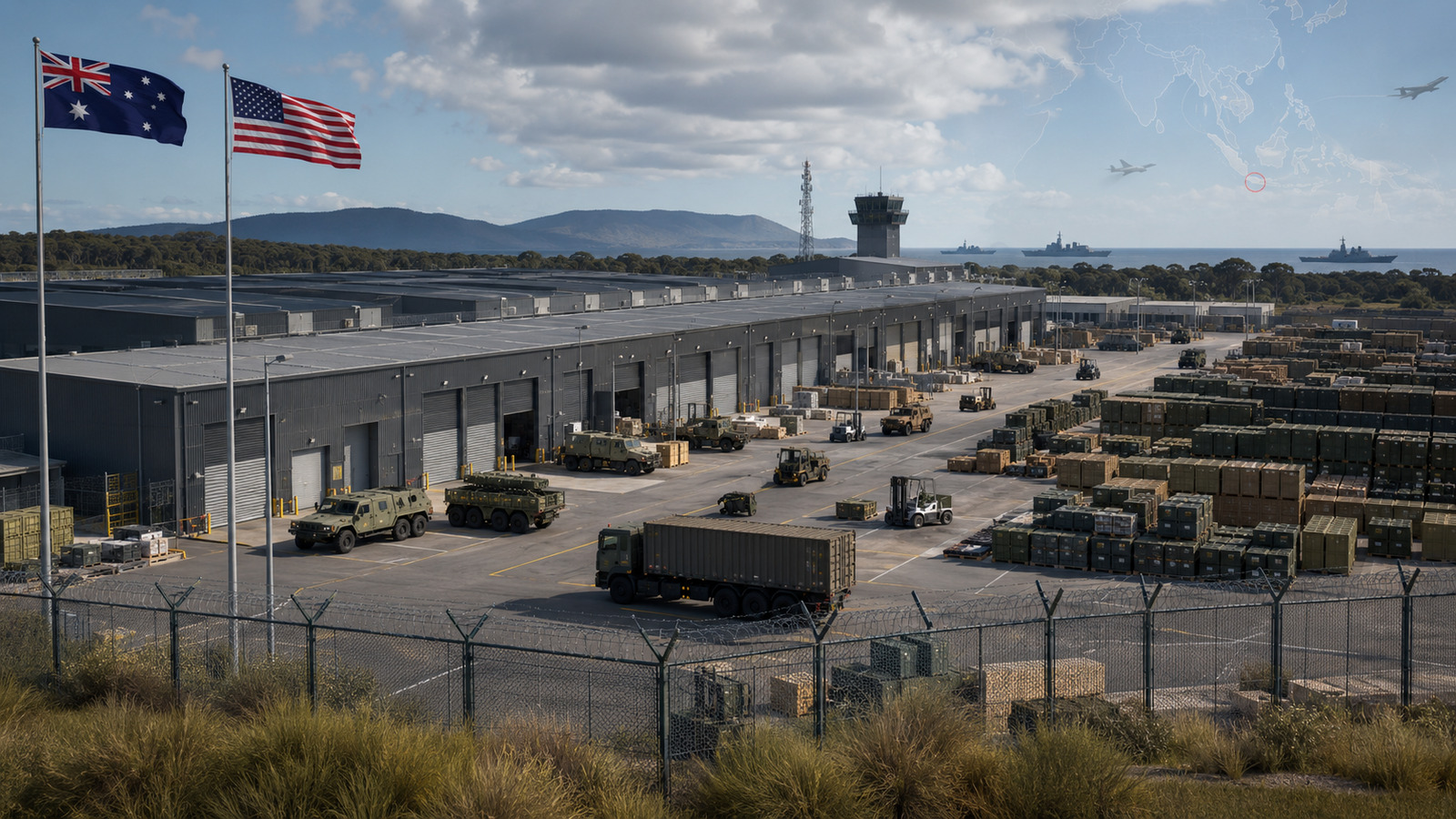
China off the radar: US plans mega $30 million weapons depot in Australia, out of reach of most Chinese missiles, with full capacity expected by 2028



This publication details strategies to weaken the Navy’s Cooperative Engagement Capability (CEC) system. This system is essential for real-time information sharing between ships and other units, ensuring that the fleet operates in an integrated and coordinated manner.
The choice of these targets reveals a critical point: the focus of the Chinese Army is not on physical attacks but on electronically disrupting the operational capability of naval forces.
The list disclosed by the Chinese Army includes 15 critical U.S. naval targets, focusing on radars, sensors, and communication systems. These targets are part of the Cooperative Engagement Capability (CEC) system, which is fundamental for the integrated operation of the U.S. naval fleet.
The main elements of the list are:
- Advanced Detection Radars
- Maritime Sensor Systems
- Long-Range Communication Antennas
- Data Transmission Systems
- Electronic Warfare Control Centers
- Naval Monitoring Satellites
- Integrated Wireless Communication Networks
- Access Points to the CEC System
- Information Processing Centers
- Command and Control Ships
- Missile Guidance Systems
- Maritime Signaling Emitters
- Encrypted Communication Links
- Phased Array Radar Systems
- Real-Time Fleet Support Infrastructure
The report suggests that the Chinese Army could exploit vulnerabilities in these systems through hacking, false signals, and network overloads, compromising the U.S. capability to coordinate its maritime operations in an electronic warfare scenario.
How Does the Chinese Army Intend to Attack U.S. Naval Systems?
According to Jiaqin’s report, the strategy is to use hacking and overload the systems with false signals and continuous access requests. This would create genuine operational chaos, leading to temporary communication shutdowns.
The CEC system, a key component of the U.S. Navy, would be infiltrated by mimicking “correct signals,” allowing the Chinese to access the network as if they were part of the American fleet. This infiltration method could generate misinformation or even disable critical parts of the naval operation.
To simplify, imagine a radar network like an orchestra: if someone alters the notes on the sheet music or cuts off the sound of the instruments, the music becomes chaotic and dissonant. This is the objective of the Chinese Army’s strategies.
The Vulnerability of Radars and CEC Systems
The report also highlights the vulnerabilities of these systems, mainly due to their reliance on wireless communications. When an opposing force uses electronic interference, disconnection of links can occur easily.
This means that, in an electronic warfare scenario, excessive use of wireless networks can be a trap. The Chinese Army is betting precisely on this weakness to compromise American operations.
What Is the Impact of This Revelation on China-U.S. Relations?
The disclosure of this list heightens geopolitical tensions between the two powers. Experts claim this is a calculated move to show strength and send a clear message to the United States. This type of publication is rarely accidental: it serves as a veiled warning.
The list raises concerns about how much China has advanced in its electronic warfare capabilities. With increasingly sophisticated systems, the U.S. Navy will need to bolster its security and seek alternatives to address the exposed vulnerabilities.
The international community is also watching closely, as a potential conflict between China and the U.S. could have global repercussions.
Is the Chinese Army Sending a Message?
Why was this list disclosed now? Some see the publication as an intimidation tactic. Revealing details of its strategies can help destabilize the opponent without physical conflict occurring.
In modern warfare, information is as valuable as weapons. Showing that one possesses the necessary knowledge to attack the adversary’s vital systems may be enough to deter aggressive actions.
By exposing this information, the Chinese Army seems to be betting on this logic. At the same time, the report could serve as a warning for the U.S. to strengthen its electronic defenses.
The disclosure of this list of U.S. naval targets by the Chinese Army is more than just a simple technical report: it is a direct message on the global geopolitical chessboard. In a world where electronic warfare is growing exponentially, China is making it clear that it is prepared to exploit the weaknesses of its main rival.





-

1 person reacted to this.