






 Portuguese
  Spanish
  2 min of reading
  0 comments


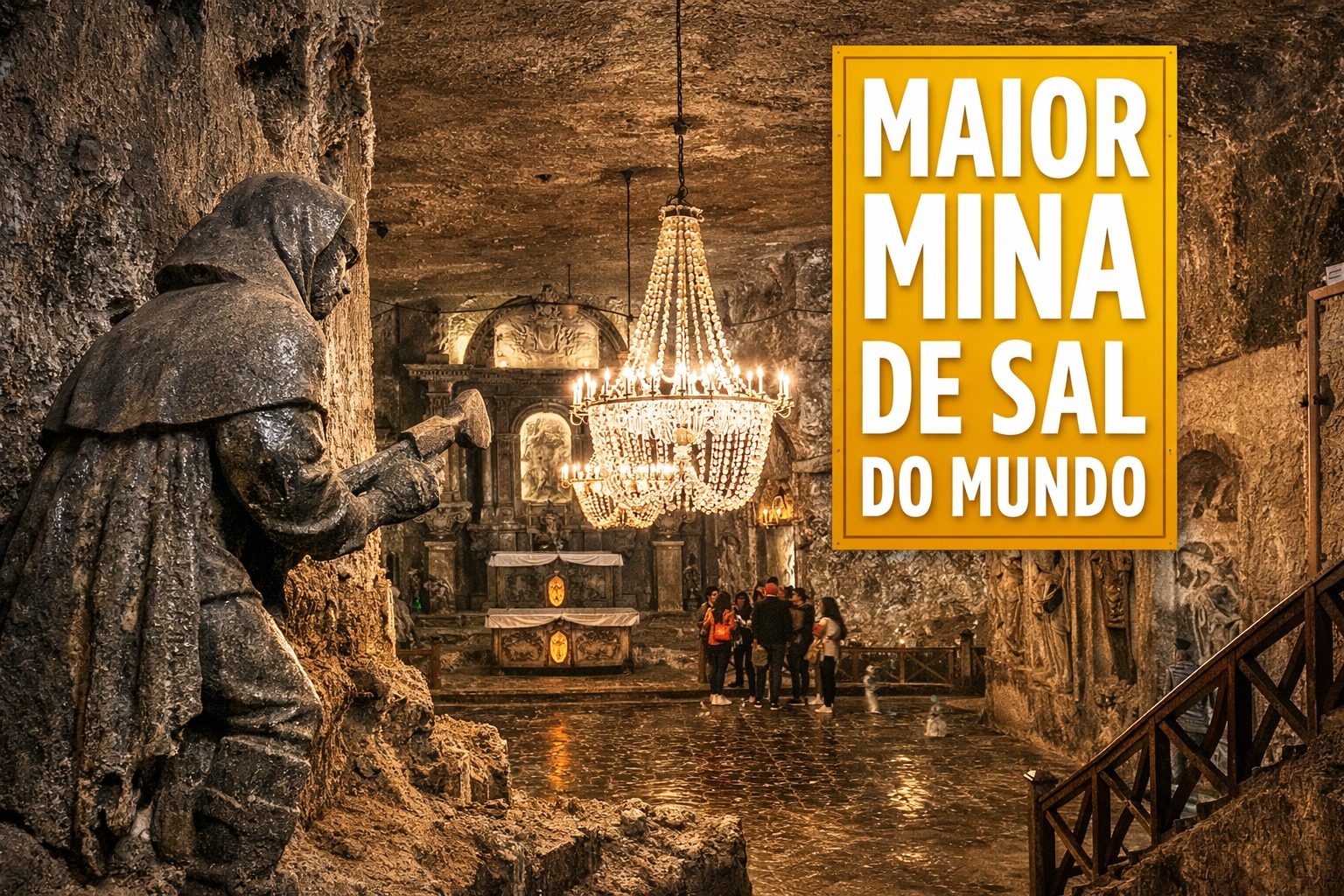
Explored Since The 13th Century, The Wieliczka Salt Mine Sustained The Ancient Polish Kingdom, Shaped Its Economy, Endured Centuries Of Extraction, And Today Survives As A World-Renowned Historical, Touristic, And Cultural Heritage
Poland houses the largest salt mine in the world, located in Wieliczka, near Krakow, explored since the 13th century, whose economic and historical significance shaped the ancient Polish kingdom and remains relevant today.
Known as white gold, the mine began operations in the 13th century and quickly became one of the main sources of revenue for the ancient Polish kingdom.
For centuries, salt production accounted for a significant portion of the crown’s revenue, establishing the complex as a central element of the national economy and history.
-
Illegal betting money may change destination: government announces freezing of funds, contacts banks, and explains how the amounts could finance the fight against organized crime after a billion-dollar operation in three states.

-
Two sisters, aged 12 and 13, collected cans for a year, set up a lemonade stand without any help, and turned $236 into a business that has already grossed $65,000.

-
Central Bank changes rule that lasted decades and allows dollar and euro accounts in Brazil for exporters and companies with foreign capital, eliminating the need for currency exchange in some transfers starting in October 2026.

-
The Central Bank ends the R$ 500 limit on Pix by approximation, and account holders will be able to use the general Pix limit to pay any amount by tapping their phone on the terminal starting in October 2026.




Over time, mining activity advanced through various underground levels, reaching depths of over 300 meters and expanding the structural complexity of the site.
The expansion included support areas, internal transportation routes, chapels, and underground restaurants, transforming the mine into a unique place in the European context.
It is estimated that throughout its history, 26 shafts were opened, although only a small portion is currently accessible to visitors.

From Productive Peak To Historical Preservation
Exploration peaked after World War II, when new techniques enhanced extraction and kept the mine as an important economic asset.
However, from the second half of the 20th century onward, production entered a gradual decline, reflecting technological and economic changes in the mining sector.
In 1996, extraction activities were suspended, marking the definitive end of the traditional productive function of the underground complex.
In 1978, the site was granted UNESCO World Heritage status, recognizing its unique historical, cultural, and architectural value.
Tourism, Experiences, And Current Uses
Today, the former mine operates as a multifunctional tourist complex, with routes that showcase the history of mining and underground life.
Visitors can explore chapels adorned with salt sculptures and participate in more intense experiences, such as the so-called miners’ route.
In addition to tourism, the mine also has relevance in the health sector, utilizing its microclimate rich in mineral salts in a controlled manner.
Currently, only a fraction of the extensive underground labyrinth is open to the public, preserving historical areas and ensuring the conservation of heritage.
The transformation from a productive center to a cultural space reflects decades of adaptation, preservation, and historical appreciation of the site, keeping alive a centuries-old Polish heritage, despite minor adjustments in writing and historical record.
With information from Correio do Estado.





-

-

5 people reacted to this.