Portuguese
  Spanish


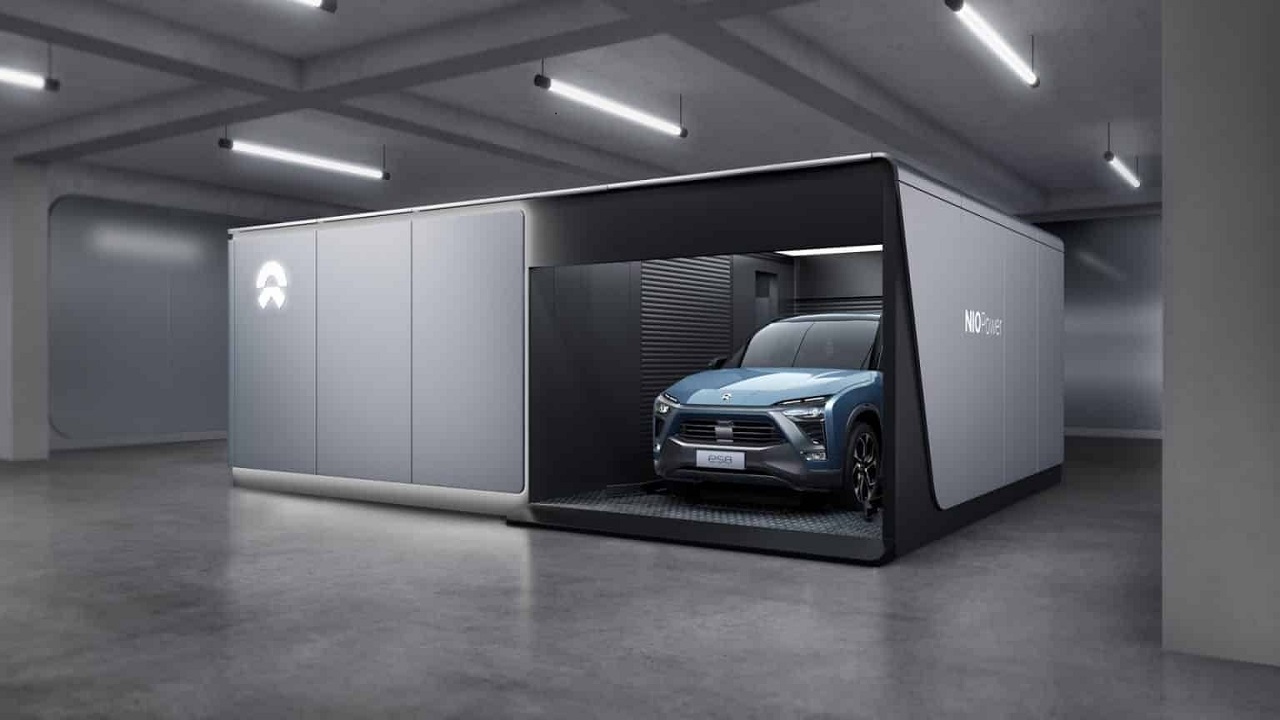

The Chinese Company NIO Just Announced New Technology for Electric Car Battery Swapping. The Idea is That Battery Swapping Matches the Refueling Time at Gas Stations.
NIO, one of China’s giants in the electric car segment, recently announced that it will expand its network of battery swapping stations in the Asian country. More than 2,300 points will be installed in busy locations. It is worth noting that an electric car can take hours to recharge, depending on the charging technology used.
To overcome this impasse, NIO intends to facilitate battery swapping for its models, significantly reducing the downtime at charging stations.
Understand How the Technology That Recharges Electric Cars in Seconds Works
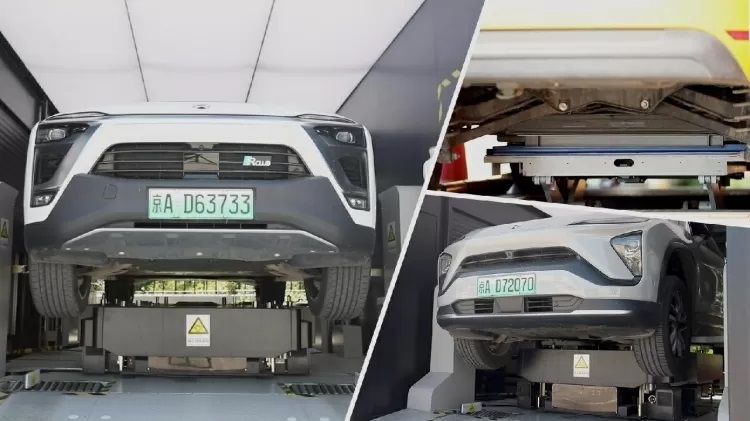
Basically, the stations take less than 5 minutes to extract the spent unit from beneath the vehicle and install a new pack. During the swap, the car is slightly moved sideways to ensure proper alignment of the new battery.
-
End of an era in Brazil: beloved sedan by Brazilians is discontinued despite having a 2.0 engine with 151 hp, CVT transmission, 466-liter trunk, and up to 650 km of range.

-
New Law Proposal in Brazil Could Heavily Penalize Drivers: Dangerous Overtaking May Become a Serious Offense with Fines Increased Tenfold and a 12-Month License Suspension; Update on 2026 Progress

-
Electric Revolution: Watts W125 Motorcycle Offers 160 km Range, 90 km/h Speed, and Affordable Price Starting at $3,000
-
General Motors Replaces Over a Thousand Workers with 50 Cobots at Electric Vehicle Plant, UAW Union Criticizes Move Amid Industry’s Automation Push



The car is then lifted around 50 millimeters for the installation of the new component, which is pre-charged to 90% to prolong the lifespan of the cells. According to Journalist Richard Ingram, ten laser-guided screws secure the battery to the vehicle with just a few clicks and taps.
Each NIO station has 13 batteries stored under controlled temperature conditions. Norwegian customers who choose not to purchase the package and subscribe to the company’s plan are entitled to two free swaps per month or the equivalent kWh of charging.
According to reports, when it was launched in mid-2021, the company charged 10 euros for battery swapping, plus 20 euro cents for additional kWh. By the end of the decade, the company plans to spread 5,000 battery swapping stations for electric cars across China, the USA, and Europe. One thousand stations will be installed outside its home country.
NIO Also Develops Ultracharger
According to NIO, the battery swapping technology can already be considered faster than waiting for the refueling of a combustion vehicle at the station. The method also works in places that still do not support the installation of more powerful chargers.
For now, the main disadvantage is the maintenance cost. The system is not cheap for the company, which seeks to keep all stations operational and always stocked with charged batteries.
Last year, the electric car company launched its own network of ultrachargers. According to the company, the technology will be able to deliver up to 500 kW, surpassing rivals like GAC Aion with its 480 kW charger. The company’s product can generate a maximum current of 650 amperes.
Chinese Company Plans to Manufacture Its Own Batteries for Electric Cars
NIO has not yet stated how quickly the new technology could charge its electric cars, especially since none of them seem capable of operating with more than 90 kW currently.
The manufacturer plans to launch a solid-state battery package of 150 kWh for its models, allowing charging at 500 kW. Thus, it will be possible to utilize the full potential of the charger, which at the time suggested that NIO made the announcement to keep up with its Chinese rivals in the near future.
In addition to the electric car charger, Xpeng also launched its ultracharger of 480 kW at that time, putting pressure on NIO to match this power.
NIO announced that, starting in 2024, it will begin manufacturing its own 800-volt electric car batteries, which are likely not to be solid-state. However, these components should produce much faster charging speeds than the current ET7 or ES8.
Source: Tilt UOL