Portuguese
  Spanish


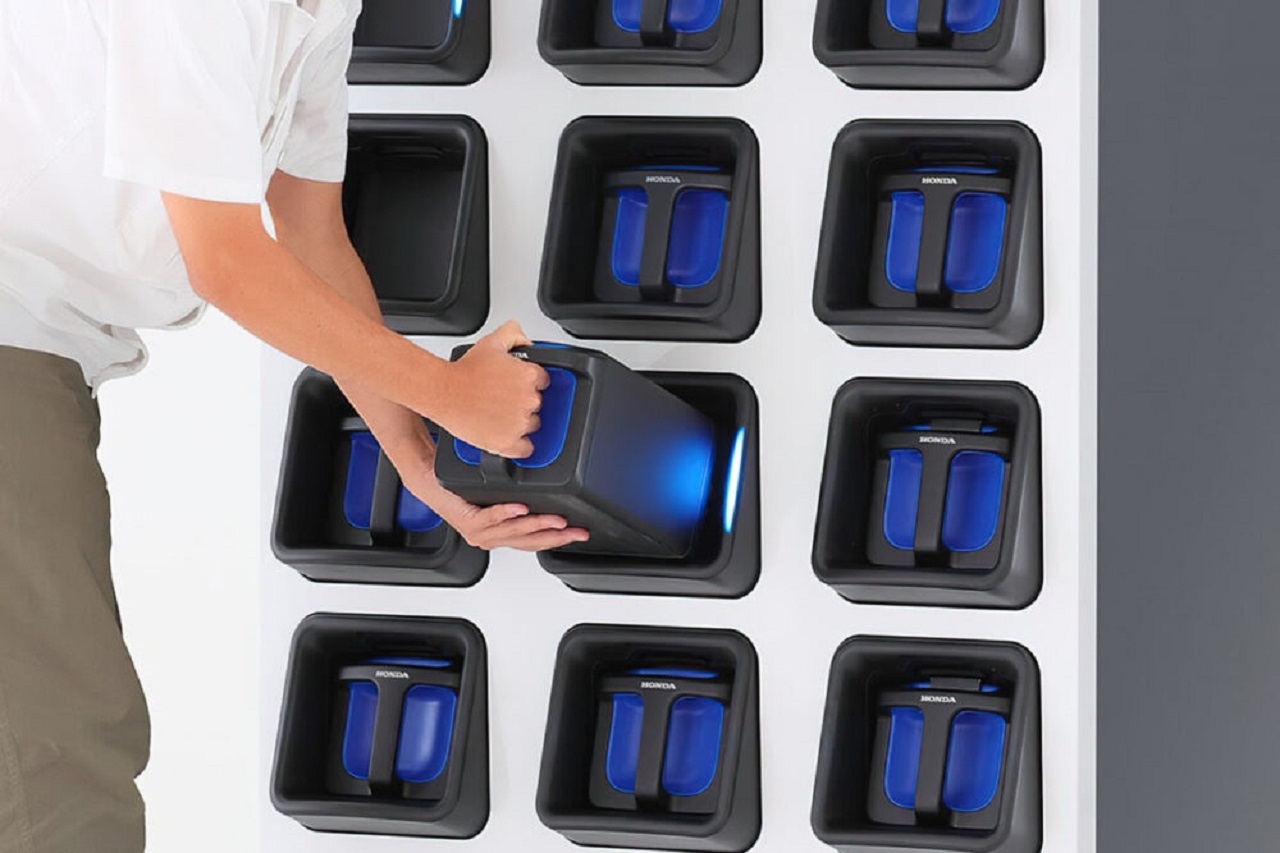

Honda Announces This Friday (4) That It Has Officially Entered the Battery Swap Market Focused on All Types of Electric Vehicles.
Honda is officially in the battery swap market focused on electric vehicles. The company now has the Honda Power Pack Exchanger and the battery swap station from the Japanese automaker, which begins sales and commissioning, for now – at home, with the delivery of the first unit to Gachaco, a consortium dedicated to battery swapping.
Honda Develops External Design That Becomes Part of the Urban Landscape
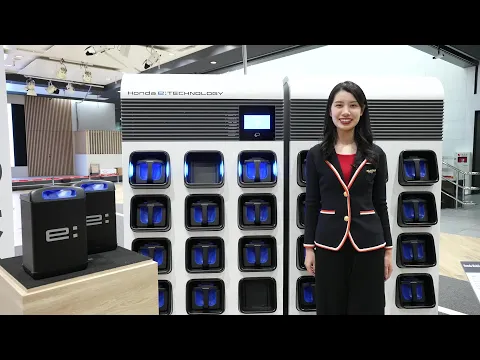

Now, mass production of the infrastructure will begin, capable of simultaneously charging multiple Honda Mobile Power Pack units. Honda promises a quick and easy swap for those riding motorcycles or using other products compatible with its batteries.
The Japanese company claims to have developed a station with an external design that perfectly fits the urban landscape and utilizes the Power Pack Cloud system to centrally manage all information required for a battery sharing service in the cloud.
-
End of an era in Brazil: beloved sedan by Brazilians is discontinued despite having a 2.0 engine with 151 hp, CVT transmission, 466-liter trunk, and up to 650 km of range.

-
New Law Proposal in Brazil Could Heavily Penalize Drivers: Dangerous Overtaking May Become a Serious Offense with Fines Increased Tenfold and a 12-Month License Suspension; Update on 2026 Progress

-
Electric Revolution: Watts W125 Motorcycle Offers 160 km Range, 90 km/h Speed, and Affordable Price Starting at $3,000
-
General Motors Replaces Over a Thousand Workers with 50 Cobots at Electric Vehicle Plant, UAW Union Criticizes Move Amid Industry’s Automation Push



The upper and lower compartments have an angle that makes the insertion and removal of the battery easier. The Honda electric vehicle device starts charging as soon as the battery is inserted into the slot. The user only needs a card to start recharging. The cloud system handles everything, from the replacement to the payment.
Honda Begins Testing Battery Sharing Service
According to the company, ease and convenience of use have been sought for both battery swap service companies for electric cars and users of electrified mobility products. Through its subsidiary Power Pack Energy India (HEID), the company has already started a battery sharing service for electric taxis and tricycles that utilize the battery swap station.
The tuk-tuks are also the protagonists of the second-life initiative launched by Audi, which uses accumulators at the end of the first cycle to power small electric vehicles in the Indian subcontinent.
It is important to note that in July, Honda closed a new partnership with the Japanese retailer MUJI to create an electric scooter. The outcome of the partnership between the companies was the MS01, which combines a modern appearance, minimalist elements, and a black-and-white finish.
The Japanese automaker paid special attention to the vehicle’s motorization, while Kenya Hara, a bicycle designer, was responsible for the vehicle’s visual design. The designer was inspired by Honda’s H-type bicycle and other innovations.
Company Launches Electric Motorcycle Capable of Reaching 25 km/h
The body of the scooter has a U shape, and its small bicycle pedals create easy access for cyclists of all sizes. Additionally, the Honda electric vehicle features a standard handlebar with basic features designed to keep costs low and operation simple.
The scooter does not have additional functionality beyond that of a standard electric bicycle. The 17-inch (approx. 43 cm) tubeless tires are used to handle all types of road conditions. The vehicle comes equipped with a 400W motor, allowing it to reach a maximum speed of 25 km/h, equivalent to 16 miles (25.75 km).
The electric model from Honda also features lithium batteries of 48V/20Ah, and a regenerative EBS system that offers a range of 65 km, equivalent to 41 miles (65.98 km), on a single charge.
This way, the Honda electric scooter needs to be charged only once or twice a week, capable of supporting hours of riding each day as long as the driver limits their trips and movements within the city.