





 Portuguese
  English
  Spanish
  4 min of reading
  9 comments


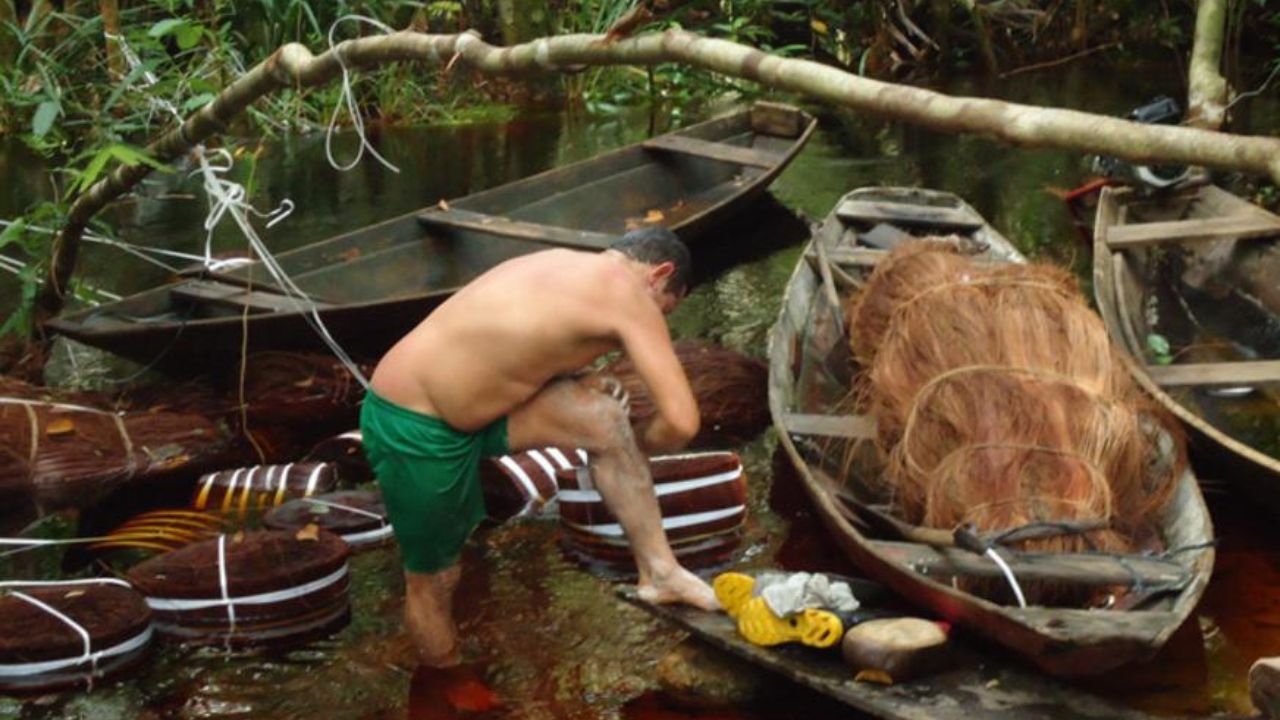


Families Live Isolated in the Amazon Interior, Depend on Piaçaba to Survive, and Face Extreme Journeys, Low Income, and Total Absence of the State.
Reaching the families who live from the collection of piaçaba in the heart of the Amazon is not just a long journey. It is a physical and symbolic displacement away from urban, connected, and institutionalized Brazil. The journey begins in São Paulo, continues with a four-hour flight to Manaus, and from there, abandons any notion of speed or predictability. The rest of the way is made by rivers, days and nights entirely navigating through one of the most isolated regions of the country.
The final destination is Barcelos, in the interior of Amazonas. Although it has just over 25,000 inhabitants, the municipality occupies a gigantic area, almost the size of England, and extends into zones where the State practically does not reach. It is in this territory that the piaçabais are found, forest areas where entire families spend months living from the extraction of the plant fiber that supplies brooms, brushes, and utensils used throughout Brazil.
An Economy That Depends on the River, the Forest, and Human Resilience
From Barcelos, navigation follows for about 650 kilometers up the Rio Negro, often during the early morning hours. The boat becomes a home, dormitory, and kitchen for more than ten days. There are no fuel stations, technical assistance, or reliable electricity.
-
The 2026 World Cup has barely started, and the sticker album has already become a craze with 980 stickers, 48 teams, and a cost that is alarming.

-
Amid the United States’ economic blockade, China delivers 15,000 tons of rice to Cuba as part of a 60,000-ton donation personally approved by Xi Jinping. The package includes 80 million dollars and solar panels for hospitals.

-
For around 200 reais, anyone can buy a kit and have a chip implanted between their fingers to replace cards, keys, badges, and even medical information in case of a hospital emergency.
-
A 600-meter hill in the interior of Santa Catarina hides a volcanic past of almost 600 million years. The Morro do Garrafão in Corupá may have been an ancient extinct volcano, and science now confirms what the residents have always suspected.


Any mechanical failure becomes a serious issue, as when the generator on the vessel breaks down, and the crew spends days navigating in the dark, unable to charge basic equipment.
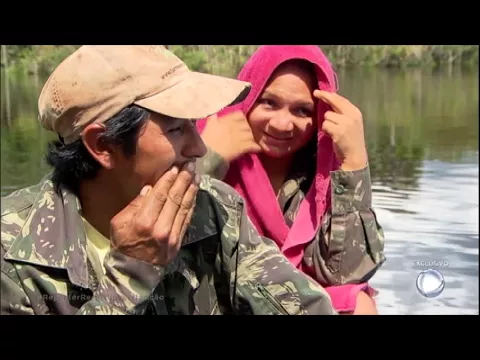

Upon leaving the Rio Negro, the route ascends through tributaries such as the Huaracá and Curuduri, narrower, darker rivers surrounded by thick forest. It is there that the piaçabeiros live.
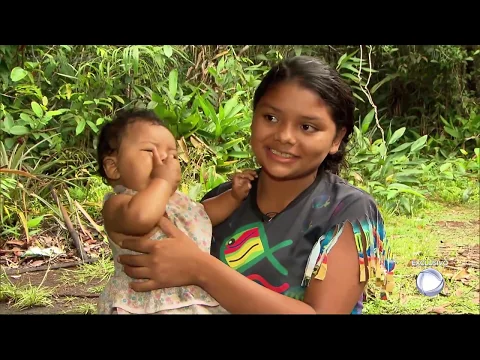
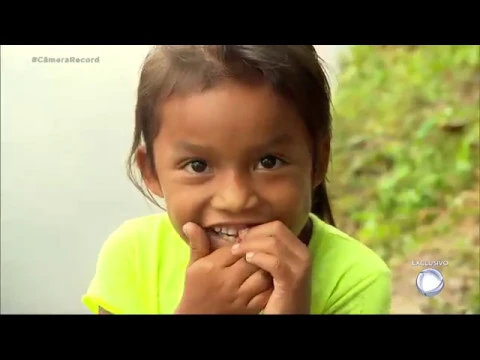
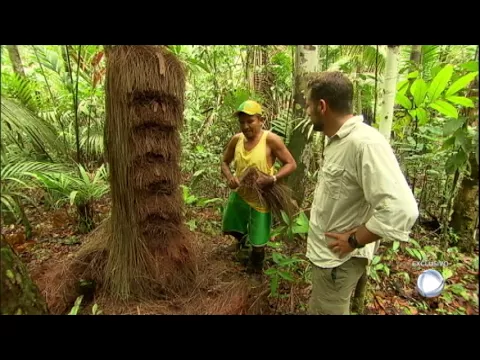
Couples, families, and even newborns remain isolated for months in makeshift camps, cutting, transporting, and tying up piaçaba logs that can weigh over 80 kilos each.
The work starts early, around six in the morning, and only ends in the late afternoon. Often, after more than ten hours of heavy physical labor, the group still needs to unload the production and sleep by the riverbank, exposed to rain, insects, and wild animals.
Low Earnings and a Cycle of Dependency That Repeats
Despite the hardship of the work, the income is extremely low. A couple encountered during the journey reported that, after three months of extraction, they earned about R$ 7,000. However, more than half of that amount was consumed by what is called “rancho,” the food purchased in advance — in addition to fuel expenses.
In the end, they were left with just over R$ 2,000, an amount that needs to be shared between two people and spread over months of work. In practice, this means a monthly income of less than half the minimum wage per person.
This model creates a structural dependency. Workers receive advances to buy food, return to the forest in debt and spend months trying to “settle the account.”
The isolation prevents direct negotiation, labor inspections, or alternative income options. It is an economy that operates at the margins, sustained by extreme physical effort and the absence of options.
Life Without Light, Assistance, and Guarantees
In the piaçabais, there is no electricity, sanitation, health posts, or structured schools. The water used for drinking, cooking, and bathing comes directly from the river. Nighttime lighting depends on lanterns or small generators, when they work.
During the journey, a group of piaçabeiros was seen crossing a storm with a newborn on board. There were no appropriate life jackets, safe shelter, or any kind of medical support. Such situations are not exceptions; they are part of the routine.
Even those who are just passing through feel the risks. After the breakdown of three generators, the team had to abandon the main boat and travel in a support boat in search of help, with batteries running low and navigation limited by the total darkness of the forest.
The Piaçaba That Sustains Distant Cities
The fiber extracted under these extreme conditions travels a long way until it reaches urban centers. After being tied up, the logs float awaiting larger boats to transport them back to Barcelos. From there, they go to processing centers and, subsequently, to the national market.
The final consumer hardly imagines that a common broom starts its journey in makeshift camps in the middle of the jungle, carried manually by barefoot workers stepping on submerged branches and dark waters, unaware of what lies beneath their feet.
An Invisible Brazil Within Its Own Country
The reality of families living off piaçaba exposes a deep contrast within Brazil. On one side, connected cities, digital services, and fast consumption. On the other, communities that have lived for decades practically out of the reach of the State, dependent on the river, the forest, and their physical resilience to survive.
This is not just geographic isolation but institutional isolation. The absence of basic infrastructure, labor inspections, and specific public policies keeps these families trapped in a subsistence model that has changed little over time.
Meanwhile, the boat continues down the river, the generator finally works again, and the journey goes on. For those passing through, the isolation lasts a few days. For those living there, it lasts a lifetime.




Dios los Bendiga 🙌🙏💖
“Pará quem passa, o isolamento dura alguns dias. Para quem vive ali ele dura uma vida inteira”.
(Sem comentários).
O 3º BIS do EB encontra-se em Barcelos, com certeza dão atendimento médico e odontológico a sua população.