Portuguese
  Spanish


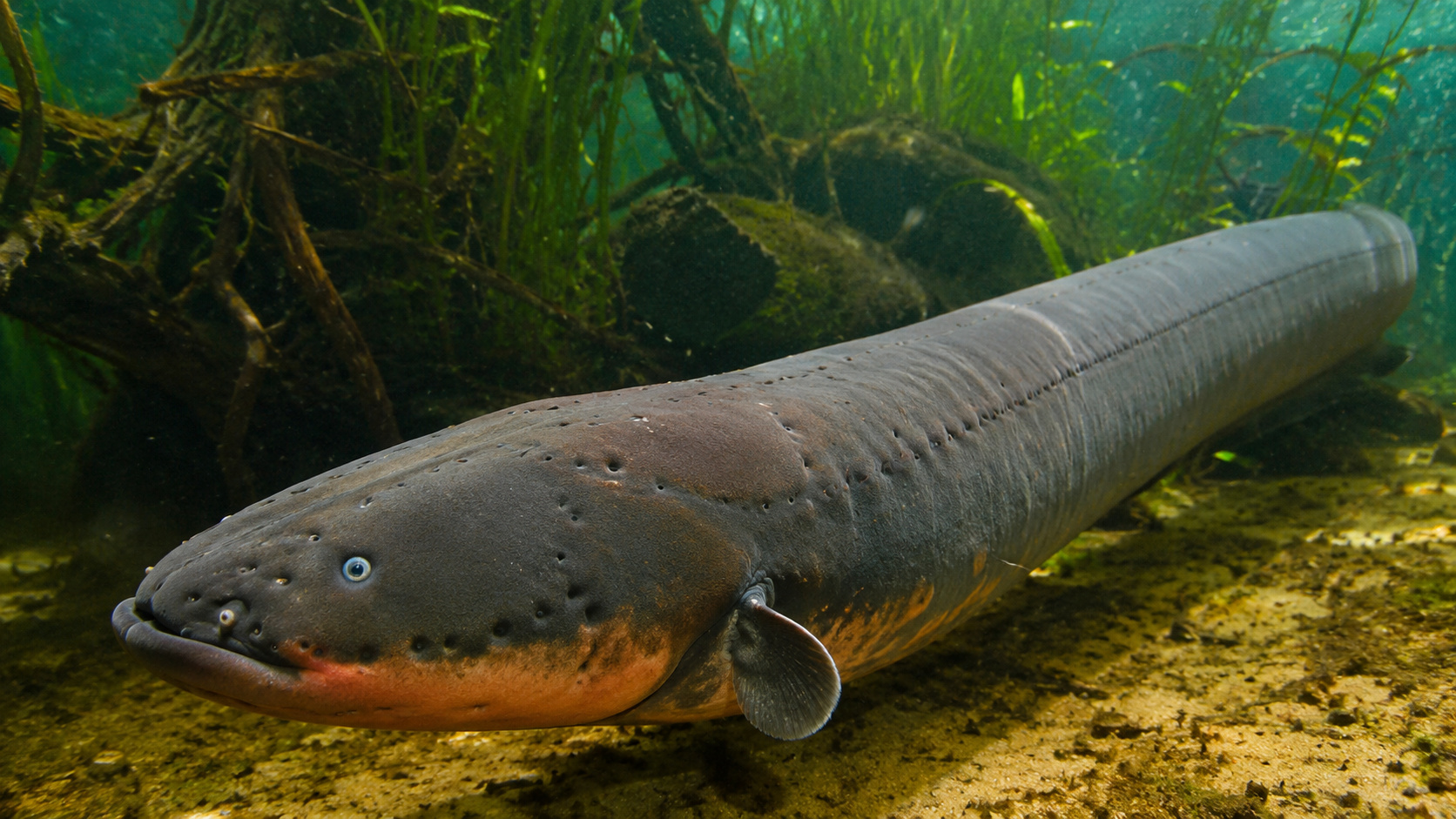


Discover how scientists explain the bioelectricity of Amazon electric fish and the role of cellular ions in the generation of extreme discharges.
The electric fish of the Amazon are among the most impressive organisms ever studied by science. Capable of producing an electric discharge of up to 860 volts, these animals use thousands of specialized cells to generate energy, locate prey, communicate, and survive in low-visibility environments. The functioning of this biological system sparks the interest of scientists worldwide and inspires new research in areas such as medicine, electronics, and energy storage.
According to information from Revista Amazônia on June 10, the combination of bioelectricity, cellular ions, and evolutionary adaptations has transformed the electric eel into a true living battery. Besides revealing the secrets of nature, studies on these animals help to understand mechanisms that may influence future technologies.
Scientists reveal the mechanism behind the 860 volts
Scientists have discovered that electric fish can produce an extremely powerful electric discharge thanks to structures called electrocytes. These cells are modified versions of muscle cells that have lost their movement function and have started to act as energy generators.
-
From Hotel Porter to CEO: Brazilian Entrepreneur Leads Travel Agency Serving Major Brands and Generating $270 Million in Revenue

-
From Selling Cleaning Products in Vans to Over 300 Franchises: Entrepreneur Targets $30 Million by Expanding into Professional Cleaning Services and Laundries

-
China Constructs 5.1 km Undersea Highway in Dalian Bay, Reducing Travel Time from 1 Hour to 5 Minutes
-
Massive Transporters Otto and Lore Move ALMA Radio Telescope in Chile’s Atacama Desert



When the animal’s brain sends a command, thousands of electrocytes spring into action simultaneously. This synchronized activation creates an electric pulse capable of reaching up to 860 volts, one of the highest voltages ever recorded in a living organism.
In the Amazon, this capability represents an important advantage for hunting, defense, and navigation in dark and murky rivers.


The anatomy of electric fish resembles a giant battery
Unlike most fish, the electric eel dedicates a large part of its body to energy production. Studies indicate that approximately 80% of its anatomy is occupied by three specialized organs:
- Main organ
- Hunter’s organ
- Sachs’ organ
These structures store thousands of electrocytes organized in parallel columns. The arrangement resembles the principle used in modern batteries, where small individual charges add up to form a much greater power.
Scientists consider this organization one of the most sophisticated examples of bioelectricity found in nature.
How cellular ions create a record-breaking electric discharge
The secret of the electric discharge lies in the behavior of cellular ions present in the membranes of electrocytes.
At rest, each cell maintains an electric charge difference between its interior and the external environment. When the release of acetylcholine occurs, the neurotransmitter responsible for initiating the process, the cell membrane channels open rapidly.
At this moment:
- Sodium cellular ions enter the cell
- Potassium cellular ions exit the cell
- Electrical polarity is inverted
- The accumulated energy is released
Individually, each electrocyte produces only a small voltage. However, when thousands of these cells are activated simultaneously, the microvoltages add up, generating an electric discharge capable of traveling through the water in fractions of a second.

Bioelectricity transforms dark rivers into three-dimensional maps
Visibility in many areas of the Amazon is extremely reduced due to the presence of sediments, suspended vegetation, and organic matter.
To overcome this challenge, electric fish use bioelectricity as a navigation tool. The Sachs organ produces continuous low-intensity pulses, generally below 10 volts.
These signals create an electric field around the animal’s body. When an object crosses this area, a change in the water’s electrical resistance occurs.
Receptors distributed across the skin detect these changes and send the information to the brain. In this way, the fish can identify obstacles, locate food, and avoid threats without relying on vision.
Scientists discover an invisible communication network in the Amazon
Research shows that electric fish use electricity for much more than hunting and defense.
Scientists have observed that these animals can exchange information through specific electrical signals. The frequency and intensity of the pulses vary according to the situation.
In the Amazon, this system functions as a kind of invisible language, allowing individuals of the same species to transmit messages related to:
- Reproduction
- Territoriality
- Recognition among individuals
- Social hierarchy
This form of communication reinforces the complexity of bioelectricity developed over the course of evolution.
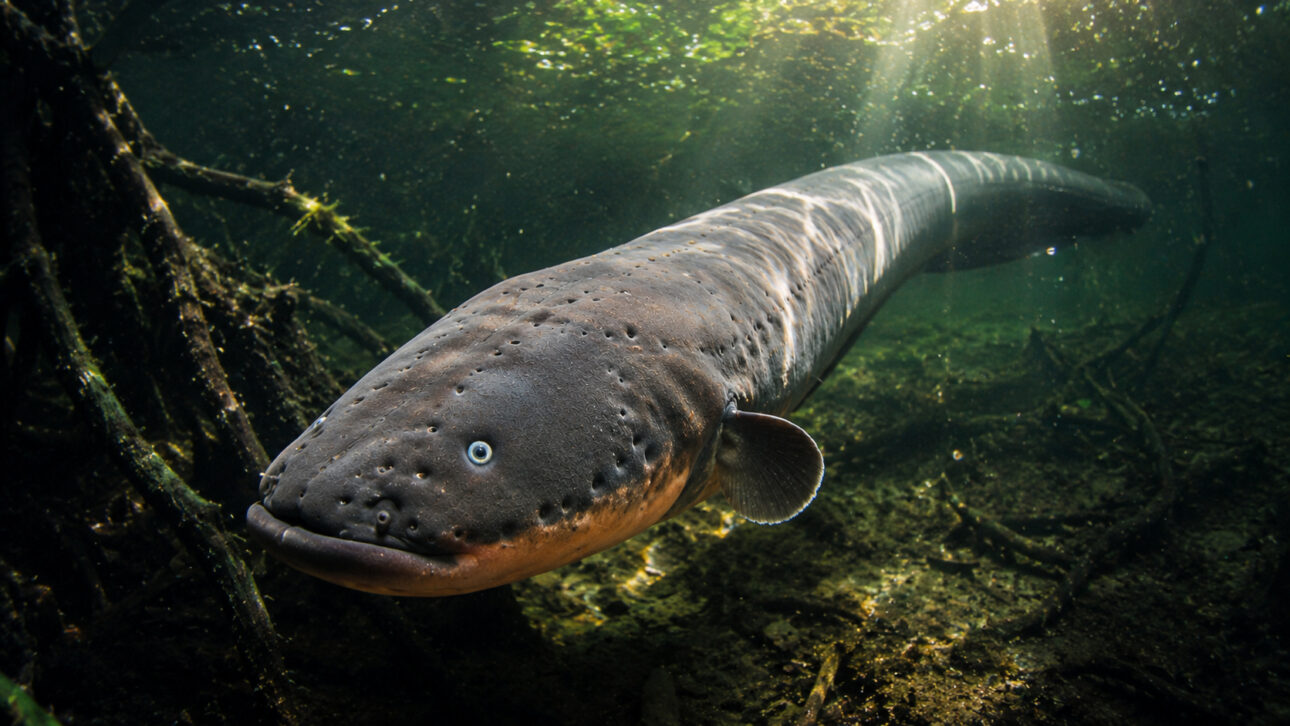
Collective hunting strategies surprise researchers
For a long time, it was believed that electric fish were exclusively solitary predators.
However, recent observations have revealed cooperative behaviors in certain regions of the Amazon. In some cases, dozens of individuals work in groups to corral entire schools of fish into shallow areas.
When the encirclement is complete, synchronized discharges are fired.
The result is an intense collective electric discharge that causes involuntary muscle contractions in the prey, making any escape attempt difficult. Many end up jumping out of the water or remain temporarily immobilized.
This behavior has caught the attention of scientists for demonstrating a degree of cooperation rarely associated with these animals.
Natural protection against their own electric shock
One of the most common questions about electric fish is how they manage to survive their own discharges.
The answer lies in highly efficient evolutionary adaptations. The vital organs are concentrated in a small anterior region of the body, protected by connective tissues and layers of fat that act as natural insulators.
Additionally, the skin produces a thick mucus that reduces the return of electric current to the internal tissues.
Thus, the electric discharge follows the path of least resistance, propagating through the water towards the target instead of returning to the organism of the emitter itself.
Cellular ions inspire new medical and energy technologies
The functioning of electrocytes arouses great interest among scientists specializing in biomimetics.
The mechanisms involving cellular ions are being studied for the development of innovative technologies, including:
- Flexible microbatteries
- Implantable biosensors
- Medical devices
- Energy sources for pacemakers
The efficiency observed in electric fish demonstrates how biological solutions can inspire technological advances capable of benefiting millions of people.
From Alessandro Volta to modern laboratories
The influence of electric fish on science is not recent.
In the late 18th century, reports from naturalists who explored the Amazon reached Europe describing the shocks produced by the electric eel. This information sparked the interest of Italian physicist Alessandro Volta.
Inspired by the principles observed in these animals, Volta developed the voltaic pile in 1799, considered the first electric battery in history.
Although modern technology is much more advanced, the idea of adding small energy-generating units has a conceptual relationship with the structure found in electrocytes.
Why protecting the Amazon also means protecting science
The survival of electric fish depends directly on the conservation of Amazonian ecosystems.
Mercury pollution, deforestation of riverbanks, alteration of natural flood cycles, and fragmentation of watercourses represent growing threats to these species.
Scientists warn that the loss of these habitats may compromise not only regional biodiversity but also valuable research related to bioelectricity, cellular ions, and the development of new technologies.
Electric fish demonstrate how the Amazon continues to be one of the greatest sources of biological knowledge on the planet. With discharges of up to 860 volts, advanced electrical navigation systems, and extremely sophisticated cellular mechanisms, these animals represent an extraordinary example of evolution’s ability to create efficient solutions. Preserving these ecosystems means ensuring that future generations of scientists can continue exploring discoveries capable of transforming science, medicine, and technology.