Portuguese
  Spanish


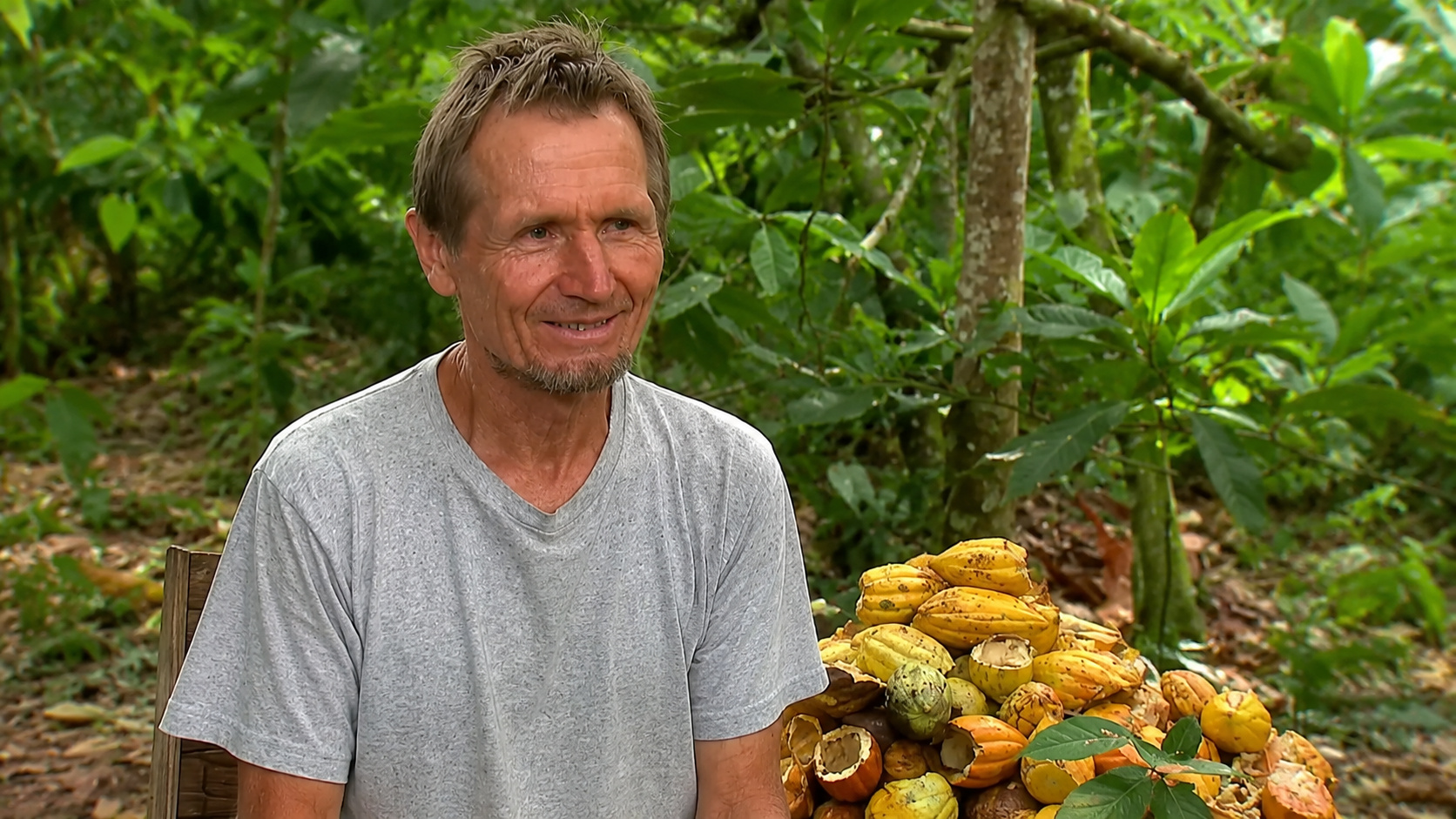

Ernst Götsch transformed the Olhos d’Água Farm, in Piraí do Norte, Bahia, into a reference for agroforestry, recovered water, and cocoa without chemical products
In the 1980s, Swiss farmer Ernst Götsch arrived in southern Bahia after studying and working with genetic improvement in Switzerland and spending time in Costa Rica. In Piraí do Norte, he bought a cheap, degraded area with an uninspiring name: Fugidos da Terra Seca Farm.
The property had been deforested, exploited with cassava and pig farming, and then abandoned. The biggest problem was water. However, old documents revealed another name for the place: Olhos d’Água Farm.
From then on, Ernst began work on vegetation restoration and soil recovery with agriculture associated with the forest. The system, known as syntropic agriculture, began to combine agricultural production, trees, organic matter, and permanent soil cover.
-
Study Reveals 40% of Brazilians Unaware of Circular Economy, Highlighting Challenges in Sustainable Transition and Recycling Expansion

-
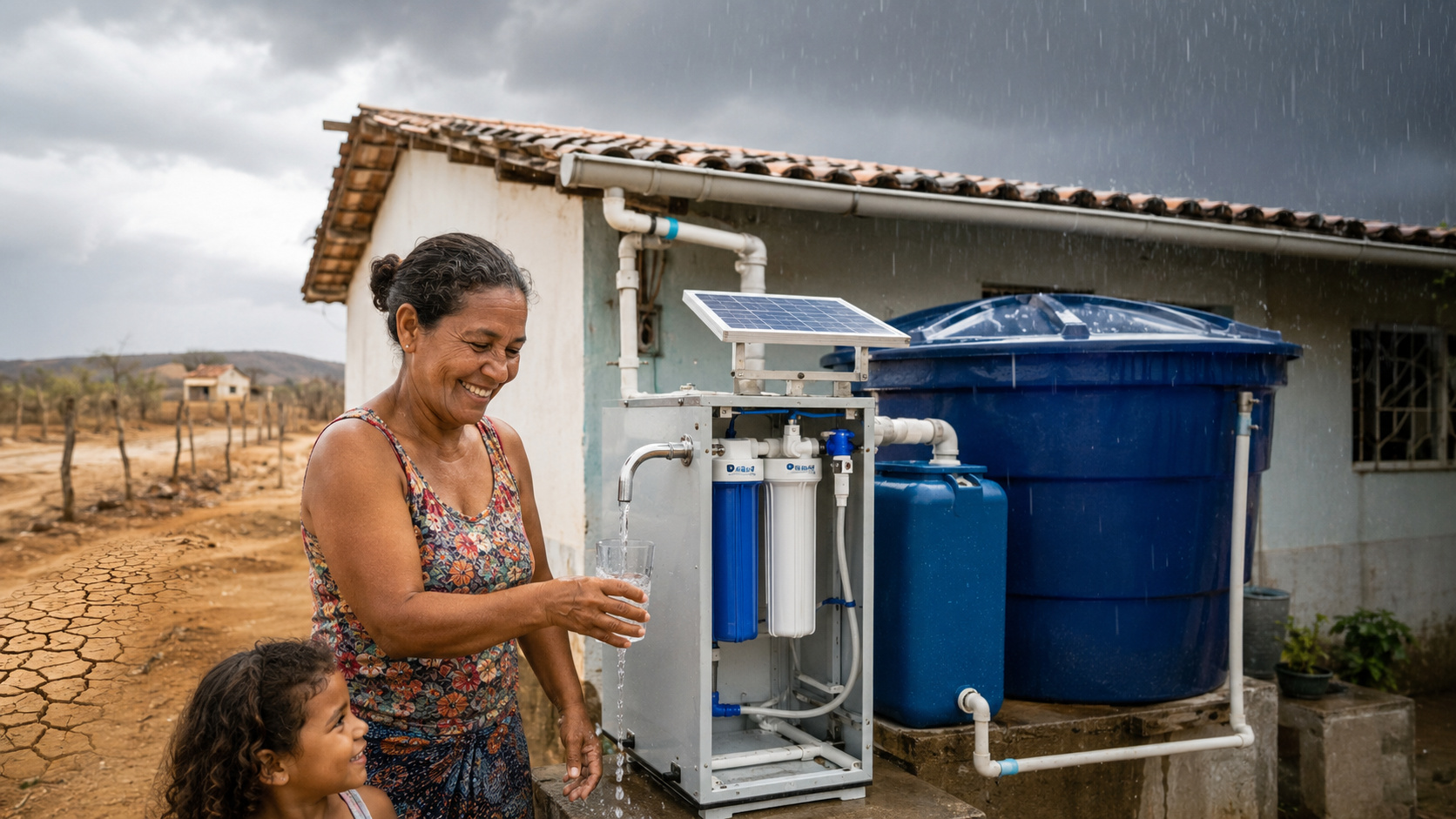
Brazilian Startup Converts Rain into Potable Water Without Chemicals, Surpasses 10 Million Liters, Joins $1.2 Million Project to Bring Simple Technology to Drought-Stricken Areas in Northeast Brazil
-
Brazilian Company Innovates with Treated Water Billing Model, Surpassing 10 Billion Liters and Offering Up to 40% Savings for Large Industries
-
Scientists Discover Antidepressants in Hammerhead Sharks, Revealing Hidden Path of Pharmaceuticals to Brazilian Waters



Dry farm turned into productive forest with recovered springs and streams in Bahia
With the advance of vegetation, the landscape changed profoundly. Trees, plants, and crops began to occupy previously degraded areas. Additionally, springs and streams reappeared within the property.
During a prolonged drought in the 1990s, the farm’s streams remained active in the region, according to the presented account. Therefore, residents began to associate the persistence of water with the work done by Ernst.
In the community, he became known as the “rain-calling gringo.” The nickname arose because the restored forest seemed to have attracted more water to the environment.
Cited studies explain that plants help water circulate. They draw moisture from the soil, carry this water to the leaves, and transpire. Thus, they contribute to cloud formation and environmental balance.


Syntropic agriculture recovered degraded soil without the use of chemical products
In 1996, when reports were made on the farm, the landscape had already changed considerably. Even so, there were areas in the process of recovery.
At the time, the work included clearing the brush, incorporating organic matter into the soil, and planting pineapples in holes. Around them, seeds of fruit trees, such as cocoa and jackfruit, were placed.
The pineapple helped in soil recovery. Moreover, the strategy dispensed with lime correction and followed a central rule advocated by Ernst: no chemicals.
According to the farmer, previous experiences with chemical fertilizers did not work. Therefore, the farm began to follow a path based on soil cover, species diversity, and the strength of the forest itself.
Cocoa grown in agroforestry became worth four times more than conventional
Ernst even imagined a chocolate factory, but stated that he never had enough capital to realize the plan. Even so, he achieved another important result: a cocoa considered of very high quality.
The product gained value because of the cultivation without chemicals and special fermentation. According to the family’s account, conventional cocoa was sold for about R$ 95 to R$ 105 per arroba.
Meanwhile, the cocoa produced on the farm reached R$ 30 per kilo, equivalent to approximately R$ 450 per arroba. Therefore, the price reached about four times the conventional value.
The production, however, remained modest. The mentioned harvest was 3,500 arrobas per year, concentrated in just 5 hectares near the headquarters.
Children followed part of the ideas in the production of cocoa, banana, and energy bars
Ernst’s influence also reached the family. Older children started running a neighboring farm, producing cocoa and bananas without pesticides.
The system was still more conventional, in a cabruca area, with large and old trees shading the cocoa. Even so, the intention was to advance towards something more similar to the model developed by their father.
The main source of income came from energy bars made with banana and cocoa. The product had no added sugar, only the natural sweetness of the banana.
The production was still small, with about 600 bars per month. However, production was expanding.
Almost 500 hectares were left as forest in a kind of ecological debt
Although cocoa generated income, Ernst did not intensively exploit the entire farm. Of the almost 500 remaining hectares, a large part was maintained as forest.
For him, given the reduction of forests in the country, that area needed a “refreshment.” The decision was also defined as a way to pay humanity’s ecological debt.
Ernst spent at least half of his time away from the property. During this period, he provided consulting, taught courses, and spread the ideas of syntropic agriculture.
According to the Götsch Agenda, the Olhos d’Água Farm receives students interested in learning the principles of the system. EcoAgri also presents Ernst as a reference in the use of the technique since 1984, in Piraí do Norte.
The history of the farm shows how a degraded area, once marked by water scarcity, came to gather forest, springs, valued cocoa, and agricultural production. More than a change of landscape, the case became an example of agriculture linked to environmental recovery.