Portuguese
  Spanish


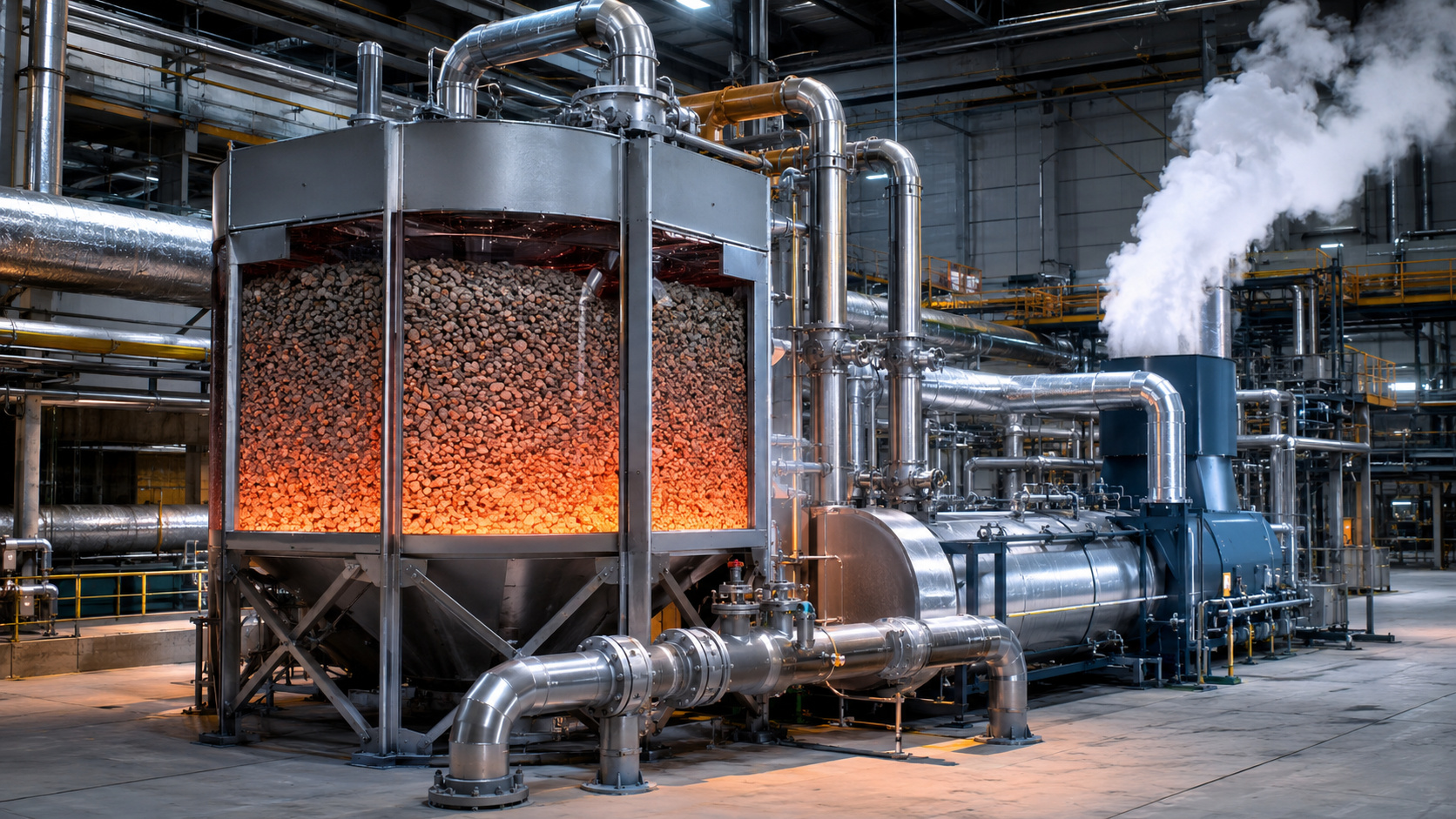

Israeli company created thermal battery with crushed rocks to store heat, generate clean industrial steam, and reduce the use of natural gas in industry.
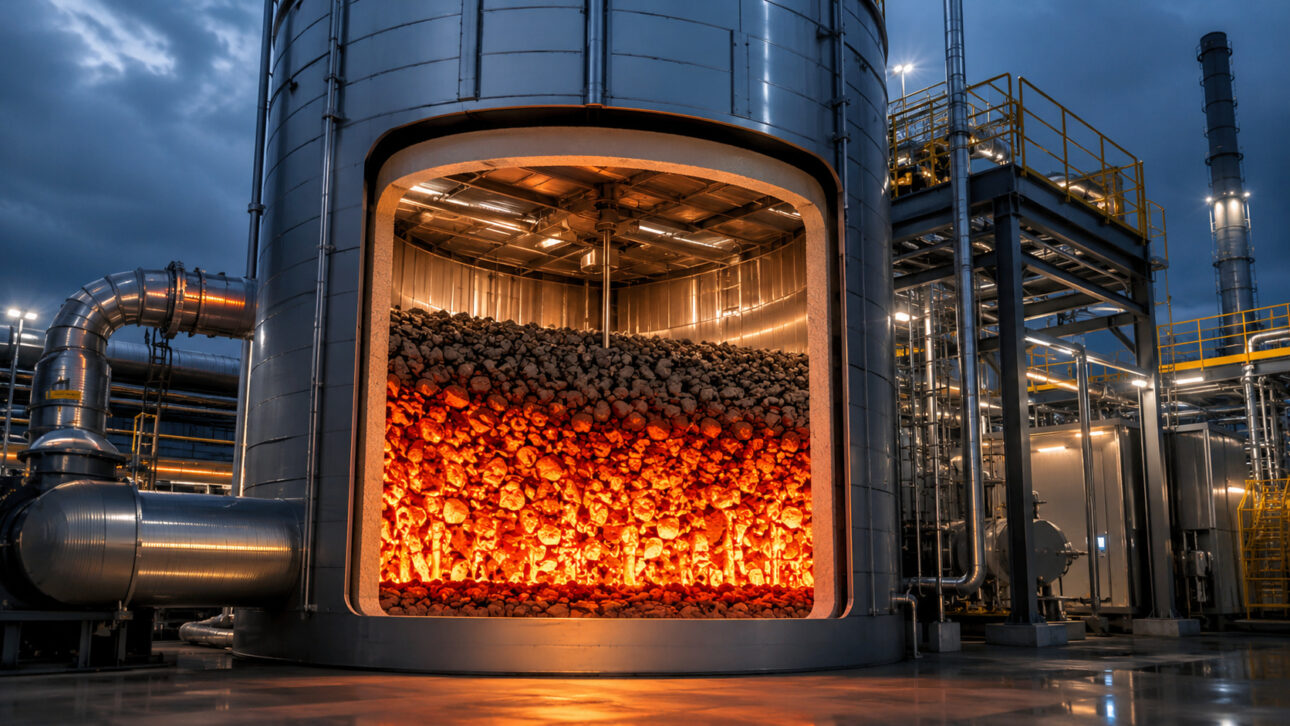
Instead of following the lithium battery path, an Israeli company decided to bet on heat as a form of energy storage. Brenmiller Energy developed the bGen, a thermal battery that uses crushed rocks to store energy and then deliver it as industrial steam, hot water, or hot air in production processes.
The proposal targets one of the most challenging aspects of the energy transition: replacing heat generated by natural gas, fuel oil, and coal in industrial sectors that require continuous thermal supply. Instead of burning fossil fuels, the system can be charged with renewable electricity, grid energy during lower-cost periods, or even waste heat from industrial processes.
How the thermal battery with crushed rocks stores heat for industrial use
Unlike an electrochemical battery, the bGen does not store electricity directly. The system converts electrical energy into heat and transfers this heat to a solid medium made of crushed rocks, kept inside highly insulated modules.
-
In the Desert, Nearly Black Solar Panels Could Trigger Rainfall: Researchers Aim to Prove if Heat from Solar Farms, Combined with Humid Winds and Artificial Dunes, Can Generate Clouds in Arid Regions

-
Electric Vehicle Repairs Cost 23% More, But the Battery Isn’t to Blame
-
China’s Solar Panel Installation in Desert Unintentionally Alters Soil, Moisture, and Vegetation Dynamics

-
China’s Plan to Prevent Giant Asteroids from Hitting Earth Involves Deep Nuclear Blasts and 20 Years of Preparation


When the factory needs thermal energy, water or another fluid passes through the system and receives this stored heat. From there, the installation can provide industrial steam, hot water, or hot air in a controlled manner, without relying on the direct combustion of fossil fuels at the point of consumption.
The company presents the technology as a solution aimed at the continuous operation of the industry, with thermal storage for hours or even days, depending on the project configuration. This allows shifting electricity use to cheaper or cleaner windows and using the heat later when the plant really needs to produce.
Abundant rocks replace critical metals and enhance the industrial appeal of the technology
One of Brenmiller’s main arguments is the choice of storage material. Instead of relying on lithium, nickel, or cobalt, the system uses crushed rocks, a much more abundant input with less exposure to the stresses of global critical mineral supply chains.
The company also claims that the technology was designed for long life in heavy industrial applications.
In institutional material, Brenmiller describes the bGen as a platform aimed at decarbonizing industrial heat with operational stability and the use of components suitable for high-demand manufacturing environments.


This positioning helps explain why the solution has gained traction in sectors that need not only electricity but firm, predictable, and large-volume heat. In practice, it is this type of demand that supports processes in food, beverage, paper, chemical, and other steam-intensive segments.
Tempo Project in Israel Became the Main Commercial Showcase for the Stone Battery
The most emblematic application of the technology today is at Tempo Beverages in Netanya, Israel. In the project, Brenmiller installed a system with 32 MWh of thermal storage, electric charging of 5.6 MW from solar photovoltaic energy and grid electricity, and delivery capacity of up to 14 tons of steam per hour at 7 bar.
According to the company, the system was designed to replace fossil boilers and generate process steam for the beverage factory.
Brenmiller itself states that the installation should mitigate more than 6,200 tons of carbon emissions per year, making the project a reference for industrial decarbonization based on clean heat.
The commercial advancement entered a new phase on June 1, 2026, when the company announced that the Tempo system had begun to provide steam during the commissioning phase. The company described the milestone as an important step to validate the platform under real industrial operating conditions.
Hospitals, plants, and factories in other countries also entered Brenmiller’s route
The expansion of technology was not restricted to the Tempo plant. On the official projects page, Brenmiller lists an installation at Wolfson Hospital in Holon, Israel, with 12 MWh of thermal storage, 2 MW of off-peak electric charging, and production of up to 5 tons of steam per hour at 7 bar.
The company also reports a project with Enel in Santa Barbara, Italy, with 24 MWh of thermal capacity, as well as a project by PPF in Dombóvár, Hungary, with 30 MWh and dispatch of saturated steam for process heat.

In Brazil, the company lists an installation by Fortlev in Anápolis, Goiás, with 4 MWh of thermal storage.
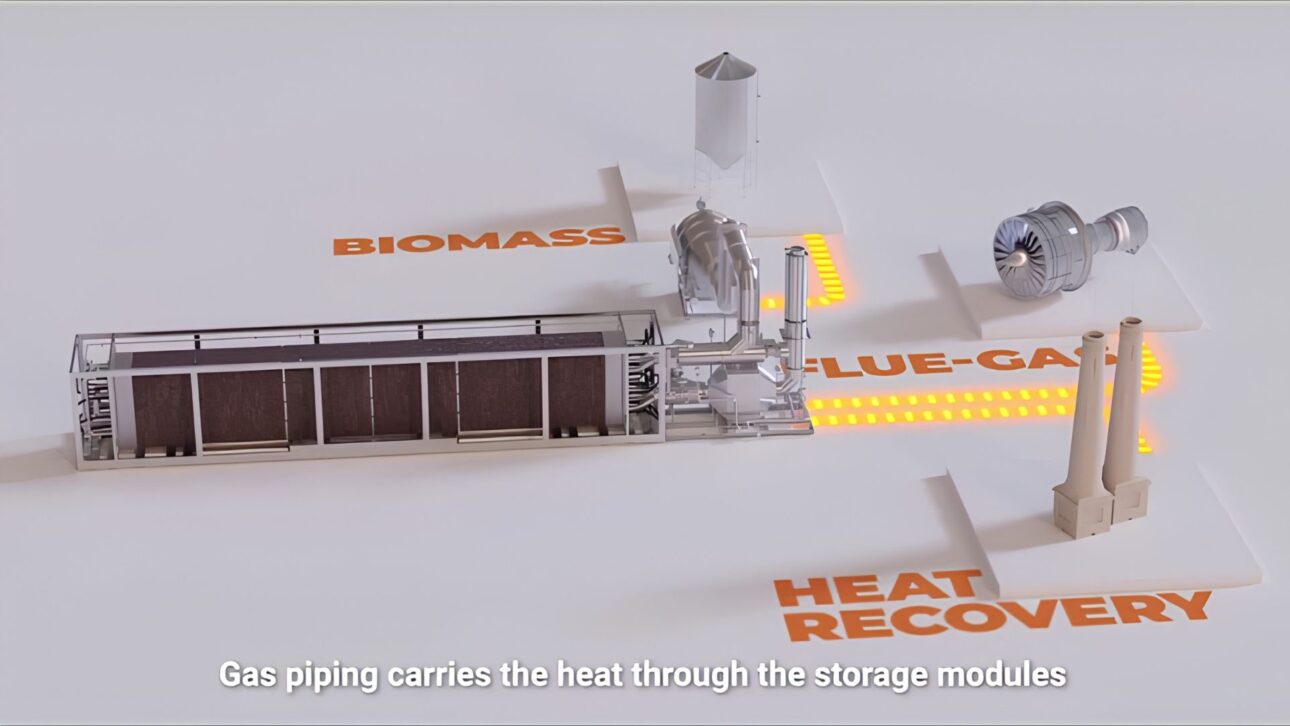
In this case, the system is charged with heat from biomass combustion gases and discharges hot air at 400 °C for industrial processing, showing that the technology can also be used for thermal recovery, not just for direct heat electrification.
Thermal battery attempts to cut dependence on natural gas in industrial heat
A large part of the world’s industry depends on steam for sterilization, heating, drying, and transformation of raw materials. Traditionally, this steam is produced in boilers powered by fossil fuels, which keeps energy costs high and makes it difficult to reduce emissions.
The logic of the thermal battery is to reverse this dependence. When renewable energy is available or cheaper electricity is on the grid, the system charges the rocks with heat. Later, this heat can be released on demand, allowing the factory to use steam without needing to burn fuel at that moment.
This arrangement has made the technology especially relevant in the debate on decarbonization of industrial heat, an area that usually receives less attention than the electrification of cars or the expansion of solar energy, but remains central to reducing emissions from heavy and manufacturing industries.