Portuguese
  Spanish


Reaqt bet on a “water toll” model for large operations, has already treated more than 10 billion liters, and says the format can reduce industrial clients’ bills by up to 40%.
The Brazilian company Reaqt is gaining attention by selling treated water as a service, in a model the company itself compares to a toll. The idea has already moved past the testing phase: more than 10 billion liters treated and savings of up to 40% on industrial clients’ bills, according to Exame.
The business targets large companies that need customized solutions for reuse and effluent treatment, without bearing the investment, operation, and maintenance of the structure. Among the mentioned clients are Suzano and Heineken, while the company projects reaching R$ 45 million in revenue by 2025.
Founded in 2013, the company started with the name Aquafix and is now headquartered in Vila Madalena, São Paulo. The operation is still lean, with about 40 employees, but gained traction after investments totaling R$ 101.5 million since 2021.
-
Scientists Discover Antidepressants in Hammerhead Sharks, Revealing Hidden Path of Pharmaceuticals to Brazilian Waters

-
Warm water hidden deep in the ocean has been moving towards Antarctica for 20 years, potentially accelerating glacier melting from below.
-
U.S. Offers Nearly $200,000 to Combat Invasive Mussels Threatening Waterways and Hydroelectric Plants
-
Cigarette Butts Pollute Brazilian Beaches, Sparking Debate on Coastal Environmental Protection Measures


The “water toll” became a business for large industries
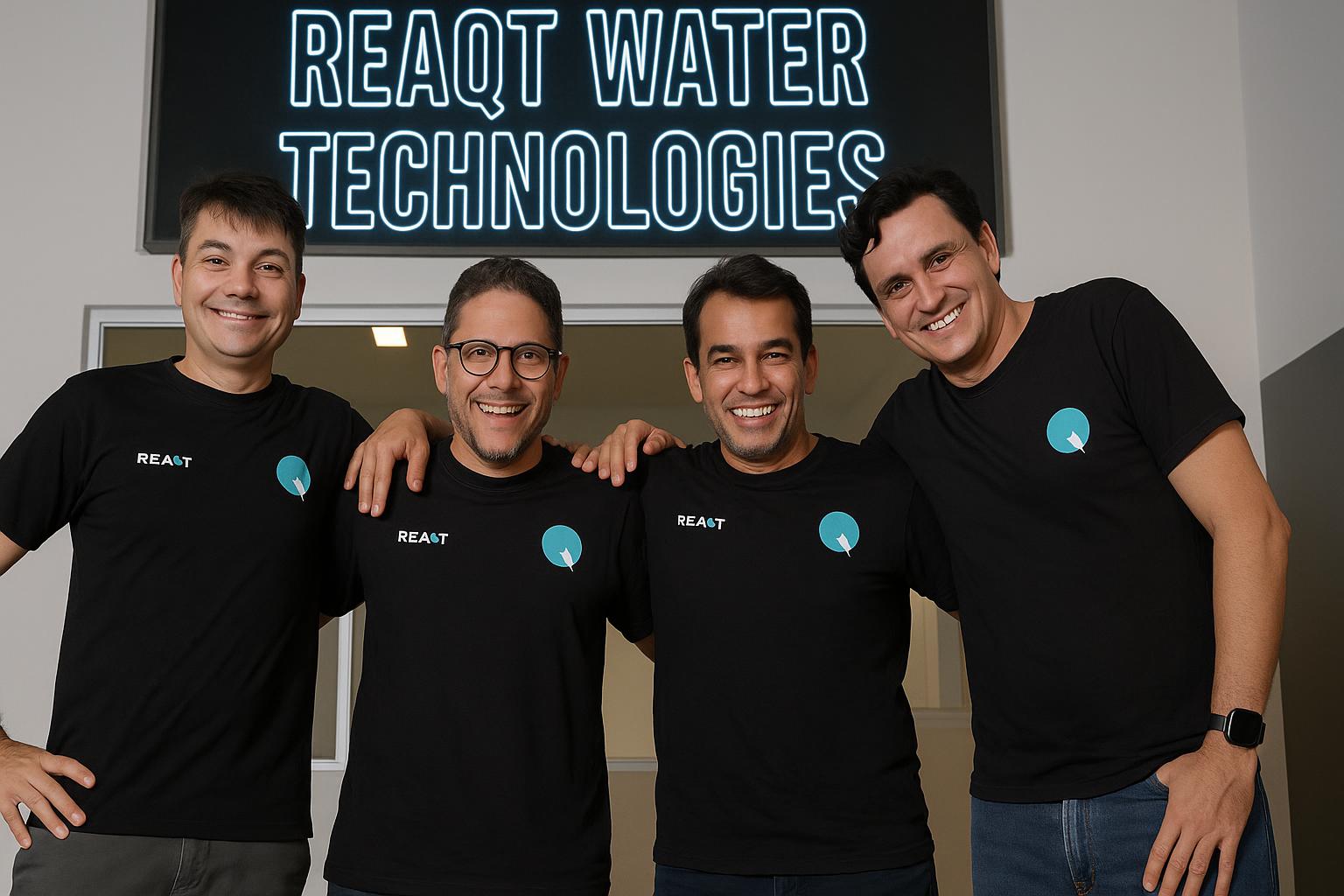
Reaqt’s model deviates from the traditional logic of water treatment. Instead of selling only equipment or projects, the company provides the structure, implements the operation, and charges for the use of treated water. The client, according to CEO and co-founder Marcos Heitor Cardoso, pays for consumption and does not need to manage the system’s operation.
The proposal makes sense especially for sectors that consume a lot of water and deal with complex effluents, such as paper and cellulose, chemical, food, beverages, oil and gas, and ports and marinas. The company claims to work with its own engineering, data usage, and solutions designed for each operation.
More than 10 billion liters treated and savings of up to 40%
The most striking number of the operation is the scale: Reaqt claims to have treated more than 10 billion liters of water. Additionally, the company says it delivers up to 40% reduction in clients’ bills, a gain that helps explain the business expansion amid pressure for efficiency in industries.
The projects also gained relevance due to the combination of cost and complexity. The company itself describes the work as a kind of “tailoring” of the treatment, since industrial water can contain different chemical components and require specific solutions.
R$ 101.5 million in investments accelerated expansion
Until 2021, Reaqt was primarily funded with its own resources and those of the founders’ family, which limited the growth rate. From then on, the company received investments totaling R$ 101.5 million from a confidential group of investors and accelerated its expansion plans.
The goal now is more ambitious: to generate R$ 45 million in revenue by 2025, more than doubling the result year by year. The progress also paved the way for negotiations outside the country, focusing on Asian markets that face challenges similar to those in Brazil regarding water use.
From Manaus to green hydrogen, the company targets more complex projects
Before reaching large industrial plants, the company gained experience in shopping mall treatment stations, including the Manauara Shopping in Manaus. From there, it began to seek larger and more sophisticated projects, including areas that require extreme water purity.
Among the next steps are initiatives related to the production of green hydrogen, an area that demands much stricter technical standards. For Reaqt, the growth space is still large — and the competition for water solutions tends to become more strategic for Brazilian industry.
Whether the model will continue to gain space among large companies is still too early to say, but Reaqt’s trajectory shows that treated water can cease to be an invisible cost and become a significant business. We want to know: should this type of solution gain more space in Brazil?