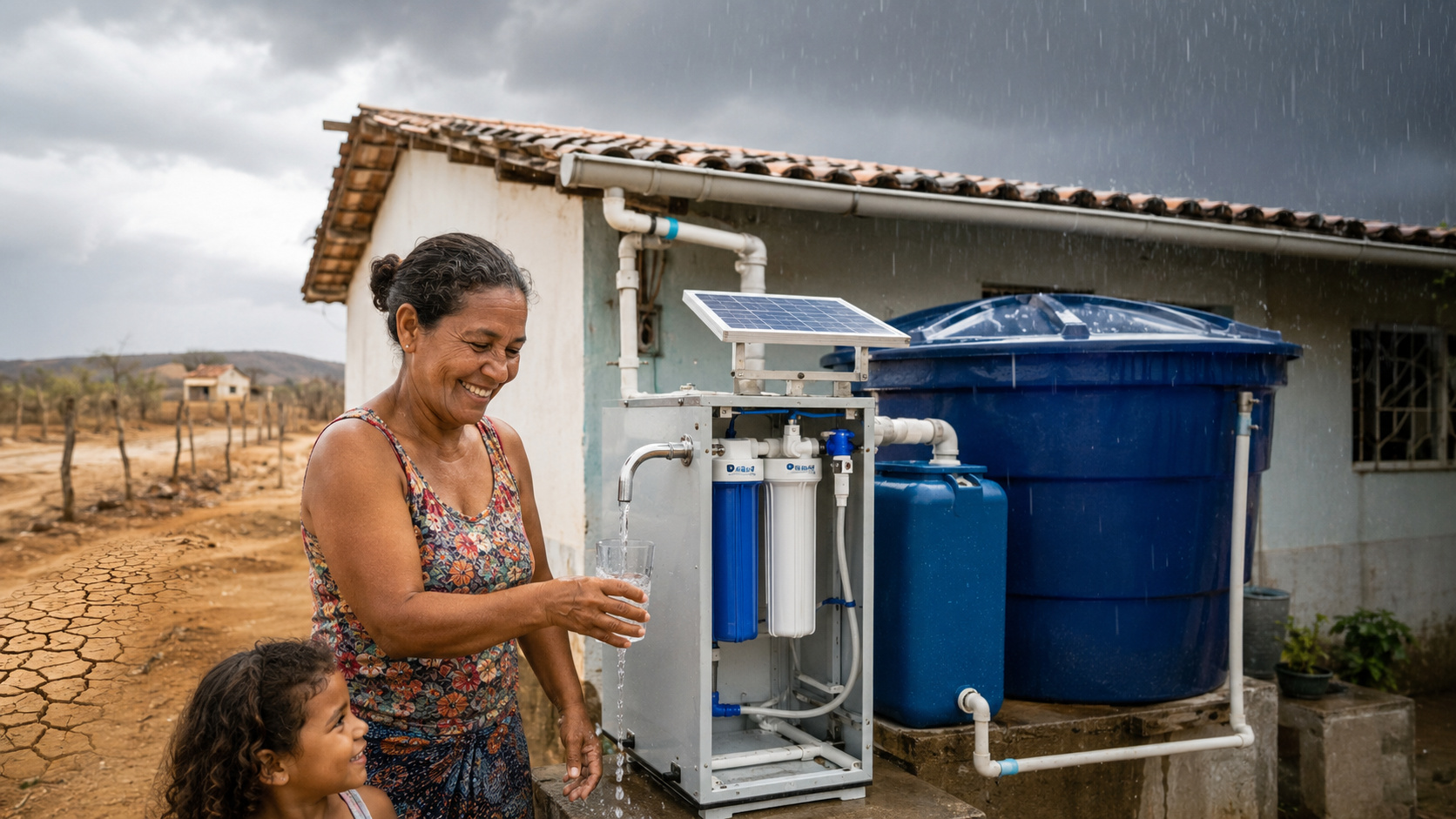

Pluvi, from Recife, has already surpassed 10 million liters of potable water produced and entered projects of great impact in vulnerable areas, with an estimated savings of up to R$ 250 thousand and expansion supported by the government of Pernambuco.
A startup from Recife is transforming rain into potable water and has already surpassed the mark of 10 million liters generated in communities of the Metropolitan Region. The technology, created by Pluvi, gained space precisely in areas where the lack of treated water and urban vulnerability make the water crisis part of the routine.
The progress did not remain just in speech. According to Exame, the solution has already brought an estimated savings of R$ 250 thousand to assisted families and reached territories like Alto da Telha and Jardim Monte Verde, where rain is usually synonymous with risk, not relief.
The technology also caught the attention of the government of Pernambuco, which signed an agreement of R$ 6 million to install 400 units in critical areas. This move places the company at the center of a practical response for locations that deal with water scarcity, flooding, and constant pressure on urban infrastructure.
-
Brazilian Company Innovates with Treated Water Billing Model, Surpassing 10 Billion Liters and Offering Up to 40% Savings for Large Industries

-
Scientists Discover Antidepressants in Hammerhead Sharks, Revealing Hidden Path of Pharmaceuticals to Brazilian Waters
-
Warm water hidden deep in the ocean has been moving towards Antarctica for 20 years, potentially accelerating glacier melting from below.
-
U.S. Offers Nearly $200,000 to Combat Invasive Mussels Threatening Waterways and Hydroelectric Plants


From UFPE research to the routine of communities without regular water
Pluvi was born in 2021 at the Technological Hub of the Federal University of Pernambuco, from research conducted with the mentorship of Professor Sávia Gavazza. The idea was simple to understand and difficult to execute on a scale: capture, treat, and distribute rainwater with a system designed to operate in vulnerable areas.
The problem, in Brazil, is significant. Still according to the data cited by the report, 35 million people live without regular access to treated water. In Recife, about 207 thousand residents are in risk areas, representing 13% of the population of the capital of Pernambuco.
In these territories, improvised housing and the absence of formal connection to the water or sewage network are part of daily life. It was in this scenario that the startup found space to grow with a proposal of direct impact and low operational cost.
PluGoW uses solar energy and dispenses with chemicals
The company’s main product is PluGoW, a self-supporting system that can operate with solar energy. It uses physical barriers, such as the separation of the first rainwater, to purify the liquid and make it drinkable within the standards of the Ministry of Health.
One of the most striking points is its simplicity. Unlike conventional models, the process can be done without chemicals. This helps reduce reliance on more expensive solutions and can facilitate adoption in communities where infrastructure is limited.
According to the company, the system has already produced more than 10 million liters of drinking water in communities in the Metropolitan Region of Recife, including Alto da Telha and Jardim Monte Verde. The estimated savings reach R$ 250,000, equivalent to the cost of about 1,000 water trucks.
Jardim Monte Verde became a symbol of the technology’s impact
The use of the solution in Jardim Monte Verde gave national visibility to the project. The area, between Recife and Jaboatão dos Guararapes, was the epicenter of the disaster in May 2022, when landslides caused by the rains left 44 dead, 17 of them on the same street, and more than 750 families homeless.
It is in this type of territory that the technology gains human dimension. The report shows that, instead of carrying buckets or improvising baths with mugs, some families now have access to running water when it rains. “Today, the rain has become a reason for celebration,” said Silvia do Nascimento, a community resident.
There is also an important technical effect: hydrological modeling conducted by UFPE researchers indicates that mass installation of the system could retain up to 30% of rainwater, reducing soil infiltration and pressure on urban drainage systems.


Government of Pernambuco expands the project and scales up the solution
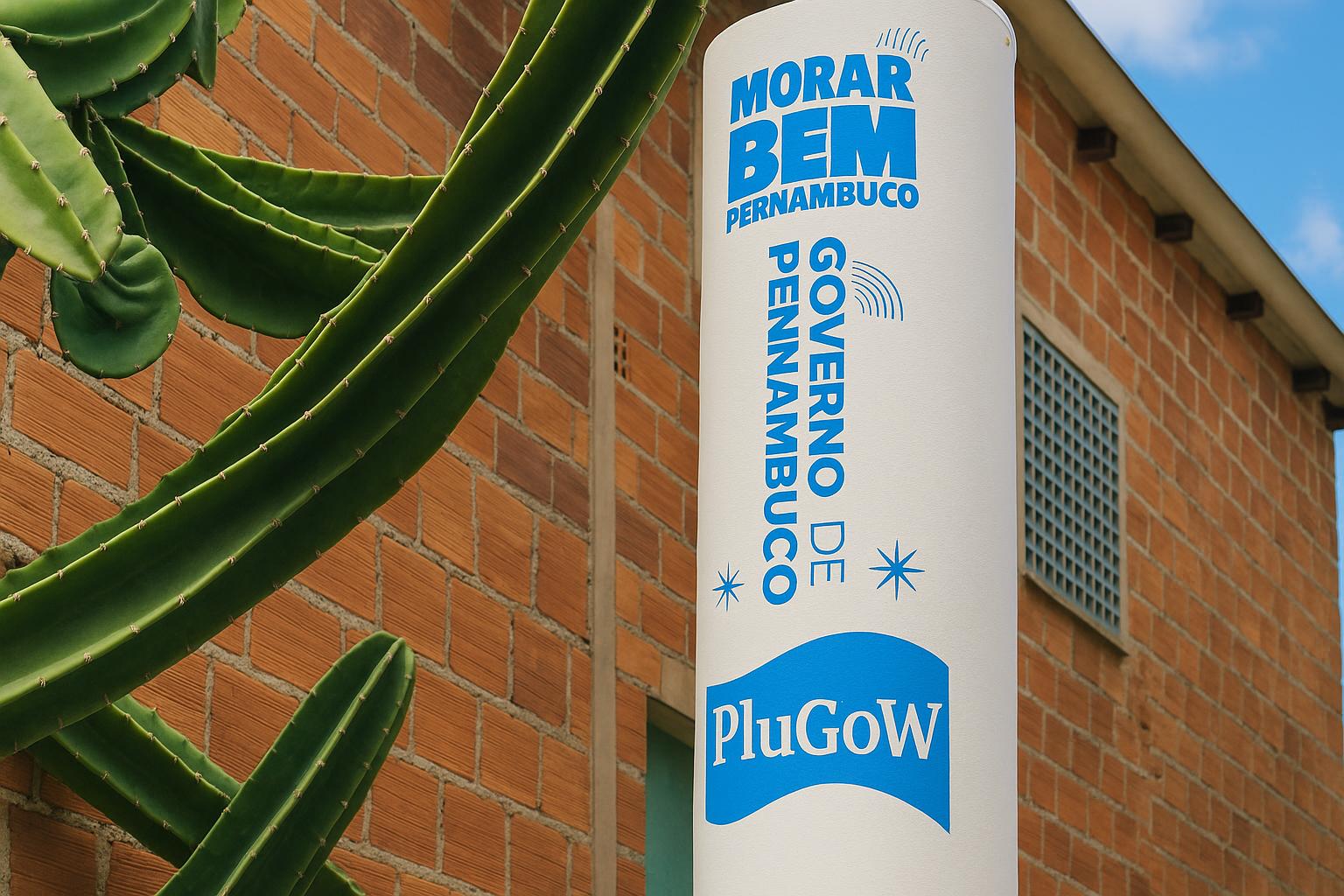
The entry of Pluvi into the largest slope containment program in the country reinforces that the technology has moved from the experimental phase to occupying space in public policies. The R$ 6 million agreement provides for 400 units in critical areas, expanding the reach of the solution beyond pilot projects.
For CEO Isabelle Câmara, the immediate impact is what sustains the work. “What motivates me every day is being able to see the immediate impact this technology has on people’s lives,” she said. The startup has also been supported by Sebrae since 2020 and participated in initiatives such as Catalisa ICT and incubation at UFPE.
In 2024, the company was one of two Brazilian women-led companies to receive recognition at the BRICS Women’s Startups in Moscow, after competing with over a thousand competitors from 28 countries. The victory in the Innovation and Infrastructure category helped bring the Pernambuco solution to an international showcase.
With more than 10 million liters already generated, significant savings for communities, and planned expansion in critical areas, the startup has become a rare example of simple technology with measurable results. If you want more stories like this, follow and share this article with those interested in innovation that changes real life.