Portuguese
  Spanish


Companies like Vibra, Raízen, and Ipiranga demand transparency, clear rules, and legal certainty before adhering to measures announced in early April
Major fuel distributors have decided not to adhere, at this initial moment, to the diesel subsidy program announced by the federal government. Companies like Vibra, Raízen, and Ipiranga reported that they will only monitor the aviation kerosene (QAV) installment payment proposal, released on Wednesday, April 1st, by Petrobras.
According to Estadão/Broadcast’s investigation, there is a possibility of joining the diesel program throughout April 2026. Still, the sector emphasizes that the decision will directly depend on the detailing of operational and financial rules.

Lack of clarity hinders adherence to the diesel program
According to sector sources, it is still not defined how and when the subsidy payment will be made, which creates insecurity among companies. It is also unclear how distributors will be able to prove that the discount was passed on to the final consumer, increasing regulatory uncertainties.
-
Azul tightens its belt, targets aviation fuel prices, and may reduce flights in cities while Campinas, Belo Horizonte, and Recife become key components of the new network.

-
Petrobras surprises the market and reduces diesel prices at refineries, easing pressure on fuels in 2026 and reinforcing its strategy to maintain competitiveness in the energy sector amid international oil fluctuations and global demand.
-
Gasoline prices may have a controlled increase with the new government MP after the crisis between the US and Iran.

-
Impressive record in sight: B diesel is expected to reach 70.8 million m³ in 2026 in Brazil, while biodiesel grows 7.2% and boosts the economy, according to a StoneX projection.



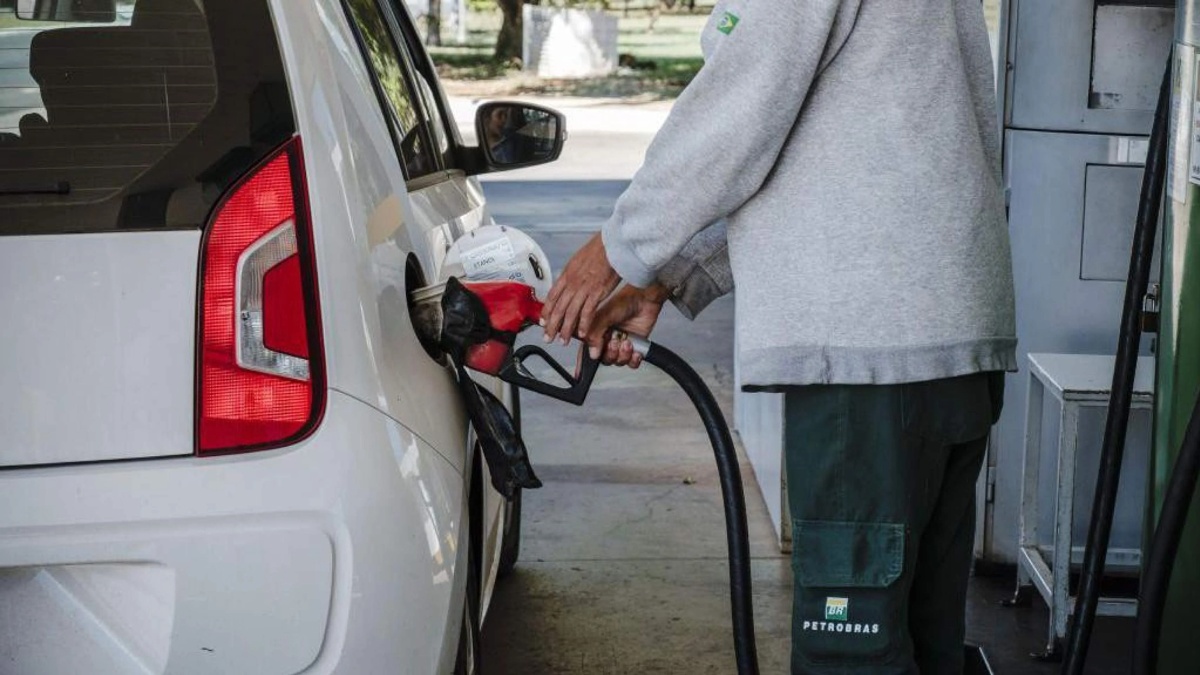

Distributors question whether the subsidy amount will be compatible with import prices, while the sector demands more transparency and legal certainty before adhering to the government’s proposal. Currently, there is an estimated discount of R$ 0.32 per liter, where those who sell diesel with this reduction would receive the amount back.
The National Agency of Petroleum, Natural Gas and Biofuels (ANP) established reference prices by import hubs, which raises doubts about how the measure will be applied in practice and how inspection will be carried out.
Imports increase and pressure on prices intensifies
To meet the demand of March 2026, distributors increased diesel imports, which pressured costs in a scenario of high international prices. Consequently, concern grows regarding the requirement to pass on the discount to the final consumer.
The ANP was positioned as responsible for inspecting possible abusive practices in the market and acts as a “sheriff,” monitoring distributors and gas stations. However, clear rules are still lacking to prove that the discount was effectively passed on, which raises fears of undue penalties.
The sector also assesses that the program’s announcement occurred in an accelerated manner, although there is an expectation that, throughout April, the rules will be better defined and bring greater predictability.
Reduced supply and financial risk concern the sector
Sources indicate that Petrobras reduced diesel quotas at import hubs and would not be importing usual volumes, which contributes to market disorganization. At the same time, private companies increase their imports to meet domestic demand.
This movement generates a risk of loss, as it is not always possible to pass on costs to the domestic market, especially in an environment of high price volatility.
QAV installment payment also raises doubts
The increase in aviation kerosene (QAV) also brought uncertainties to the sector, as the considered high readjustment was initially denied by Petrobras. Subsequently, the state-owned company confirmed the increase and announced an installment payment program for the average rise of 54.63%.
There are still doubts about how the model will work, especially whether the proposal will be structured as credit or financing with interest charges. According to Petrobras, the measures were already under technical study, with the objective of preserving demand and ensuring market functioning.
The company informed that the terms of adherence with more details will be released on Monday, April 6, 2026, which should bring greater clarity to the sector.
Aviation sector will be decisive for adherence
Adherence to the QAV installment payment will directly depend on the aviation sector, as companies will need to assess whether they can pass on the increase to passengers. This factor will be decisive for adherence to Petrobras’s so-called “credit plan.”
The sector remains cautious in the face of operational and regulatory uncertainties, while awaiting clearer definitions to move forward with the measures.
This scenario raises a relevant question: can the lack of clarity delay strategic decisions in a market already pressured by high costs?