






 Portuguese
  Spanish


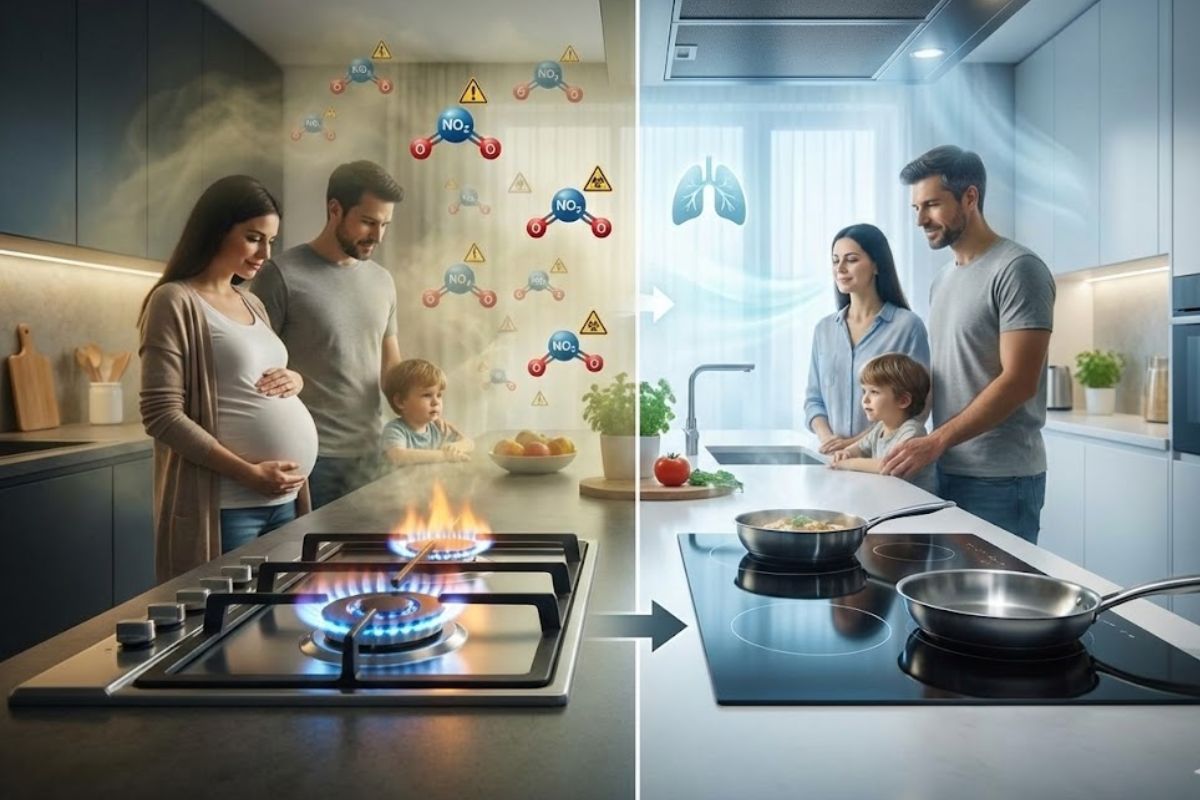


Research Indicates That Gas Stoves Release Hidden Toxic Gas With Nitrogen Dioxide In Home, Exposing 22 Million Americans To Dangerous Levels And Increasing Risk Of Asthma, Preterm Birth, And Lung Cancer, Reduced When Switching To Electric Stove.
A new study from Stanford University, published in the scientific journal PNAS Nexus, revealed that gas and propane stoves can turn the kitchen into a source of hidden toxic gas, raising nitrogen dioxide concentrations indoors to levels rivaling outdoor pollution.
The research, the first national assessment that combines outdoor and indoor pollution, shows that simply cooking can push NO2 concentrations beyond the levels deemed safe for the long term, with direct impact on respiratory diseases, preterm births, diabetes, and lung cancer.
Stove On, Invisible Pollution In The Heart Of The Home
Spending time at home does not guarantee protection against dirty air. According to Stanford researchers, gas and propane stoves release significant amounts of nitrogen dioxide, a gas pollutant that accumulates in the indoor environment while preparing lunch or dinner.
-
Pennsylvania Mine Creates Ice in Summer Heat and Melts in Winter, Turning a Mountain Crevice into a Reverse Natural Refrigerator

-
China Accelerates Global Expansion of Robotics: From Smart Vacuums to Industrial and Humanoid Machines, Millions Exported to Over 150 Markets
-
Polar Air Mass to Hit Brazil: Temperatures to Plummet in Nine States, Near Freezing in the South with Frost Risk Until Monday
-
Chinese “dark factories” produce electric cars 24/7 with minimal human intervention, as Zeekr assembles 800 units daily, raising concerns in Brazil.





In millions of American homes, the concentration of this gas can match or even exceed the pollution measured outside.
In practice, the central equipment in the kitchen becomes a constant source of hidden toxic gas, with no specific odor and often without any efficient exhaust or ventilation system.
Cooking in a small space, with closed windows and without proper range hoods, further exacerbates the accumulation of nitrogen dioxide in the air that the family breathes daily.
Study Compares Indoor And Outdoor Air For The First Time
This is the first national assessment that integrates, in the same model, the indoor and outdoor sources of nitrogen dioxide. By crossing data on cooking habits, housing characteristics, and urban pollution patterns, scientists concluded that for many Americans using gas stoves, exposure to NO2 generated solely by the stove is equivalent to exposure from all combined outdoor sources, such as vehicles and industries.
Historically, the focus of authorities and environmental legislation, like the Clean Air Act in the United States, has been on external pollution produced by exhausts and chimneys.
Indoor air, however, remains largely unregulated, despite posing a similar risk, especially in homes with limited ventilation and heavy use of gas stoves.
Peaks Of NO2, Benzene, And 22 Million Above Safe Limits
Researchers observed that risk peaks occur precisely during food preparation, when the stove burners are on and air circulation within the kitchen is insufficient to disperse nitrogen dioxide.
In short periods, concentrations rise rapidly, creating an invisible cloud of household pollution.
Previous studies by the same team had already identified benzene, a known carcinogen, as another pollutant released by gas stoves.
In the new work, data show that 22 million Americans live with NO2 levels above the recommended long-term safety limits, a condition associated with increased risk of asthma, chronic obstructive pulmonary disease, preterm birth, diabetes, and lung cancer.
Smaller Houses And Rural Areas Concentrate The Problem
The distribution of this risk is not uniform. The study indicates that the problem is worse in smaller homes, where the air volume is reduced and the gas concentrates easily, especially when windows are kept closed due to extreme cold or heat.
Rental properties also appear as a point of concern, as many tenants do not have the freedom to replace gas stoves with other models.
In rural communities, where emissions from stoves represent a larger fraction of total air pollution, the impact of hidden toxic gas released in the kitchen becomes even more significant for family health.
Switching From Gas Stove To Electric Reduces Hidden Toxic Gas
Despite the concerning situation, scientists highlight that there is a relatively simple solution. The study shows that replacing gas stoves with electric models reduces exposure to nitrogen dioxide by more than a quarter on the national average, alleviating the burden of pollutants breathed indoors.
Among those who cook more frequently, the gain is even greater. The research indicates that, for this group, migrating to electric stoves can cut NO2 exposure in the home environment by about half, reducing pressure on the respiratory system and lowering the risk associated with chronic diseases.
In this context, the authors advocate for public policies that facilitate the transition, such as financial incentives and tax credits aimed at purchasing electric stoves and other clean cooking technologies.
According to the senior author of the study, Robert B Jackson, prioritizing indoor air quality is an essential step for those seeking cleaner air and a healthier life, and switching from gas to electric stoves is a direct path to achieving that.
Given this data, would you keep the gas stove in your home or consider switching to an electric stove to reduce this hidden toxic gas in your kitchen?







Não tenho condições financeiras para trocar o fogão à gás para elétrico.