






 Portuguese
  Spanish
  5 min of reading
  0 comments


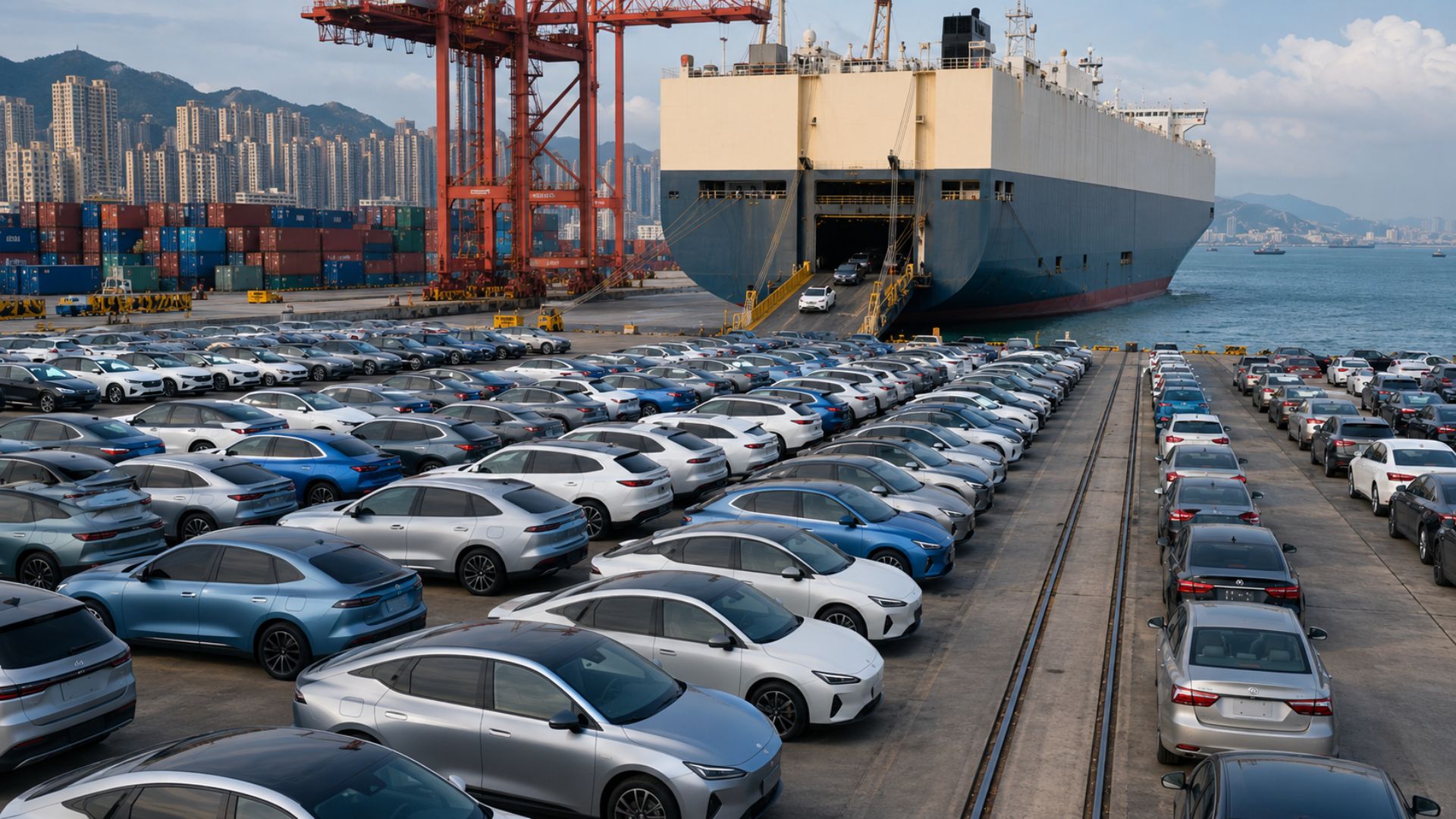
China exported more electric and plug-in hybrid cars than traditional gasoline or diesel vehicles for the first time in history in April 2026. According to information from CNN Brasil, there were 406,000 new energy units, representing 52.7% of the total 769,000 automobiles exported that month, more than double the same period last year, while sales in the Chinese domestic market fell by 21.5%.
The Chinese automotive industry has just crossed a milestone that symbolizes a global transformation. In April 2026, China exported for the first time more electric and plug-in hybrid cars than gasoline or diesel-powered vehicles, according to data released by the China Passenger Car Association (CPCA). Of the 769,000 automobiles exported by the country that month, 406,000 were new energy vehicles, a category that includes pure electric cars and plug-in hybrids. This volume represents 52.7% of the total and more than doubled compared to the same month last year.
The historic milestone in exports, however, occurs amidst a worrying domestic scenario for Chinese automakers. Retail sales of passenger cars in China fell by 21.5% in April compared to the previous year, dropping to 1.38 million units. Compared to March, the decline was 16%. It is precisely this retraction of the domestic market that is pushing Chinese automakers out of the country with increasing intensity, transforming exports into the main growth engine of China’s automotive industry.
The April milestone: when electric cars surpassed gasoline
The overtaking of traditional vehicles by electric and hybrid cars in Chinese exports was not an isolated or seasonal event. It is the result of a trend that has been accelerating month by month, fueled by the aggressive expansion of Chinese automakers into international markets. Companies such as BYD, MG (SAIC), Chery, and Great Wall have been opening factories, dealerships, and distribution centers in Europe, Latin America, Southeast Asia, and the Middle East, creating a commercial infrastructure that supports the growth of shipments.
-
Helicopter Drops 180 Tons of Sand and Gravel on Swedish River to Revive Ecosystem Damaged by Decades of Exploitation

-
Brazilian Company Launches Retro Smartphone with 48 MP Camera, T9 Keyboard, and Privacy Features for Social Media-Free Use

-
Self-Taught Chinese Farmer Builds 5-Ton Submarine from Scrap, Launches It in Anhui River
-
Invisible Induction Technology Enables Wireless Power for Blenders, Coffee Makers, and Air Fryers, Reducing Countertop Cables





The 406,000 new energy units exported in April represent more than double the volume recorded in the same month of 2025. This growth rate indicates that the share of electric cars in Chinese exports will not fall back below 50%, but tends to consolidate and increase in the coming months. For the global industry, the data signals that Chinese new energy vehicles are no longer a domestic phenomenon: they are an industrial-scale export product.
The Chinese domestic market in retraction
While electric car exports are breaking records, China’s domestic market faces difficulties. The weak consumer sentiment among Chinese citizens caused retail sales of passenger cars to drop by 21.5% in April year-on-year, a significant decline that affects both traditional and new energy vehicles. Even electric and hybrid cars, which have been gaining market share domestically, registered a 6.8% drop in sales in April, totaling 849,000 units.
The domestic retraction has multiple causes. Consumer sentiment in China is depressed by economic uncertainties, a slowdown in the real estate sector, and household caution regarding high-value spending. The Beijing Auto Show, held in April, gave a slight boost to consumer interest, but it was not enough to reverse the downward trend. For automakers, the equation is clear: if Chinese consumers are not buying cars at the expected pace, buyers must be found on other continents.
The role of oil in the electric shift
The rise in oil prices added an extra factor to the migration of Chinese consumers to electric cars. The CPCA highlighted that increased fuel costs weighed on the demand for traditional gasoline-powered vehicles, encouraging undecided buyers to opt for electric or hybrid models, whose operational cost per kilometer is significantly lower. In a country where the vehicle fleet exceeds 300 million units, every extra cent per liter of fuel has a multiplied impact.
This dynamic reinforces a cycle that benefits electric cars in both the domestic market and exports. The more consumers migrate to new energy vehicles, the more automakers invest in production scale, which reduces unit costs and makes Chinese electric models even more competitive in international markets. Expensive oil doesn’t just affect China: in Europe and Latin America, where Chinese automakers are expanding their presence, the same operational cost calculation attracts buyers to electric cars from China.
Europe and Latin America in the sights of Chinese automakers
The international expansion of Chinese electric car manufacturers is not random. The CPCA indicated that major manufacturers will likely continue expanding operations in Europe and Latin America to offset weaker demand in markets such as the Middle East. Europe is the highest value-added market, where Chinese vehicles face direct competition from traditional German, French, and Italian brands, but also find consumers willing to try more affordable models with good range and embedded technology.
In Latin America, Brazil has become one of the main destinations for Chinese electric and hybrid car manufacturers. BYD inaugurated a factory in Bahia, Great Wall operates in the Brazilian market with the Haval brand, and Chery is expanding its presence with electrified models. For Brazilian consumers, the arrival of these vehicles represents more options and competitive pressure on traditional automakers, which can translate into more accessible prices and more advanced technology in dealerships.
What the shift means for the global industry
The fact that China exported more electric cars than gasoline vehicles for the first time is not just a statistic. It is confirmation that the world’s largest automotive market already operates under a logic where new energy vehicles are the main product, not a complement. For European, Japanese, and American automakers that still rely predominantly on internal combustion engines, the Chinese data serves as a warning: the global automotive market is changing faster than many traditional companies were willing to admit.
The CPCA expects exports to become the main growth driver for the Chinese automotive industry in the coming years. If this projection is confirmed, electric cars manufactured in China will increasingly compete with traditional models in markets across all continents. The combination of production scale, competitive costs, and advanced technology puts Chinese automakers in a position to redefine the rules of the global automotive market.
A shift that is here to stay
China exported 406,000 electric and hybrid cars in a single month, more than half of everything it shipped abroad. The April 2026 milestone confirms that new energy vehicles are no longer a future bet and have become the present of the Chinese automotive industry, both for domestic consumption and, now predominantly, for export. Meanwhile, the domestic market shrinks and pushes automakers towards unprecedented international expansion.
Do you believe Chinese electric cars will dominate the Brazilian market in the coming years? Tell us in the comments what you think of this shift in exports, if you have considered buying a Chinese electric vehicle, and how you assess the competition with traditional automakers. We want to hear your opinion on the future of the automotive market.





Be the first to react!