






 Portuguese
  Spanish
  5 min of reading
  0 comments


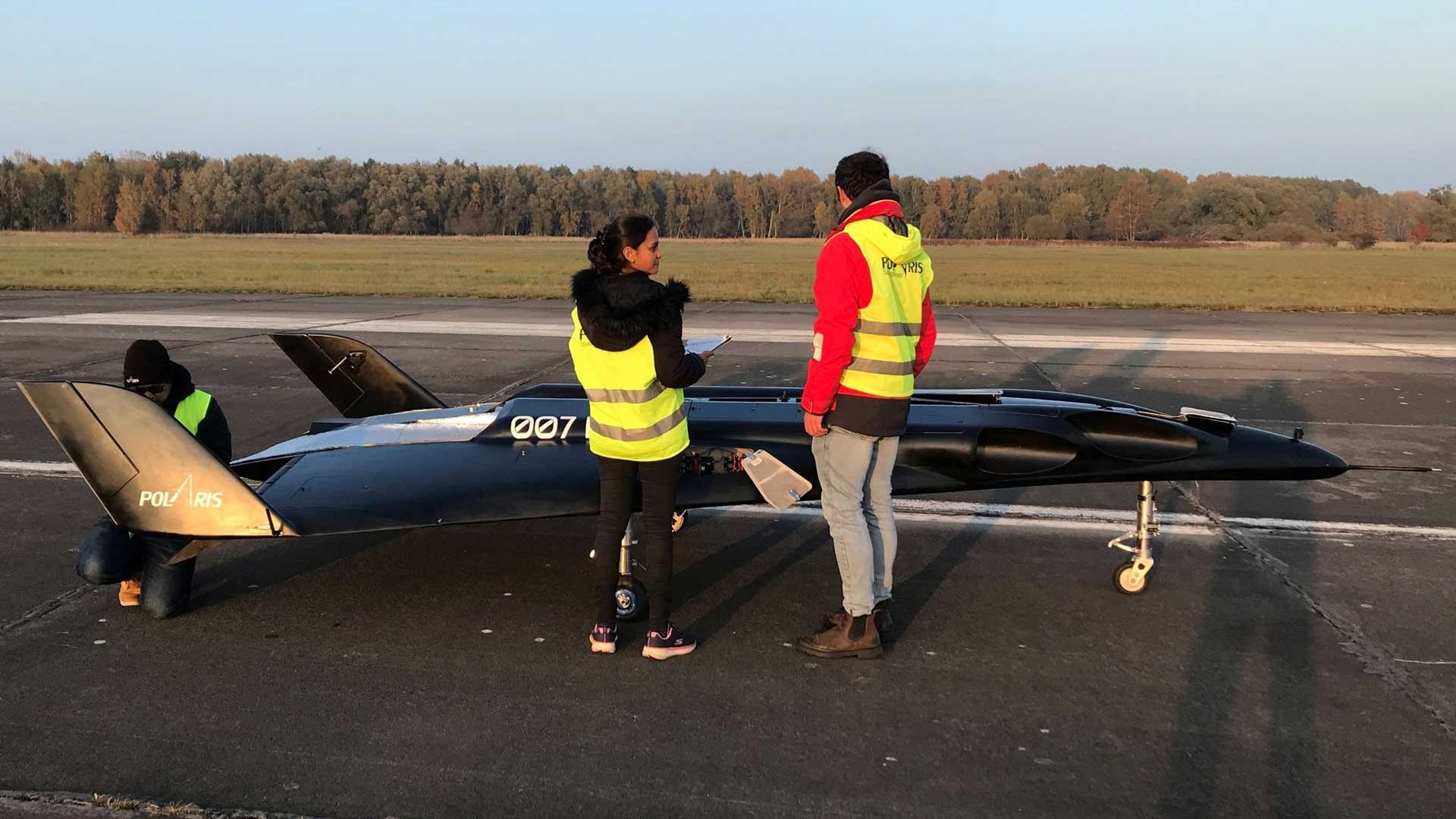
German project of reusable spaceplane combines runway takeoff, hypersonic research, and promise of flights above Mach 10, while scale demonstrators test propulsion, control, and operation technologies to bring airports closer to the race for flexible access to space.
A reusable spaceplane under development in Germany aims to bring airport operations closer to the logic of space launches, with horizontal takeoff, landing on conventional runways, and announced performance for flights above Mach 10 in specific missions.
The Aurora project, by Polaris Spaceplanes, is presented by the company as a multipurpose platform for access to space, hypersonic research, ultra-fast cargo transport, and defense applications, without relying on a tower or vertical launch platform.
The comparison with the Concorde illustrates the intended technical leap, as the Franco-British supersonic commercial aircraft operated around Mach 2, while the Aurora is described by Polaris as capable of exceeding Mach 10 and surpassing 100 km in altitude.
-
Chinese students build a 6.06-meter remote-controlled paper airplane, achieve a flight of almost 15 minutes, and turn a school pastime into an engineering project to attempt a world record.

-
He started with a jigsaw, his father’s screwdriver, and many drawings made during classes; years later, the young man who built a roller coaster in his own backyard went viral on the internet, was hired by Cacau Park, and now coordinates Brazilian and foreign professionals in the installation of an attraction weighing 737 tons, 55 meters high, one kilometer long, featuring moments of zero gravity and a speed of 120 km/h, in a journey that turned curiosity, calculations, and persistence into a professional career.

-
Between Egypt and Sudan, Bir Tawil is no man’s land that neither country wants on paper, but in practice has gold mining, nomadic tribes, and even fake “kings.”

-
Swimming champion Shavarsh Karapetyan dove about 40 times into a frozen lake in Armenia to rescue a sunken bus, saved 20 lives, and lost his career because of it.


According to data released by the manufacturer, the system can carry up to 1,000 kg of orbital cargo in a two-stage configuration, with a disposable upper stage, or up to 10,000 kg in suborbital and hypersonic trajectories aimed at testing and transport.
Aurora by Polaris aims at hypersonic flight and space access

The proposal is still under development but is not limited to conceptual images or distant promises, as Polaris claims to have built and flown seven scale demonstrators, totaling 250 test flights in its experimental fleet.
This track record is a central part of the company’s strategy, which uses smaller aircraft to validate flight control, system integration, beyond line of sight operation, jet propulsion, and stages associated with the use of rocket engines.
The Aurora was conceived from over 30 years of German and European research in spaceplanes, according to Polaris, with technical origins associated with work developed in the environment of the German Aerospace Center, the DLR.
In July 2024, the DLR announced a cooperation agreement with Polaris for research related to horizontal takeoff spaceplanes and hypersonic aircraft, including studies on the safe integration of these vehicles into airspace.
The most visible operational difference is the absence of a traditional launch platform, as the company claims that the Aurora was designed to take off from runways around the world, in a routine closer to aviation.
This feature changes the way the project is presented to the market, as conventional rockets depend on specialized bases, launch windows, and long preparation cycles, while Polaris promises mission preparation and return in less than 24 hours.
Runway takeoff changes the logic of launches
Reusability also occupies a central place in the disclosed architecture, with the company pointing to a total system reuse between 90% and 100%, depending on the mission configuration and the use or not of a disposable upper stage.
In practice, the ambition is to reduce costs and increase flight frequency by preserving most of the structure after each operation, instead of discarding main components as occurs in many traditional space systems.

Among the demonstrators already disclosed, the MIRA II gained prominence for having performed, on October 29, 2024, the first in-flight ignition of a linear aerospike rocket engine, as reported by Polaris on its official channels.
The vehicle is 5 meters long, with a design takeoff mass of 240 kg, four turbojets, and a 1 kN AS-1F linear aerospike engine, powered by kerosene and liquid oxygen.
The aircraft is also described as capable of operating beyond the line of sight and was equipped with a redundant flight termination system, a feature used in experimental programs to reduce risks during test campaigns.
Before MIRA II, Polaris had already developed other demonstrators, such as STELLA, ALEDA, ATHENA, MIRA, and MIRA Light, each aimed at specific validation stages, from aerodynamics and control to turbine operation.
MIRA II tests aerospike engine in flight
The sequence shows an incremental approach, in which the company tests parts of the concept in smaller vehicles before advancing to more complex platforms, especially in flight regimes involving high speed, high altitude, and combined propulsion.
The experimental fleet itself also reveals the variety of solutions under study, with models powered by electric engines, turbojets, and combinations of turbojets with rocket engines, according to the technical function of each campaign.
In the case of the original MIRA, Polaris reports that the aircraft made its first flight with turbine power at the end of 2023 and underwent aerospike ignition in a rolling test in January 2024.
The same demonstrator, however, was damaged in a runway accident in February 2024, and the company decided not to repair the structure, moving directly to the MIRA II and MIRA III vehicles.
This point reinforces that the program remains in an experimental phase, although with real tests, flown prototypes, and research contracts, and still depends on new demonstrators before achieving full operation of the Aurora.
Polaris claims that the Aurora will be able to reach any orbital inclination, in addition to offering mission abort capability with the safe return of the payload, a feature presented as an advantage over conventional launchers.
Reusable spaceplane expands competition for flexible access to space


Another intended use is hypersonic research, an area of interest to governments, universities, and companies as it involves materials, flight control, sensors, and systems capable of withstanding speeds far superior to those of commercial aviation.
The company also mentions the transport of high-value goods over medium distances, with reduced flight time, and an optional configuration for human suborbital flights, although this possibility still appears as a future stage of the concept.
Defense applications appear among the markets listed by Polaris, especially in hypersonic reconnaissance missions and high-altitude operations, but the public development of the Aurora remains associated with the concept of a reusable and multipurpose platform.
European interest in this type of vehicle occurs in a scenario of seeking more flexible access to space, a higher cadence of hypersonic tests, and alternatives that combine airport infrastructure with capabilities currently concentrated in rockets.
Even with striking numbers, the Aurora still needs to demonstrate on a larger scale the promised combination of runway takeoff, hypersonic acceleration, operation above 100 km altitude, safe return, and reuse in short cycles.
For now, the concrete progress is in the demonstrators already flown, in the tests with the aerospike engine, and in the technical cooperation with institutions like the DLR, elements that differentiate the program from purely conceptual proposals.




Be the first to react!