Portuguese
  Spanish


Researchers identified gas linked to star formation in galaxies observed less than 1 billion years after the Big Bang.
What fueled the birth of the universe’s first stars? The answer to this question gained new elements after research led by scientists from Chiba University in Japan. Using observations from the ALMA radio telescope and complementary information from the James Webb Space Telescope, the team managed to directly identify gas reserves in four extremely ancient galaxies, recorded between 700 million and 800 million years after the Big Bang.
The study, published on Monday (15) in the journal The Astrophysical Journal, offers an unprecedented opportunity to examine the matter that fueled star formation in one of the most remote phases ever observed in cosmic history.
The observed gas functions as cosmic raw material
When observing such distant objects, astronomers usually see only part of the phenomena that occurred during that period. Stars and heated regions had already been detected previously, but directly locating the material that gives rise to new stars remained a much more complicated task.
-
Iraq floats and sinks under an arm of the Euphrates 10 giant concrete boxes of 46,000 tons and 125 meters each to assemble a 2.4 km submerged tunnel and open a new land route between Asia and Europe.

-
Scientists use more than 20,000 artificial birds and solar speakers to “trick” seabirds, reactivate nesting routes, and revive a colony on an island that seemed abandoned.

-
She spent 73 years breathing inside an iron lung, survived the aftereffects of polio, and became the last woman in the United States dependent on the equipment before dying at 78 years old.
-
Brazilian students created a $1 filter using pine bark, cotton, and 3D-printed parts to clean cassava wastewater, reduce the toxicity of a hazardous waste, and transform contaminated water into biofertilizer.




This limitation made it difficult to understand how the first galaxies grew and transformed over time. Now, the researchers claim to have managed to observe precisely this component, considered essential for the creation of new generations of stars.
The research focused on a specific type of emission produced by neutral oxygen atoms. According to the authors, this signal allows for more precise localization of gas-rich regions that have not yet been altered by more intense energetic processes.
In practice, it is a way to identify the available fuel for the emergence of stars.
To confirm the results, the scientists also analyzed another emission associated with a different state of the gas. The comparison between the two data sets helped determine the composition of the observed areas and reinforced the study’s conclusions.
Researchers used two of the most advanced instruments in astronomy
The work gathered information obtained by equipment that is among the most important in current astronomical research.
While ALMA was responsible for capturing the signals emitted by the galaxies, the James Webb Space Telescope provided complementary data on the characteristics of these systems.
The combination of the two observatories allowed for a more detailed analysis of the environment existing in the investigated galaxies.
Among the resources employed are:
- Observations from the ALMA radio telescope;
- Data collected by the James Webb Space Telescope;
- Analysis of emissions linked to oxygen;
- Comparison between different states of gas;
- Modeling of the physical conditions of the galaxies.
What the stars reveal about these ancient galaxies
Based on the collected information, researchers reconstructed part of the conditions present in these cosmic structures. The results indicate that the gas reserves had high concentrations of matter. These characteristics resemble environments known to favor intense star formation.
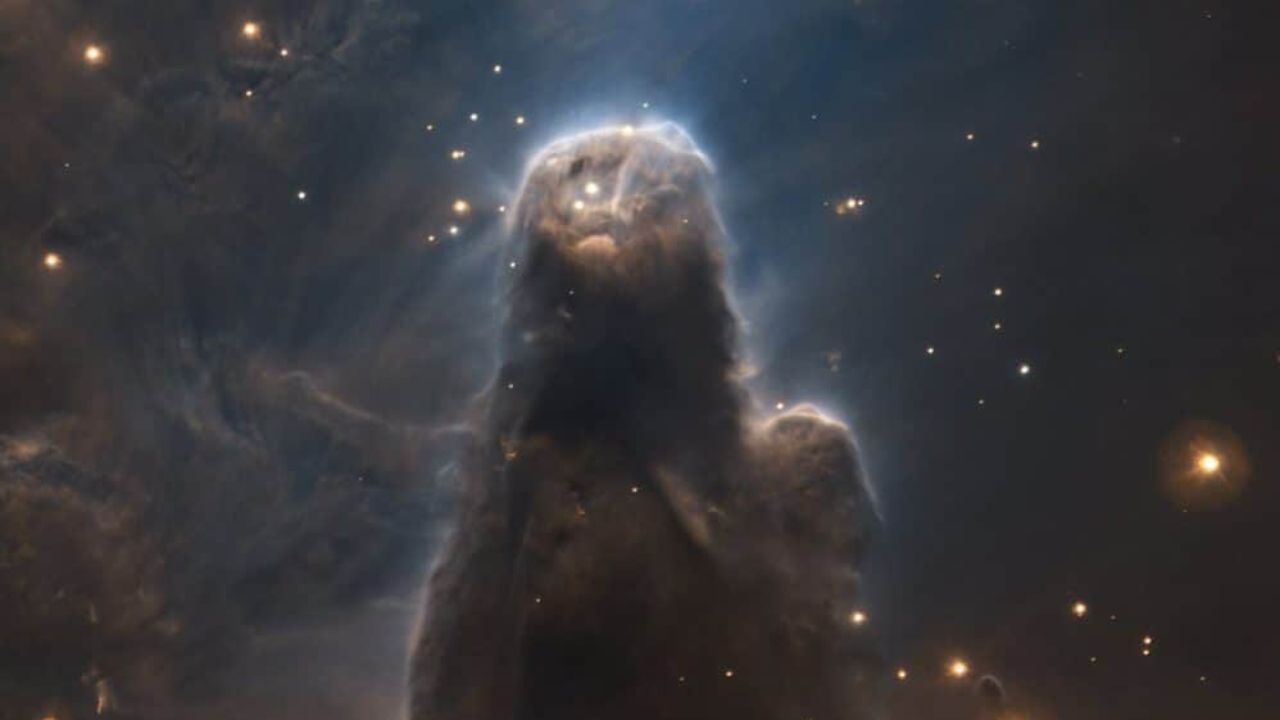
On the other hand, the team identified lower levels of radiation than those normally observed in extremely active systems. This combination suggests a particular scenario: compact regions, but supplied with large amounts of material available to generate new stars.
Researchers’ statements highlight the scope of the research
In a statement released along with the study, Yoshinobu Fudamoto, assistant professor at Chiba University and leader of the investigation, highlighted the relevance of the observation. According to him, the work represents the most distant direct record ever made of this type of gas in galaxies considered typical of the early universe.
The researcher stated that the results also expand the possibilities of using previous observations to investigate the presence of neutral gas in very ancient times of the cosmos.
Akio K. Inoue, a team member and researcher at Waseda University, emphasized that the methodology used opens new possibilities for examining a component that has remained difficult to study for decades.
According to him, the observed emission is becoming established as an important tool for future investigations into star formation.
Future studies should expand the number of galaxies analyzed
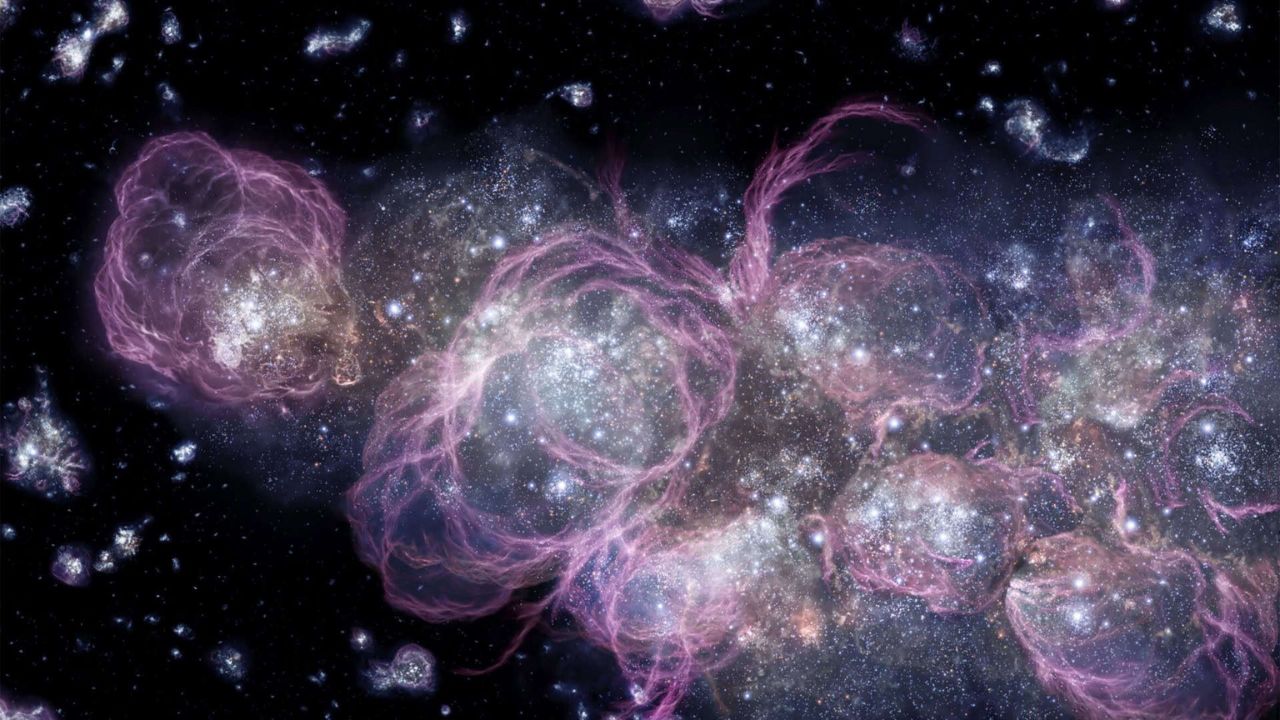
Despite the advances presented, the authors consider that the work represents only the beginning of a new stage of research. The intention now is to expand the sample of observed galaxies to better understand how these structures evolved throughout the history of the universe.
In the researchers’ assessment, the union between observatories like ALMA and James Webb should allow increasingly detailed analyses of the processes that transformed gas clouds into the first known star populations.
With this, scientists hope to more completely reconstruct the events that marked the early chapters of cosmic evolution and better understand how the galaxies observed today emerged.
With information from Olhar Digital