






 Portuguese
  Spanish


The Deployment of U.S. Warships Towards the Caribbean, Near Venezuela, Has Put Brazilian Armed Forces on Alert. The Government Monitors the Movements and Assesses Possible Impacts on Border Security.
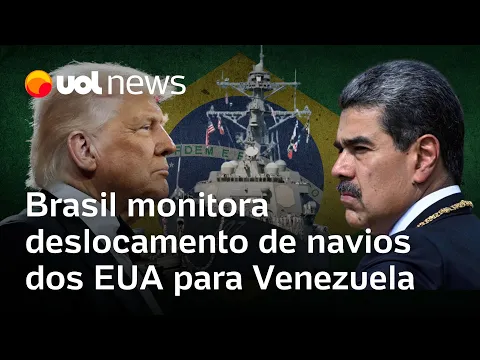
The Brazilian government and the Army are permanently monitoring the movement of U.S. military ships to areas of the Caribbean, near the Venezuelan coast.
This movement has raised the level of attention in the Planalto and among military commands, while Venezuela has put militia members on standby.
For now, the assessment is that Brazil should not intervene or issue a public position, according to UOL.
-
U.S. Navy’s Ticonderoga-class Cruiser Becomes a 9,800-Ton Missile Fortress with Advanced Aegis System Capable of Tracking Hundreds of Targets

-
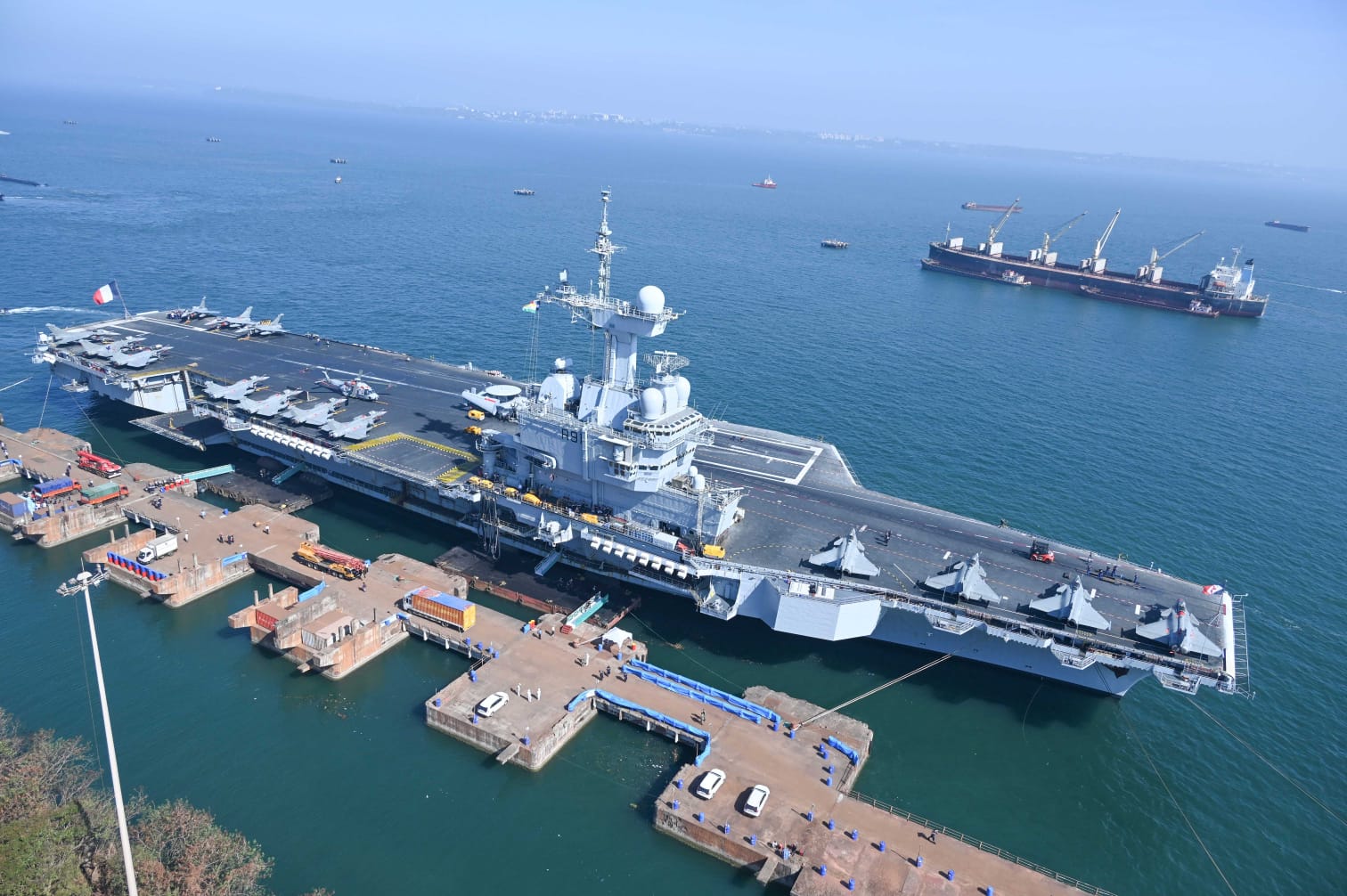
France’s Charles de Gaulle: The Sole Nuclear-Powered Aircraft Carrier Outside the US, Weighing 42,500 Tons and Equipped with Two Atomic Reactors

-
The military spaceplane that almost took the Cold War into orbit: Boeing X-20 Dyna-Soar was designed to re-enter above Mach 20, fly for up to 40 hours, land like a plane, and transform Titan rockets into a gateway to a new era of orbital warfare.
-
FAB bets on national drones and increases investments to strengthen the Brazilian aerospace industry



Monitoring of Brazilian Armed Forces
Civil and military authorities report that the directive at this moment is to maintain vigilance and await developments. The priority is the stability of the border area with Venezuela.
According to sources consulted by the report, the personnel deployed in the region — not detailed for security reasons — has been sufficient to maintain local normalcy.
Any reinforcement will depend on decisions from the Itamaraty and the Ministry of Defense, which are monitoring diplomatic and operational signals.
At the Palácio do Planalto, government officials assess that the initial movements by the United States do not yet allow for a conclusive diagnosis.
Any escalation would require a calibrated political response to uphold the historical discourse of sovereignty and the notion that South America is “a continent of peace and independence.”
Reasons for Tension in the Caribbean
The United States sent three ships towards the Venezuelan coast under the justification of “curbing the flow of drugs” to U.S. territory.
This initiative came in the wake of an increase in the reward offered by Washington for information leading to the arrest of Venezuelan President Nicolás Maduro, now set at US$ 50 million.
Brazilian military sources report that, so far, the vessels remain in international waters in the Caribbean and have not reached the area closest to Venezuela, according to UOL’s findings.
There are no indications that Brazil will be called to cooperate operationally. Nor is there, at this stage, any signal of a change in the official posture of non-intervention.
The government is monitoring the situation with intelligence reports and military attaches, keeping channels open with neighboring countries for information exchange.
Reaction from Venezuela
In response, Nicolás Maduro’s government called militia members to remain on standby. The measure was presented as a defense of sovereignty in light of the approach of U.S. naval forces.
In Brasília, government and military sources highlight the unpredictability of decisions both in Washington and Caracas, which reinforces caution in the short term.
The perception among government members is that the scenario may remain in strategic ambiguity for some time.
The combination of military assets in the Caribbean and tougher rhetoric from Caracas demands constant monitoring.
Border Security and Response Capacity
On the ground, the guidance is to preserve the operational routine of the units already deployed at the border.
There is an increase in vigilance and intelligence, with no ostentatious changes that could create regional noise.
Should there be a determination from the Executive, the Army states it has the capacity for rapid deployment to the region, including the use of aeromobile and paratrooper troops.
There is no indication of a problem with manpower or immediate logistics, according to consulted officials.
Meanwhile, the Itamaraty remains the main political coordinator.
The agency maintains channels with South American partners and observes the consequences of a crisis that, even if external, has a direct impact on Brazil’s security environment. This is due to the porosity of the border and migratory flows.
Political Discourse and Brazilian Sovereignty
An eventual intensification of the crisis would place the Brazilian government in a dilemma: to maintain discretion to avoid escalating tensions or to adopt a firm public position in defense of non-intervention.
Some argue that, in the face of any possibility of military action in the neighborhood, the country would have to clearly reiterate its defense of the principle of peaceful resolution of disputes.
At the same time, interlocutors in the Planalto acknowledge that hasty statements could be interpreted as automatic alignment with one side.
The order of the day, therefore, is to calibrate the language, protect national interests, and preserve regional dialogue, according to UOL.

Public Perception in Brazil
The external climate coincides with recent data from Quaest indicating that 5% of Brazilians have begun to report fear of a war.
Although the index is minoritarian, it helps translate a global environment marked by conflicts such as those in Ukraine and Gaza, which feed the perception of insecurity.
The reading among military personnel is that the data does not alter the operational routine but reinforces the need for transparent communication about what is happening outside the country and its potential internal reflections.
So far, the American ships remain in international waters, and Caracas maintains its mobilized base. The Brazilian border remains stabilized but under permanent observation.
Do you believe Brazil should maintain strategic silence or take a clearer public stance on the crisis?






Em alerta total mesmo já já é a nossa vez 😉