





 Portuguese
  English
  Spanish
  4 min of reading
  0 comments


USTR Report Places PIX Among Arguments for a 25% Tariff Against Brazilian Products, Alongside Criticisms on Digital Trade, Ethanol, Intellectual Property, Corruption, and Illegal Deforestation, in a Process Still Subject to Public Consultations in the United States.
Trump’s tariffs against Brazil have placed PIX at the center of a broader trade dispute between Washington and Brasília. In a report released on Monday, the 1st, the United States proposed a 25% tax on Brazilian products and pointed to the payment system as a discriminatory practice.
PIX Comes into Focus of Trump’s Tariffs
The investigation was conducted by the Office of the United States Trade Representative, known by the acronym USTR, based on Section 301 of the Trade Act of 1974. The procedure had been opened in July 2025 by Donald Trump’s determination.
The American report argues that certain Brazilian policies would be “unreasonable” and would be burdening or restricting U.S. trade. The proposal is not yet in effect and depends on public consultations before any application.
-
São Paulo creates over 202,000 formal jobs in four months, leads the national balance, and records an average admission salary of R$ 2,693.01

-
While 14.8 million workers await the end of the 6×1 schedule, Flávio Rocha, owner of Riachuelo, claims that retail costs will rise by up to 20%, says companies will pass everything onto prices or resort to mass layoffs, and calls the debate ‘populism’ in an election year.

-
After Luciano Huck’s statement about Bolsa Família, the minister responds with data and asserts that the movement is the opposite: about 15 million people have left the program after improving their income.

-
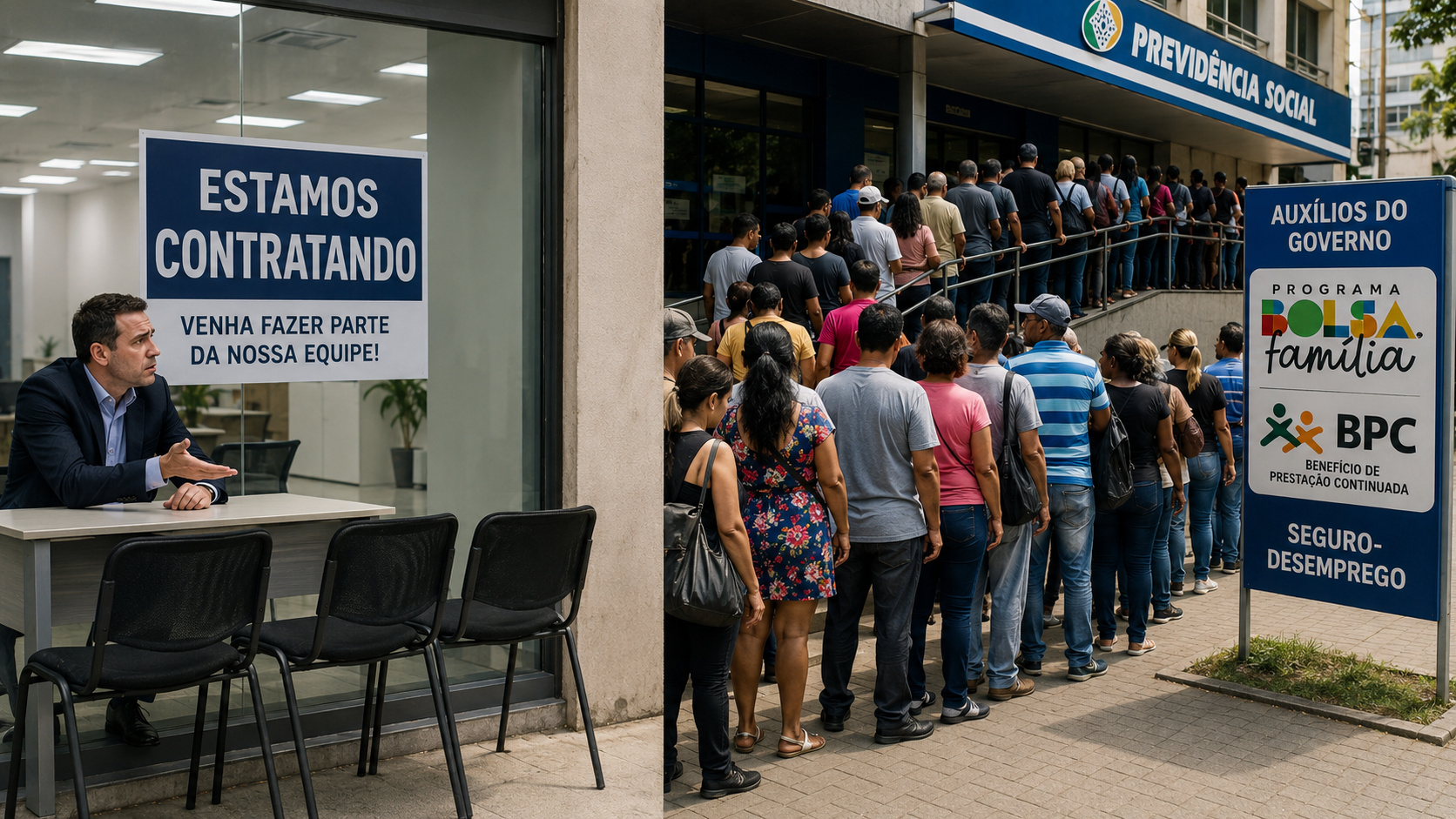
Commerce, supermarkets, and bakeries experience a “labor shortage,” and merchants blame Bolsa Família, BPC, and unemployment insurance as major culprits, while workers outside the market avoid minimum wage jobs for fear of losing benefits.


In the case of PIX, Washington questions how the Central Bank of Brazil regulates, operates, and promotes the system. For the American government, this dual role would create a conflict of interest without adequate procedural safeguards.
The document states that the Central Bank would have acted as a regulator to harm American providers of electronic payment services and favor PIX. The criticism targets operating rules, visibility in banking apps, and charging limits.
Among the points mentioned is the obligation for financial institutions with more than 500,000 accounts to offer PIX. The USTR also questions the requirement that the tool appears on the main screen of participating apps.
In the American assessment, the prominence given to the Brazilian system should be equal to or greater than that of any other payment or transfer service. The report interprets this rule as a competitive advantage granted to a local competitor.
Another sensitive point is the gratuity for individuals. The American government claims that the Central Bank encourages the use of PIX by requiring free offers for this public and limiting fees charged to companies in transactions carried out by the system.

Report also targets digital commerce, ethanol, and the environment
Although PIX has gained prominence, the investigation is not limited to payment methods. The USTR gathered criticisms in six main areas, involving digital commerce, preferential tariffs, ethanol, intellectual property, corruption, and illegal deforestation.
In the area of digital commerce and platforms, the United States claims that Brazilian courts have issued confidential orders for the removal of political content and suspension of profiles on American social networks. The topic appears within the set of contested practices.
The report also criticizes tariff agreements signed by Brazil with India and Mexico. The allegation is that these countries would receive preferential treatment in certain sectors, which, in the American view, would affect the commercial interests of the United States.
In ethanol, Washington claims that Brazil has not offered reciprocal tariff treatment to the American product since 2017. The issue appears as another element of the assessment that Brazilian practices would harm U.S. exporters.
In intellectual property, the document points to delays in patent analysis, failures in combating product counterfeiting, and insufficient anti-piracy measures. Rua 25 de Março, in São Paulo, is cited as an example of concern.
The report also mentions corruption and bribery. In this area, the United States claims that Brazil has not adopted sufficient measures, citing decisions related to Operation Car Wash and a drop in international corruption perception rankings.
In the environmental area, the criticism focuses on illegal deforestation. The USTR acknowledges the existence of environmental legislation in Brazil but argues that the country has historically failed to enforce it effectively.
25% tariff still depends on public consultation
The American proposal foresees an additional 25% tariff on products imported from Brazil, but the process still has steps before a final decision. The public consultation phase will be used to receive submissions and hold a hearing.
The informed schedule sets June 22, 2026, as the deadline for requests to participate in the public hearing. Written comments can be submitted until July 1, and the USTR hearing is scheduled for July 6.
The final deadline for any decision on the measures is July 15, 2026. Until then, Trump’s tariffs remain as a proposal, while Brazil and the United States maintain diplomatic negotiations to try to avoid new trade barriers.
The American list also provides exceptions. Aircraft and aeronautical parts, certain meats, coffee, tea, spices, fruits, fertilizers, pharmaceuticals, minerals, rare earths, cereals, seeds, medicinal plants, and organic chemicals would be exempt from the charge.
The inclusion of PIX in the debate broadens the scope of the trade dispute. The system, presented by Brazil as a tool for financial inclusion, is treated by the American government as an example of public policy that would affect foreign private companies.
The Brazilian government rejects this interpretation and maintains that PIX has expanded financial inclusion without hindering the operations of private companies. The controversy becomes part of the decision on a possible 25% tariff.
With information from Veja.






Be the first to react!