Portuguese
  Spanish


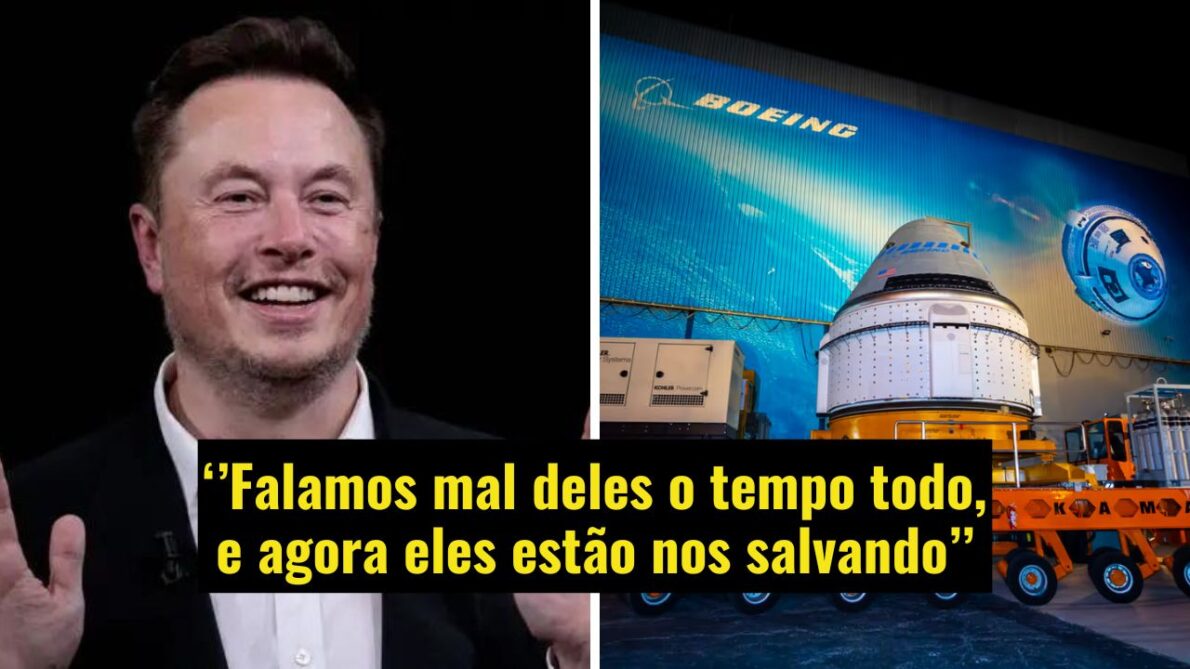

Boeing Workers Express Frustration Upon Seeing Elon Musk’s SpaceX Taking Over Astronaut Rescue Mission, Highlighting the Challenges and Technical Failures Faced by the Aerospace Giant.
The recent NASA announcement regarding the rescue of astronauts Butch Wilmore and Suni Williams by Elon Musk’s SpaceX has brought forth a feeling of embarrassment and frustration within Boeing. The two astronauts were originally on the International Space Station (ISS) aboard the Starliner capsule, manufactured by Boeing, but due to a series of serious technical issues, NASA chose to turn to SpaceX to complete the rescue mission.
The mission, which was initially supposed to last only eight days, was extended to six months due to helium leaks and failures in the Starliner capsule’s thrusters. This situation has created a profound discomfort among Boeing employees, who feel humiliated to see competitor Elon Musk’s SpaceX being called to save the day.
Frustration and Dismay Within Boeing
The environment within Boeing is far from positive. One employee, who preferred to remain anonymous, expressed their discontent to the New York Post, saying: “We hate SpaceX. We talk bad about them all the time, and now they are saving us.” This statement reflects the accumulated frustration of Boeing employees, who have been dealing with a series of setbacks recently, affecting morale and confidence in the company’s future.
-
Artist’s 15-Meter Lighthouse in the Mojave Desert, 160 km from the Sea, Intrigues Visitors with 19 km Range After Years of Bureaucracy

-
Bluetti AC70 Solar-Powered Station: Powers Fridge and Wi-Fi During Blackouts, Delivers 1,000W, 3,000 Charge Cycles, Priced at $900

-
Enormous Black Hole Phoenix A* Challenges Scientific Understanding with Mass of 100 Billion Suns, Surpassing Famous TON 618 in One of the Largest Known Galaxy Clusters
-
Say Goodbye to Storing Wine in a Regular Fridge: Midea’s Climate-Controlled Cellar Holds 34 Bottles, Maintains 5-18°C, and Uses Only Half a kWh Daily


FOR MORE: Decided: Elon Musk’s SpaceX Will Rescue NASA Astronauts and the Boeing Craft Will Return Empty
Why Did NASA Choose SpaceX?
The decision by NASA to trust Elon Musk’s SpaceX with the safe return of astronauts Butch Wilmore and Suni Williams was based on a careful analysis. For two months, the Starliner capsule from Boeing remained docked at the ISS but faced persistent issues, such as helium leaks and thruster failures, which led the agency to consider SpaceX’s Crew Dragon a safer option for the rescue. Although Boeing argued that it could resolve the issues in time, NASA chose to prioritize the astronauts’ safety.
Technical Issues with Starliner: Boeing’s Achilles’ Heel
The Starliner capsule, developed by Boeing, has faced a series of significant technical challenges, including:
- Helium leaks before and after launch, compromising mission safety;
- Recurring thruster failures, affecting the capsule’s maneuverability;
- Other technical problems that jeopardized mission integrity and astronaut lives.
These technical setbacks not only delayed the mission but also led NASA to seek safer alternatives, culminating in the decision to use Elon Musk’s SpaceX for the astronauts’ rescue.
Impacts on Boeing’s Reputation and Future
The decision by NASA to turn to SpaceX for the rescue was a hard blow to Boeing, which has already been facing criticism and challenges related to safety in its commercial airplanes, such as the incident with the Boeing 737 MAX 9. Furthermore, the company has been the target of several allegations regarding the safety and quality of its products, further damaging its reputation in the aerospace sector.
Despite the challenges, Boeing remains committed to ensuring the safety of its space missions. The company has invested about US$ 1.5 billion beyond the initial US$ 4.5 billion contract with NASA, in hopes that the Starliner can still become a viable option for transporting astronauts to the ISS, competing side by side with SpaceX’s Crew Dragon.
Scenario Increasingly Dominated by Elon Musk’s SpaceX
However, the need to rapidly overcome technical issues and restore the trust of NASA and the public will be a considerable challenge for Boeing. The company will need to prove that it can offer safe and reliable solutions for future space missions, in an increasingly dominated landscape by Elon Musk’s SpaceX, which, despite initial criticisms, continues to excel in the aerospace market.