






 Portuguese
  Spanish
  3 min of reading
  0 comments


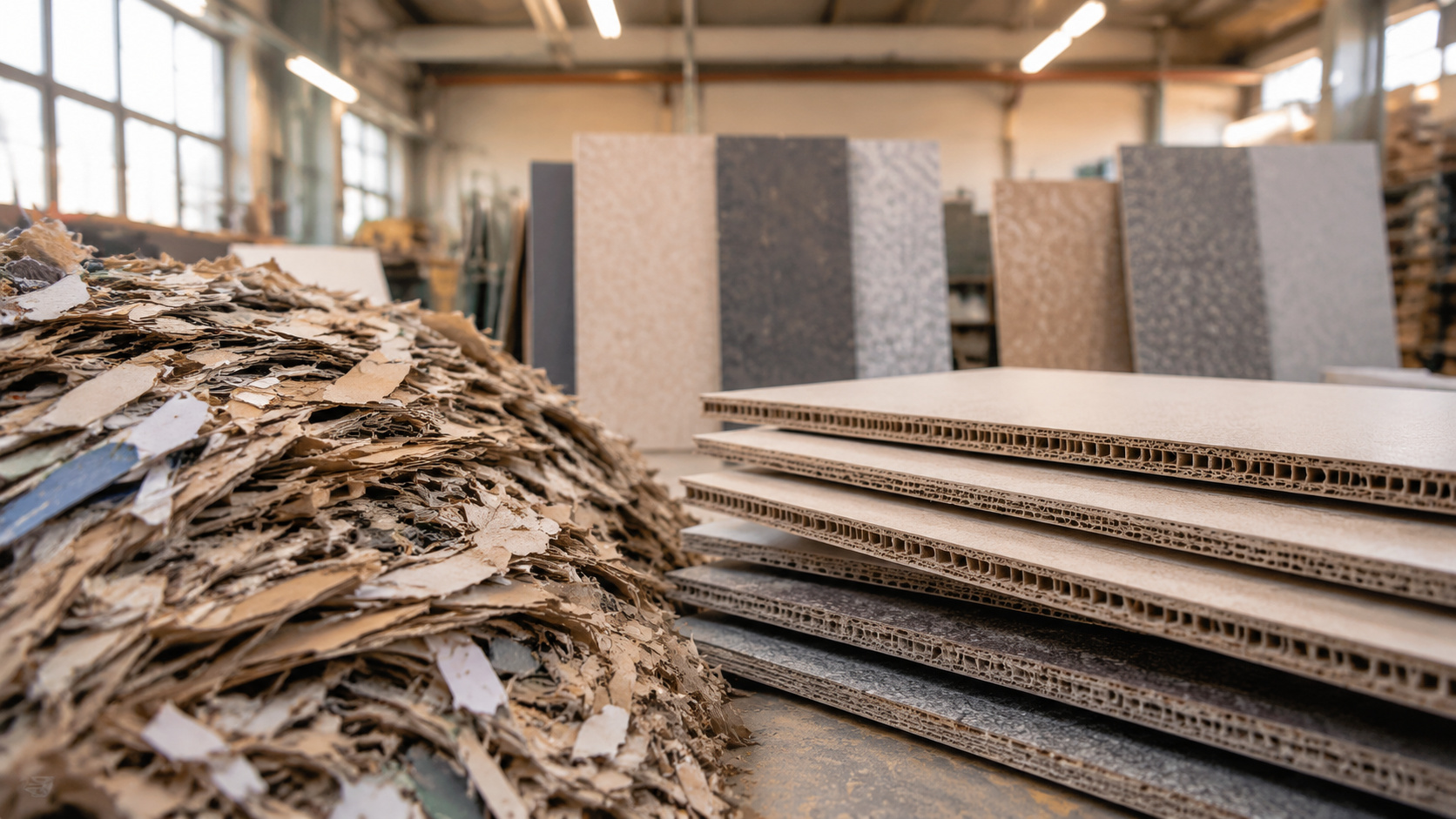
Technology transforms paper waste into eco-friendly wall panels, free from conventional resins, offering sustainable aesthetic and acoustic finish, reducing environmental impact and reusing industrial paper sludge
The end of the paper recycling line has become the beginning of a new solution. Waste that was previously discarded in landfills can now be converted into eco-friendly wall panels, free from toxic resins, thanks to the application of enzymes and safe additives. This technology transforms paper sludge, an industrial byproduct, into a functional and environmentally correct finishing material.
The initiative offers alternatives for internal cladding and acoustic insulation, creating an opportunity to reuse millions of kilograms of paper that previously could not be recycled. The process reduces the environmental impact of the paper industries and provides practical solutions for constructions seeking sustainability and innovation.
The information was published by Future Materials Bank, a portal specialized in material innovation, detailing the process of the company Honext, located in Barcelona, Spain.
-
Women in a Brazilian Community Empowered to Renovate Homes Independently Through Design and Planning Skills

-
Man Builds Solar-Powered Tiny Home to Escape Rent, Faces Demolition Order in Expensive Australian Region
-
Facing a Shortfall of 83,900 Homes, Curitiba Considers Social Housing with Public Units, Reduced or Free Rent, Prioritizing Seniors, Victims of Violence, and the Homeless

-
Abandoned Building in Brazil’s Vitória to Be Transformed into 44 Affordable Housing Units with Government Funding


Why paper also becomes difficult waste
Not all cellulose fiber can return to paper production. During conventional recycling, part of the material loses strength or quality, generating the so-called paper sludge, which represents an industrial disposal challenge.


The reuse of this sludge turns a problem into an opportunity, allowing the creation of firm and eco-friendly panels, utilizing resources that were previously considered unusable and avoiding the accumulation of industrial waste.
How enzymes replace conventional resins
The differential of the process lies in the use of enzymes and non-toxic additives, which act as a natural glue to bind the paper fibers. The material receives heat and pressure, forming resistant and uniform finishing boards, without the need for synthetic resins harmful to the environment.
This technique ensures that the final product has durability and aesthetic quality, becoming a clean alternative to conventional materials.
Where these boards can be used
The boards derived from paper sludge can be applied to internal walls and acoustic panels, providing sound insulation and visual finishing. The material is suitable for offices, studios, schools, and commercial spaces seeking sustainable solutions.

Besides reducing industrial waste, the use of these boards allows for a decrease in dependency on chemical products, creating a complete and sustainable recycling cycle.
Why this is finishing, not structure
It is important to understand that these boards serve as coating and insulation, not replacing structural elements of constructions. Correct application ensures environmental and aesthetic benefits, without compromising the safety or integrity of the walls.
The information was released by Future Materials Bank, a portal specialized in material innovation, confirming that Honext’s technology represents a new frontier in the reuse of industrial waste and sustainable construction.
The transformation of paper sludge into ecological boards shows how innovation and sustainability can go hand in hand, offering practical and low environmental impact solutions. The reuse of this waste creates economic and environmental alternatives for companies and consumers.
Would you be inspired to apply recycled paper boards in your environment or do you prefer traditional construction solutions?




Be the first to react!