






 Portuguese
  Spanish


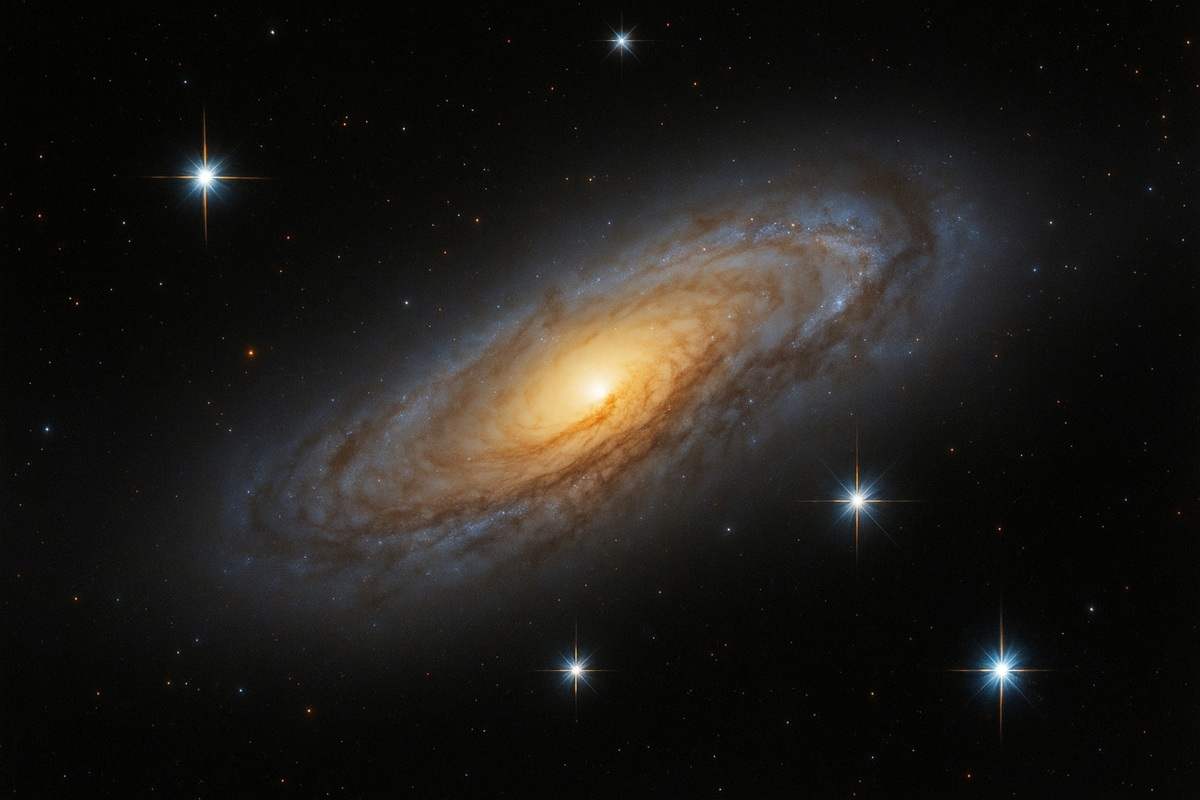
Image Captured by Hubble Reveals Spiral Galaxy with Black Hole 174 Million Times More Massive Than the Sun Growing.
The Hubble Space Telescope captured an impressive image of the barred spiral galaxy UGC 11397. Located about 250 million light-years from Earth in the constellation Lyra, the galaxy hosts an actively feeding supermassive black hole.
Calm Appearance Hides Powerful Core
According to astronomers from NASA/ESA, UGC 11397 appears, at first glance, to be a typical spiral galaxy.
It features two graceful spiral arms, illuminated by stars and cut through by dense clouds of cosmic dust. However, its center hides an intense energetic phenomenon.
-
Chile’s Plan for a 20,000 km Undersea Cable to Hong Kong Halted by U.S. Pressure, Highlighting the Silent Data Control Battle in Latin America

-
In Somaliland’s Desert, Greenhouse Uses Sun and Seawater to Grow Lettuce, Cucumbers, and Tomatoes Without Rain: 1-Hectare Project Cools Crops, Desalinates Water, and Converts Brine into Commercial Salt
-
Trump Unveils $400 Million Boeing 747 Donated by Qatar as Temporary Air Force One Amid Boeing Delays, Sparking Debate on National Security, Costs, and Foreign Influence
-
Chinese Company Unveils Robotic Toilet That Comes to You, Featuring Lidar Sensors, Voice Command, Bidet, Hot Air Drying, UV Light, and Self-Cleaning Waste Disposal




At the core of the galaxy is a black hole with 174 million times the mass of the Sun. This black hole is in a growth phase, drawing in dust, gas, and even stars.
As this matter approaches, it heats up and emits large amounts of radiation, creating a true spectacle of cosmic lights.
Activity Hidden by Clouds of Dust
Despite the intense brightness generated by this process, much of the activity remains hidden. Thick clouds of dust block the emission of visible light, preventing direct observation of the central region of the galaxy.
However, the black hole can still be detected through its strong X-ray emission.
This type of behavior led scientists to classify UGC 11397 as a Type 2 Seyfert galaxy. This category is used when the active center of a galaxy is obscured by dust and gas in the form of a ring, blocking optical light while revealing signals in other wavelengths.
Part of a Broader Study with Hubble
According to researchers, UGC 11397 is just one of hundreds of galaxies that will be observed with Hubble. The aim is to better understand supermassive black holes, discover how they grew in the past, and study star formation in their surroundings.
The interest in galaxies like UGC 11397 is related to the possibility of unveiling events from the early Universe. The new observations promise to provide important clues about the processes that shape the centers of galaxies and their most extreme structures.


Be the first to react!