






 Portuguese
  Spanish


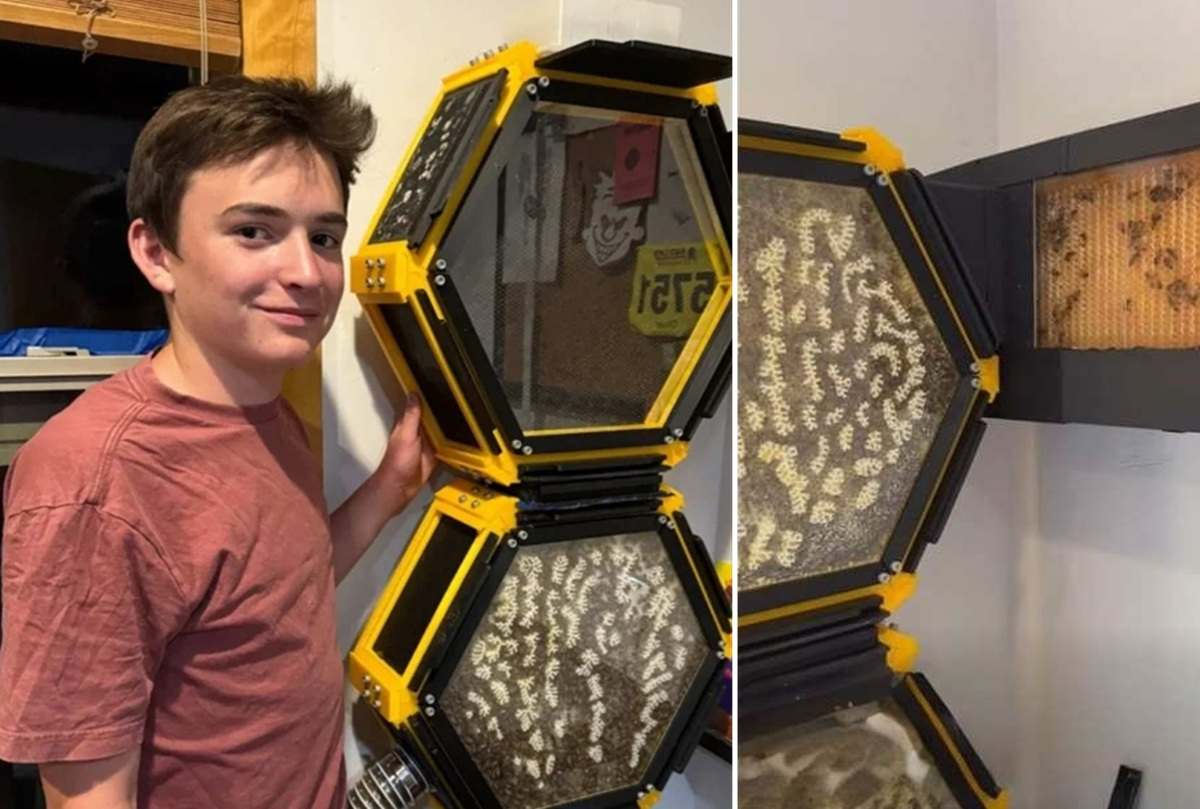


While Many Teenagers Spend Time Playing or Watching Videos, a Young British Man Decided to Make Space for 40 Thousand Bees in His Own Room. Using 3D Printing and Creativity, He Built a Modular Hive Connected to the Window and Is Already Harvesting Results — Literally
In the room of a 13-year-old teenager, thousands of bees work day and night in a hive created by him with a 3D printer. Without leaving home, the young man houses up to 40 thousand bees.
While many teenagers enjoy their school vacations in front of screens, Oliver Taylor, 13, decided to turn his room into a living experiment.
He built a modular hive, 3D-printed, connected directly to his bedroom window.
-
In a Degraded Atlantic Forest Area, a São Gonçalo Resident Transforms Land into a Living Eco-Museum, Now a Model for Environmental Education

-
World’s First Lithium-Sulfur Battery Factory Launches, Promising to Double Range Without Relying on China

-
AI Data Centers Now Feature Built-In Nuclear Power Plants and Have Ordered Non-Existent Reactors
-
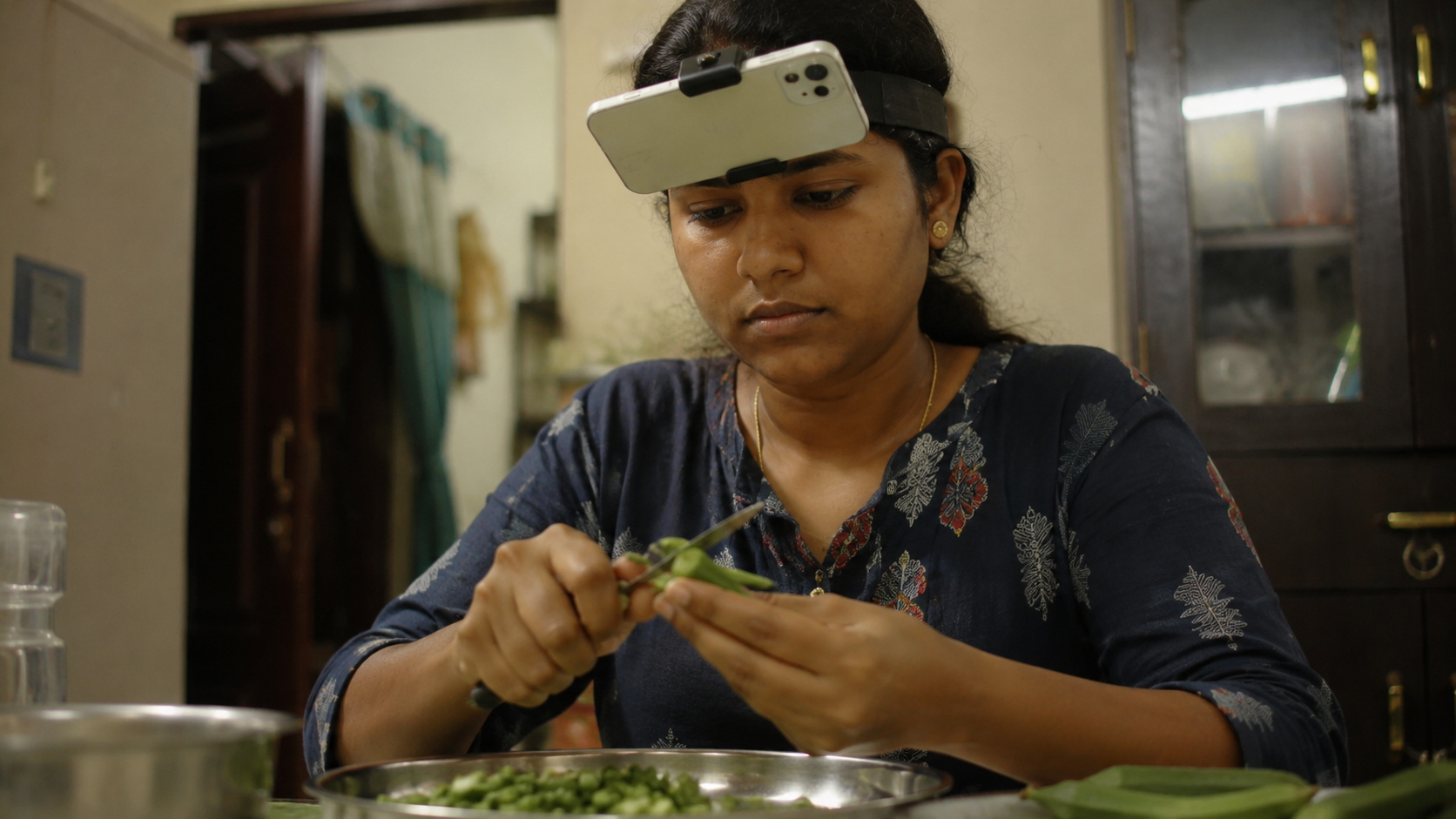
In India, thousands earn about $2.50 an hour cooking and cleaning with a phone strapped to their heads, as every move is recorded to train humanoid robots for jobs they might one day replace.


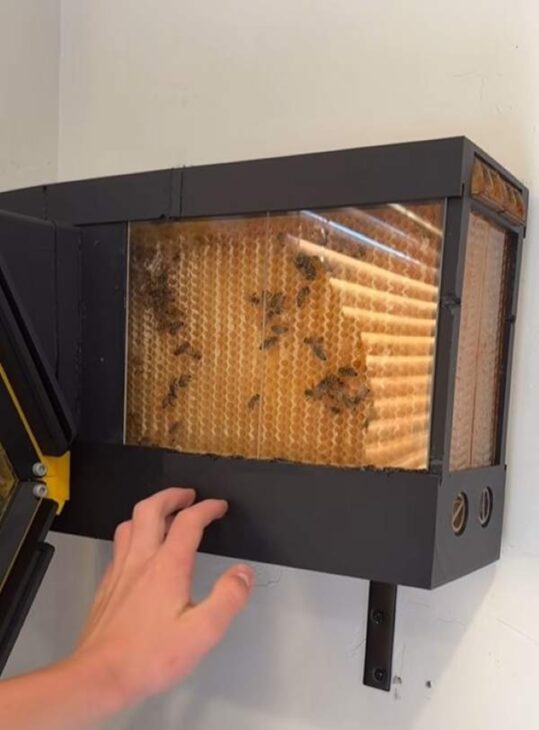
The system allows bees to come and go freely, without invading his personal space.
The idea, which might seem absurd at first glance, houses between 30 thousand and 40 thousand bees.
All producing honey in a controlled, safe environment adapted to the daily life of a typical household.
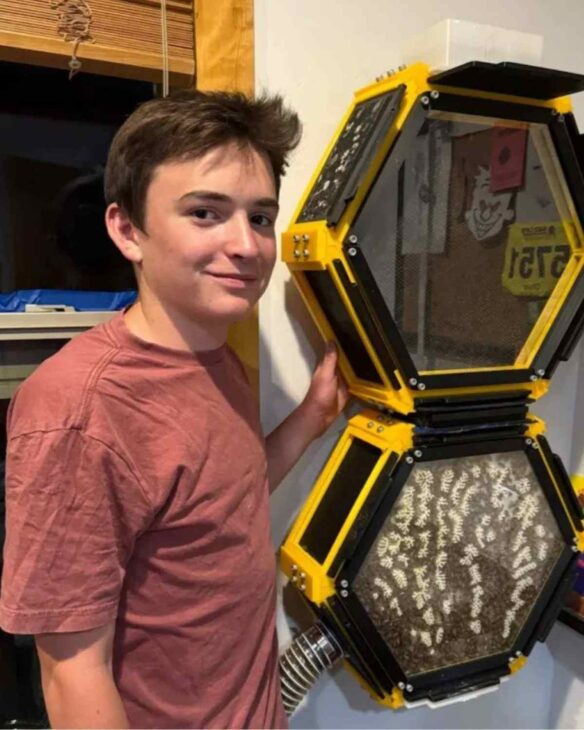
The structure follows a hexagonal model, inspired by commercial hives, but with an important differentiator: it is expandable and secure.
Design That Evolves with Purpose
The inspiration came from commercial models available on the market. Oliver was impressed by the high prices and decided he could do better.
Using CAD software, he created a modular hexagonal fitting system, similar to the natural shape of hives. But he went further: he identified a problem in the existing models.
Commercial hives posed a risk of mass escape when opened for maintenance. Oliver’s solution was inspired by the hermetic compartments of submarines.
He developed a double-door system that allows safe access to the modules without compromising the hive structure or causing panic among the bees.
The result is a functional, dismountable system that adapts to any space. Maintenance can be done safely, and the design allows for nearly unlimited expansion.
Simple Technology, Real Impact
Oliver used accessible tools to assemble the entire project. With an open-source Prusa 3D printer and free software like Blender, he created functional, lightweight, and durable parts. The use of accessible technology makes the project replicable in other contexts.
The proposal has a direct impact on the preservation of bees, increasingly threatened by pesticides, climate change, and habitat destruction.
By creating a functional hive inside the home, Oliver shows that conservation can start in urban environments with low cost and creativity.
Similar projects are already appearing in cities around the world. Insect hotels and mini-shelters on balconies are already known solutions.
But what sets Oliver’s project apart is the ease of replication and the use of simple materials.
Small Ideas, Big Reflections
Oliver Taylor’s project goes beyond 3D printing or honey cultivation. It raises larger discussions on how to integrate nature into urban and interior spaces.
Could offices, schools, and apartments adopt similar solutions?
In France, there are already buildings with facades designed to house pollinators.
In the Netherlands, bus structures with green roofs and solitary bee nests are also being tested. Oliver’s experiment may be the beginning of a shift in mindset.
The case of Oliver Taylor shows that individual initiatives, even from young people, can have a significant impact.
By combining accessible technology, environmental awareness, and creativity, he transformed his room into a microcosm of production, learning, and biodiversity.
And at the center of it all, 40 thousand bees working in harmony, showing that solutions to big problems can start with a simple idea — or an open window.








Alguém tem o slt?
Verdadeiro Zé Colmeia!
Se alguém jogar uma bolinha errada alivai da muito ruim nesse quarto