






 Portuguese
  Spanish




Before Dawn, A Teenager From The Rural Area Balances School, Milking, Cheese Canastra Production, And Local Sales, Taking On Responsibilities That Many Adults Avoid
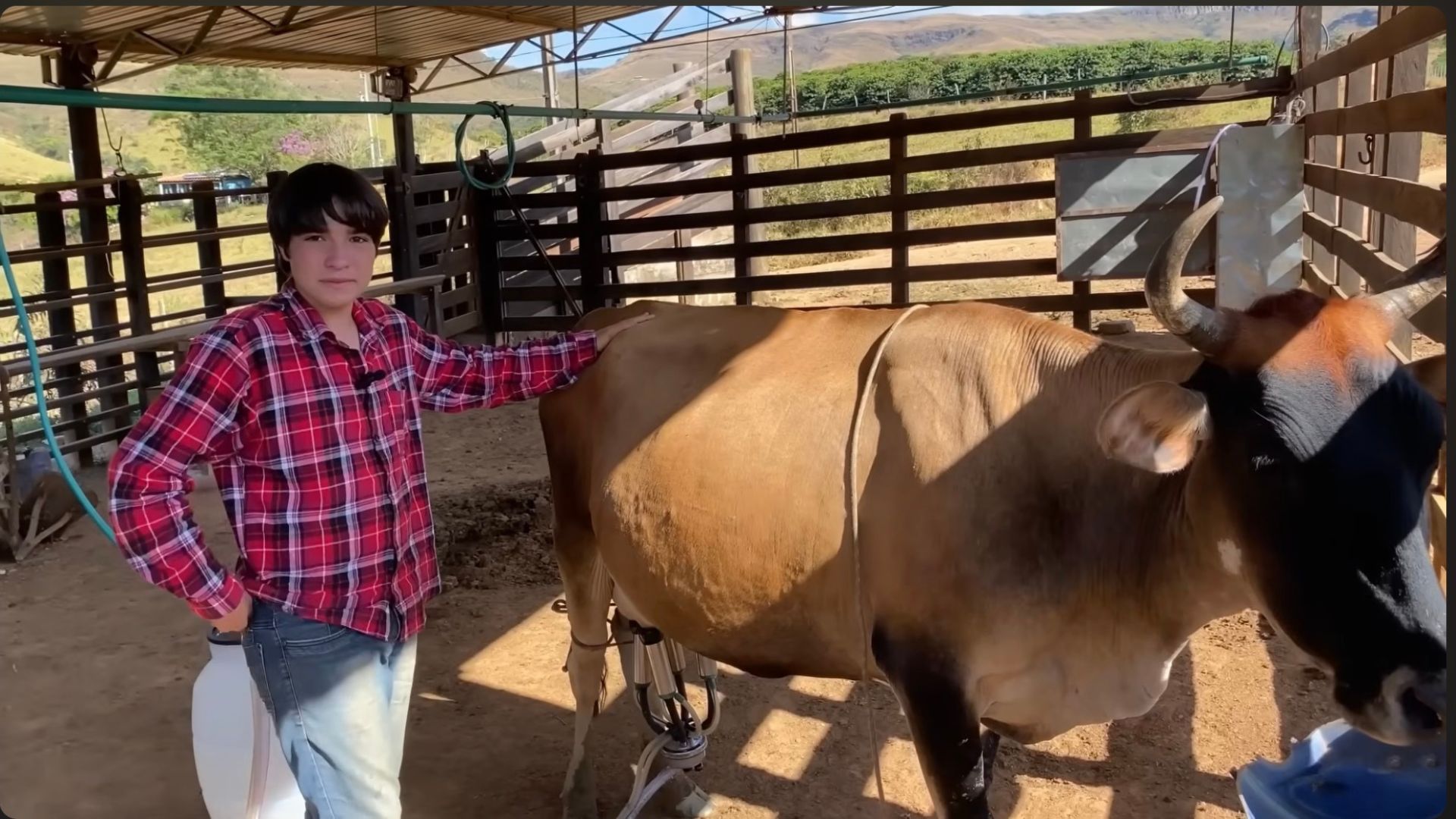
In Serra da Canastra, in Minas Gerais, while most children are still sleeping, a 12-year-old boy is already up at 4 AM. Without an alarm or any rush, he starts a routine that mixes rural work, hands-on learning, and daily discipline. Álvaro, a resident of rural Capitólio, takes care of the cows, milks them, produces artisanal cheese, and only then heads to school.
This routine catches attention not only because of his age, but for its consistency. Every day, without exception, he repeats the same process. The work, according to him, is not burdensome. On the contrary: it is part of the life he has always known.
The information was released through audiovisual content recorded in Serra da Canastra, where the entire artisanal cheese production process was closely monitored, from milking to curing the final product.
-
Brazilian Family’s Cheese, Started with One Cow in 1984, Named Best in the World, Beating 2,700 Competitors from 30 Countries

-
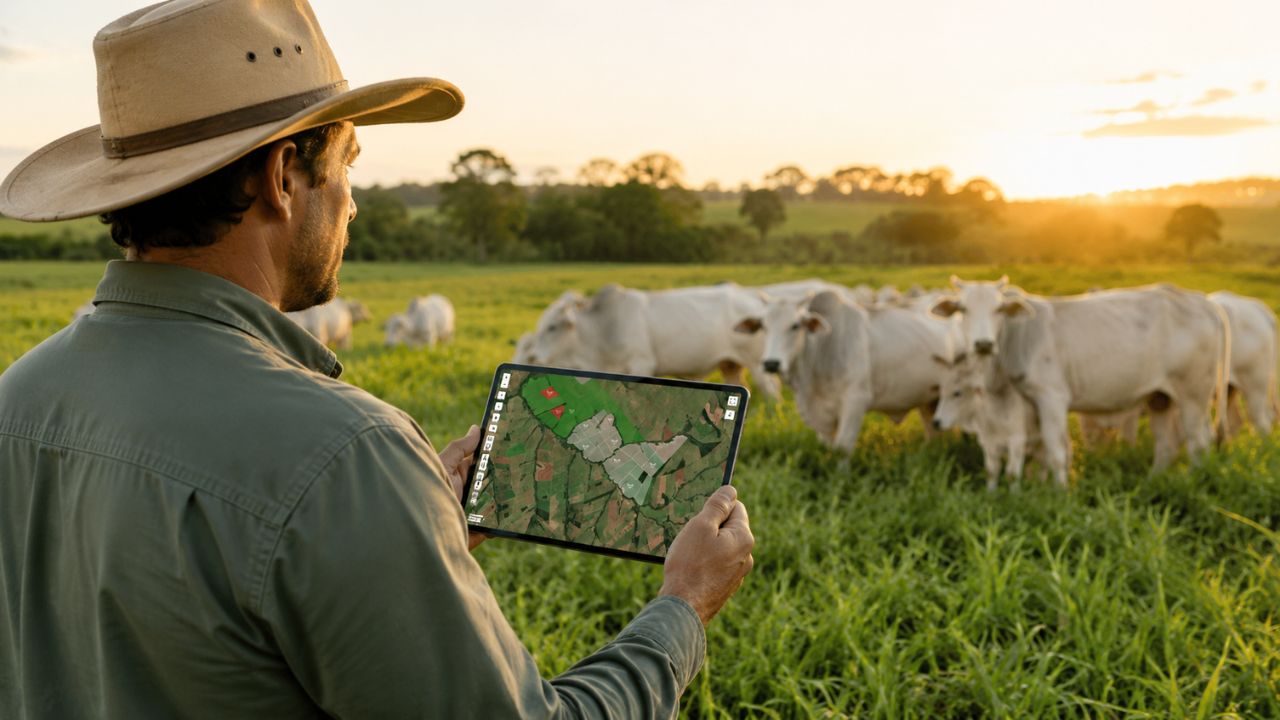
Brazilian Ranchers Use Satellites to Optimize Pasture Management and Prevent Feed Loss in Cattle Farms

-
Russia Follows China in Recognizing Brazil as Free from Foot-and-Mouth Disease Without Vaccination, Boosting Meat Exports and Agribusiness Potential

-
23-Year-Old Brazilian Turns Beekeeping into College Tuition, Harvesting Honey Twice a Year from 50 Hives




From an early age, Álvaro learned that life in the countryside requires commitment. Therefore, even with his father working outside for a large part of the day, he took on the responsibility of milking daily in the afternoon. On average, he produces between 15 and 20 liters of milk per day. However, the volume varies according to the weather. On cold days, the production decreases; on hot days, it increases.
Even so, he does not improvise. On the contrary: he applies methods, care, and knowledge passed down from his family.
From Milking To Cheese Canastra, An Artisanal Process That Demands Technique, Hygiene, And Patience
After gathering the cattle in the corral, Álvaro starts milking, which currently takes place with the help of a mechanical milker. According to him, the equipment speeds up the work, which lasts about 40 minutes, but it does not eliminate the need for attention.
Each cow enters the corral in a specific order. The animals already know the sequence and wait calmly. During milking, Álvaro offers moist feed, a strategy that avoids waste. Additionally, he periodically provides mineral salt to maintain the herd’s health.
The cost weighs on the budget. According to him, three bags of feed cost R$ 384, an amount considered high for small-scale production. Even so, he maintains the investment to ensure the quality of the milk.
As soon as milking is finished, the milk goes directly to the production of Cheese Canastra. First, he strains the milk and keeps it at its natural temperature. Then, he adds the rennet. The coagulation process takes, on average, from 40 minutes to 1 hour, depending on the ambient temperature. On hot days, the milk coagulates faster; in the cold, the time increases.
After that, Álvaro manually cuts the curd. This process can last between 15 and 20 minutes, until the whey separates properly. According to him, more delicate cuts ensure better texture and flavor of the cheese.
He applies salt only on top of the curd, a technique learned from his father, mother, and grandfather. Then, he molds the cheese in cloths and presses it manually on an inclined stone, which facilitates whey drainage.
The cheese starts to reach the point of half-cure after four or five days. From there, it takes on a yellowish color and the characteristic flavor of Serra da Canastra.
School, Sales In The City And The Dream Of Opening A Cheese Factory In The Future
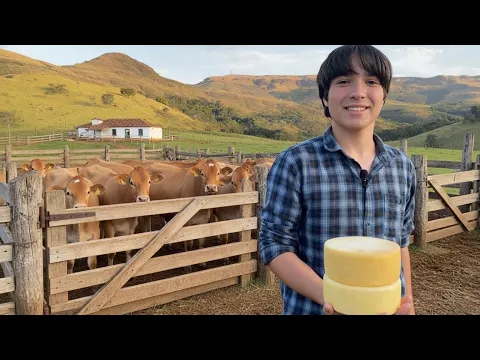

Even with an intense routine, Álvaro does not neglect his studies. On the contrary: he wakes up early precisely because he needs to take two buses to reach school in Capitólio. The journey takes about two hours. At the end of the day, he returns home only in the late afternoon.
Before leaving, however, he takes care of the animals. Upon returning, he resumes activities on the farm. Part of the cheeses is sold at two gas stations in the city, where merchants use the product to prepare cheese bread.
Normally, his father helps with the transport, using the family truck. As the school schedule does not coincide with the gas station routes, this logistics facilitate deliveries.
All the milk and cheese produced belong to Álvaro. Although his parents purchased the cows, they allocate all the production to their son as a form of encouragement. Thus, he learns, from an early age, to deal with responsibility, income, and organization.
Despite his young age, the boy is already thinking about the future. Among his plans, he considers opening a cheese factory of his own. He recognizes that he masters the practice, but understands that he still needs to study more to grow in the field.
There is fatigue. However, he does not complain. On the contrary: he states that he enjoys life in the countryside, the contact with the animals, and the feeling of producing something with his own hands.
Tradition, Learning And Resilience In The Brazilian Countryside
Álvaro’s story goes beyond an isolated case. It represents the resilience of artisanal production and the strength of family agriculture in Brazil. In a scenario dominated by industrialization, young people like him keep alive practices that cross generations.
In Serra da Canastra, cheese represents more than just food. It symbolizes cultural identity, family heritage, and livelihood. When teenagers take on this role, they ensure that knowledge does not get lost over time.
More than waking up early, Álvaro demonstrates discipline, pride, and connection with his own roots. In silence, he proves that tradition is also built every day, even before the sun rises.
Could you maintain such an intense routine from such a young age to preserve a tradition of your family?
Source: É DU CAMPO and EDUARDO PÁDUA




Pobrecito y no vas a clase para poder estudiar? Debería de estudiar, ya tendrá tiempito de trabajar en su vida.
“¿Por qué?”
Un rotundo dolor
Del fondo de mi corazón
Cada día sin cesar
Me recuerda en mi pensar
Que “busco”, en comillas más grandes
Que el amor q me tengo
Que busco? Siento que cada día pierdo la valentía de decir que tengo motivos
Por que? No lo se me odio como a nadie más
Por que? Pues sin dudar arruinó a los demás
Por que? Me hago pasar como si supiera algo de mi miserable existencia
Por que? Aun no quiero desaparecer aunque no tenga coherencia
Por que? Pues aun tengo motivos
Que aunque no entienda, quisiera que me respondas
¿Por que?
Callen a este ns xq publica esto en esta página
Mi hijo tiene diez años y lleva años levantándose a las cinco de la mañana para echarle de comer a las vacas , ovejas y caballos antes de irse al cole sin que nadie se lo pida y es un orgullo tener un hijo tan responsable asi que enhorabuena
Mi mamá nos contaba que cuando tenía trece años la mandaron a trabajar a una granja donde se levantaba a ordeñar vacas a las cinco de la mañana, además hacía tareas en la casa de la granja y cocinaba. Pero en esos tiempos no la mandaron a estudiar. El sueldo se lo pagaban directo a la madre de ella.