






 Portuguese
  Spanish


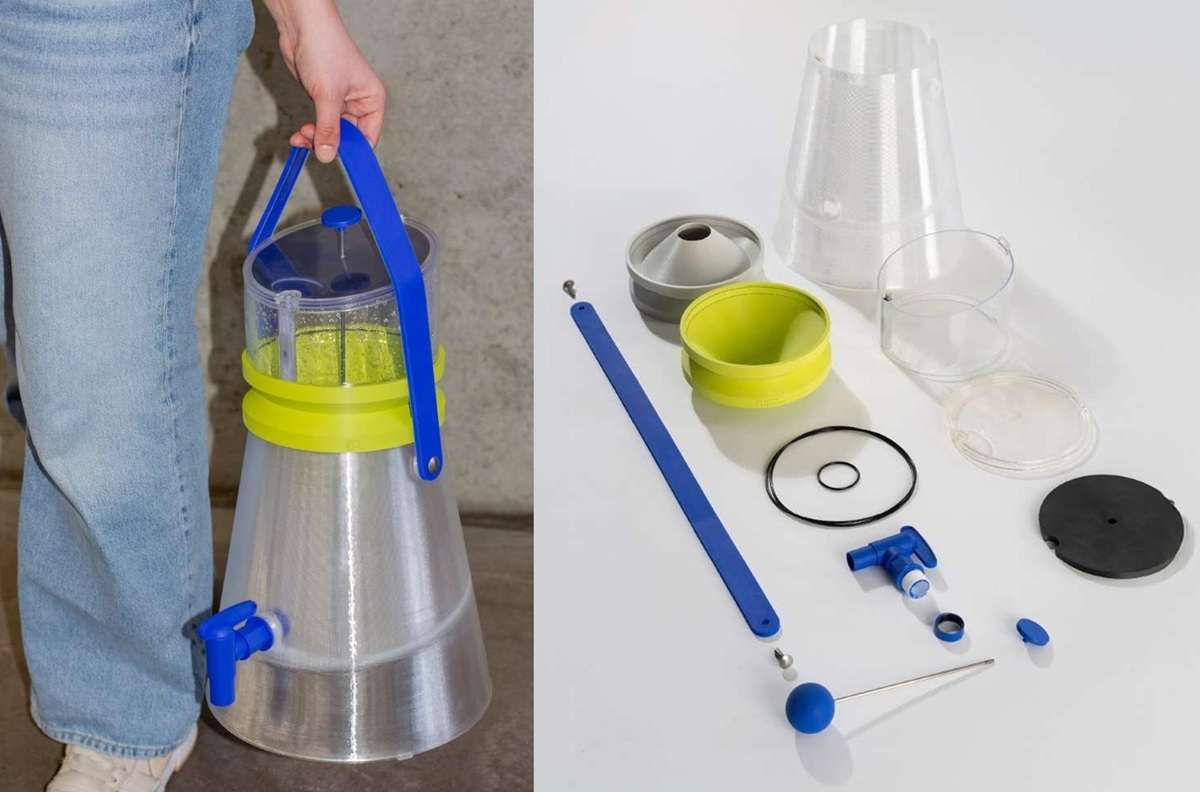


Two German Designers Created a Portable Bottle That Promises to Change Water Access in Areas Without Infrastructure. 3D Printed, It Can Generate Up to 6 Liters of Drinking Water per Day Using Only Air — and Without Needing Electricity.
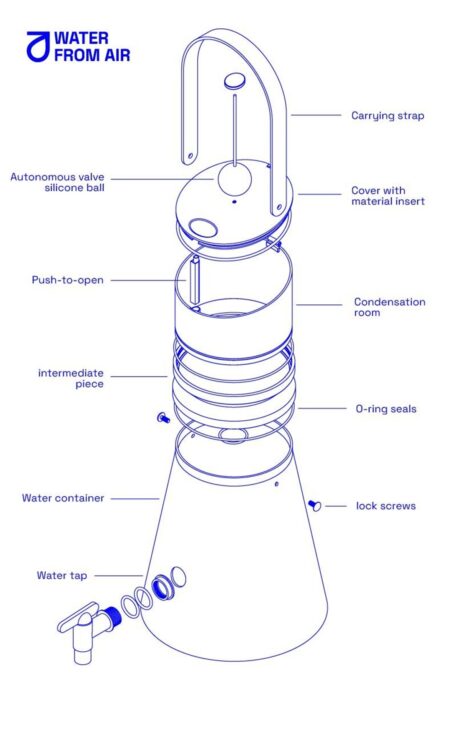
A project developed by two German designers promises to revolutionize access to drinking water in vulnerable locations. Louisa Graupe and Julika Schwarz created a portable bottle that extracts up to 6 liters of water directly from the air, without the need for electricity.
A Simple, Portable, and Efficient Device
The innovation draws attention for being both practical and accessible.
The bottle is modular, 3D printed, and does not use motors, solar panels, or filters.
-
Brazilian Engineer Develops Affordable Custom 3D-Printed Prosthetics for Children and Teens, Operated by Elbow or Wrist Movement Without Batteries

-
China Left 51 Rocket Bodies in Low Earth Orbit Between 2021 and 2025, Doubling Previous Period, Report Warns of Space Debris Threatening Satellites for Decades
-
Brazilian Researcher Uses Low-Cost Sensors to Measure Cyclists’ Pollution Exposure in São Paulo

-
18 Iron Age gold coins discovered by a teacher using a metal detector in a Suffolk field sell for £33,200 at auction, exceeding estimates.


This makes it especially useful in emergencies, remote areas, and regions without adequate infrastructure.
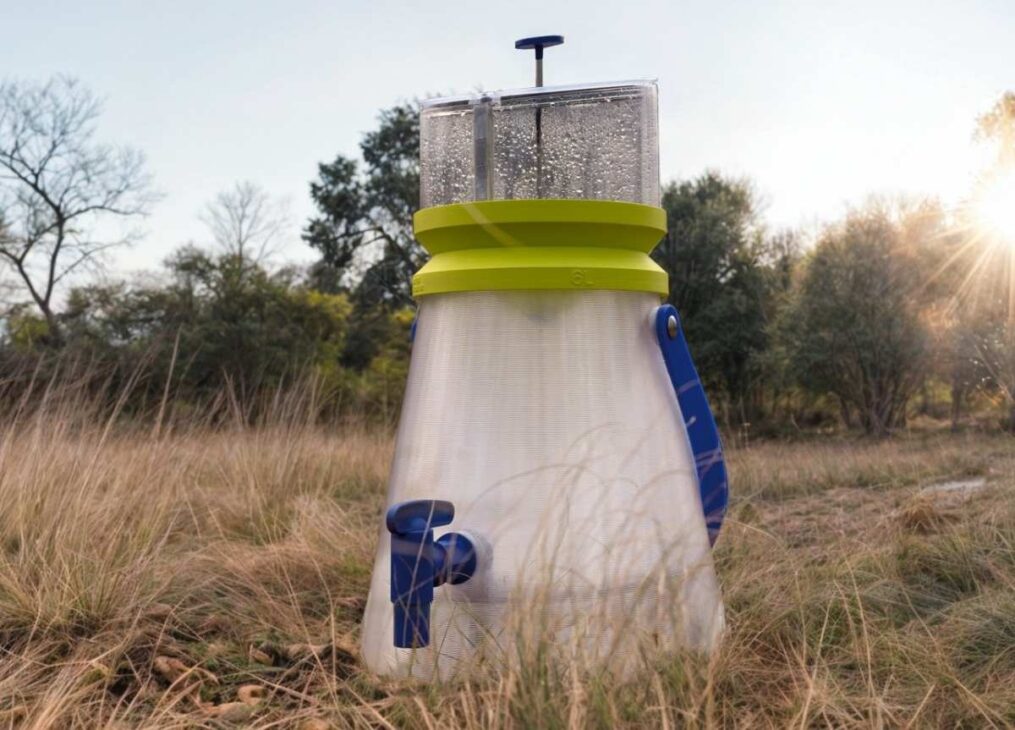
The proposal stands out for its compact design, intended to facilitate transportation and local production.
Because it is manufactured through 3D printing, it can be assembled easily, reducing costs and encouraging the autonomy of the communities that need it most.
How the Bottle Transforms Air into Water
The operation is based on a technology called MOF — metal-organic frameworks with high porosity.
In the case of the German bottle, the compound SHCP-10 is used, which is effective even in environments with low relative humidity.
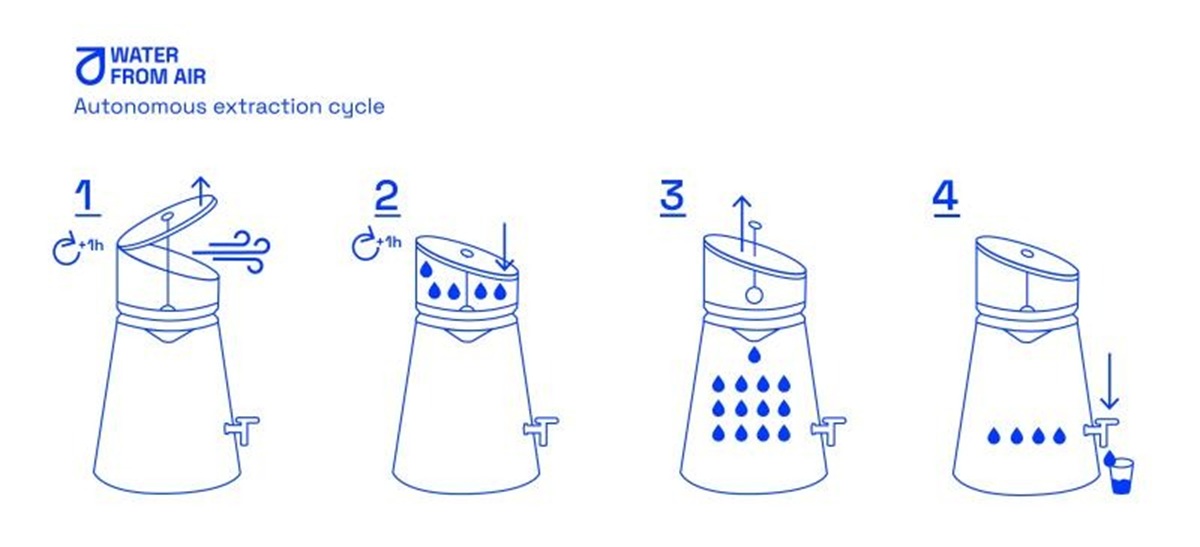
The process is simple: air enters the bottle and the MOF retains the water vapor.
Then, the container closes, and the ambient temperature heats the trapped air, causing condensation. The resulting water droplets flow into a lower compartment.
The entire cycle occurs without any external energy source. Only the natural temperature of the environment is needed to activate the condensation process.
A Real Alternative to the Water Crisis
According to UN data, more than 2 billion people live without safe access to drinking water.
Most existing technological solutions for extracting water from the air require constant electricity, making them unviable in rural areas or disaster-affected regions.
The bottle created by Louisa Graupe and Julika Schwarz aims to address this limitation with a sustainable and low-cost approach. Its application could serve populations affected by power outages, prolonged droughts, or lack of basic infrastructure.
Furthermore, being modular and without complex mechanical parts, it facilitates local repairs and reduces electronic waste.
Limitations and Challenges of the Project
Despite its potential, the device still faces significant barriers. The compound SHCP-10 is not produced on a large scale, which increases the product’s cost and complicates its distribution.
Another challenge is the variable performance: the 6 liters per day are only reached under ideal humidity conditions. In very dry climates, the yield can drop significantly.
The quality of the water also needs to be taken into account. The liquid obtained is technically distilled, lacking essential minerals, and may require remineralization for continuous consumption, especially by children or people with specific diets.
Still a Prototype — But with Great Potential
The bottle is still in the conceptual phase, with no mass production. Nevertheless, the project represents a promising alternative in light of the growing water scarcity around the world.
Its simplicity, portability, and low environmental impact place the proposal among the most creative and viable solutions to address the global water crisis.


Qual filamento suportaria temperaturas adversas?
Acredito que ABS e/ou PETG
Tem o link de onde pode baixar o modelo para impressão?
Até o momento, não foi disponibilizado publicamente um link para download do arquivo de impressão 3D da garrafa portátil que extrai água do ar mencionada na notícia. O projeto apresentado pelas designers Louisa Graupe e Julika Schwarz ainda está em fase conceitual e, segundo informações atuais, seus arquivos digitais para impressão não foram liberados em repositórios abertos ou domínio público.
### O que você pode fazer:
– **Acompanhar novidades:** Fique atento a notícias sobre o desenvolvimento do projeto, pois atualizações ou lançamentos futuros podem vir a disponibilizar esses arquivos.
– **Contato com os criadores:** Caso tenha necessidade imediata, tente localizar contatos das designers citadas no artigo, pois elas podem fornecer mais detalhes ou informar sobre eventual disponibilização dos modelos.
– **Alternativas similares:** Existem outros projetos de coletores de água atmosférica de código aberto em plataformas como Thingiverse ou Printables. Eles não são idênticos, mas podem atender a finalidades parecidas.
Se precisar de sugestões de modelos abertos para captar água do ar por impressão 3D, posso indicar alguns existentes em comunidades maker.
Analistas do prêmio NOBEL e os médicos sem fronteiras precisam ser informados….!!!!!