






 Portuguese
  Spanish


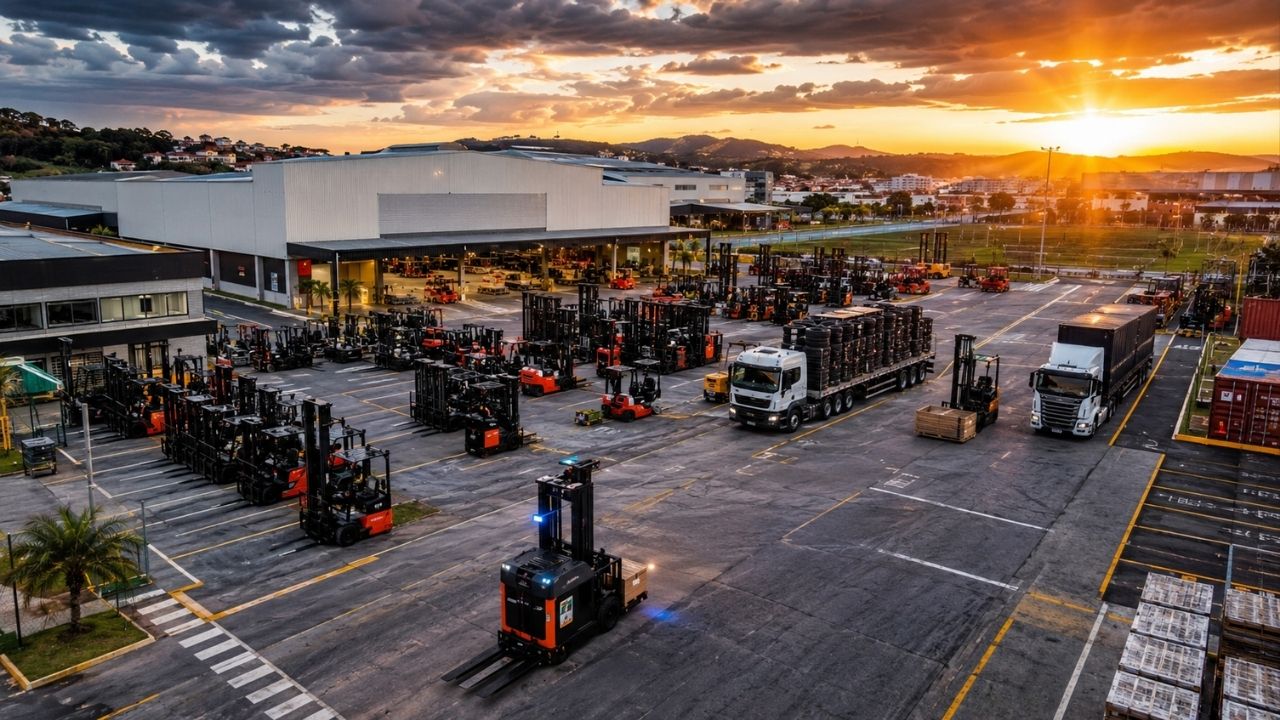

Carmak forklifts sustain revenue of R$ 304 million with rental, maintenance, and national fleet. As a Toyota distributor in Rio Grande do Sul and Santa Catarina, the company bets on 36 to 60-month contracts and autonomous machines to advance in the competitive Brazilian national market.
The forklifts have become the center of a R$ 304 million business led by Yuri Santos from Carmak, a Toyota distributor that is growing with rental, maintenance, and autonomous machines on the radar. The story was published by Exame on June 7, 2026.
According to information published by Exame, Carmak operates with rental, sales, and maintenance of equipment, is a distributor of Toyota Forklifts in Rio Grande do Sul and Santa Catarina, and operates a fleet of about 3,800 machines. The growth occurs while part of the Brazilian industry is switching from purchasing equipment to rental contracts.
Carmak grew along with the demand for industrial rental
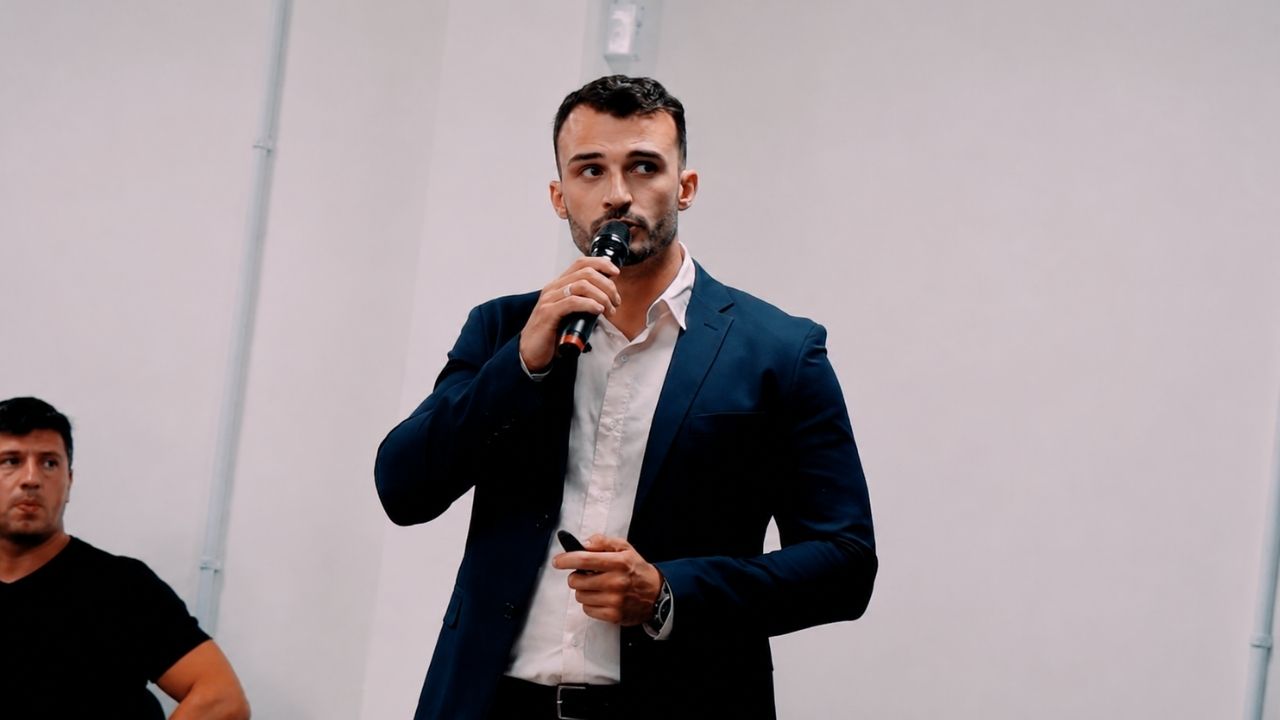
Carmak’s journey began 34 years ago, founded by Yuri Santos’ father. The origin of the business was in vehicle resale, but the company saw an opportunity when partners started buying forklifts to rent them out.
-
Entrepreneur Sells Car to Launch Healthy Meal Business, Now Runs Mr. Fit with 880 Stores in 3 Countries and $40 Million Annual Revenue

-
End of an Era: Renault Plans Major Overhaul, Cutting Jobs to Compete with Chinese Rivals and Transform Engineering by 2027
-
Brazil’s Largest Grain Port Faces Delays in the Hinterlands, Missing Rail Link Costs Agribusiness Billions

-
Egg Prices Drop Due to Weak Demand as Poultry Producers Increase Purchasing Power


At that time, according to the report, there were few specialized rental companies in the country. The market was more dominated by distributors who bought and resold equipment, while rental was still a less consolidated bet.
Carmak grew in a sector that requires capital, discipline, and long-term vision. Since the machines need to be purchased before generating revenue for years, the company cannot expand without cash control.
Today, the company has 450 employees and eight business units. More than 3,500 machines from the fleet are within clients under rental contracts, showing how rental has become the main axis of the operation.
Forklifts have gone from just sales to contracts
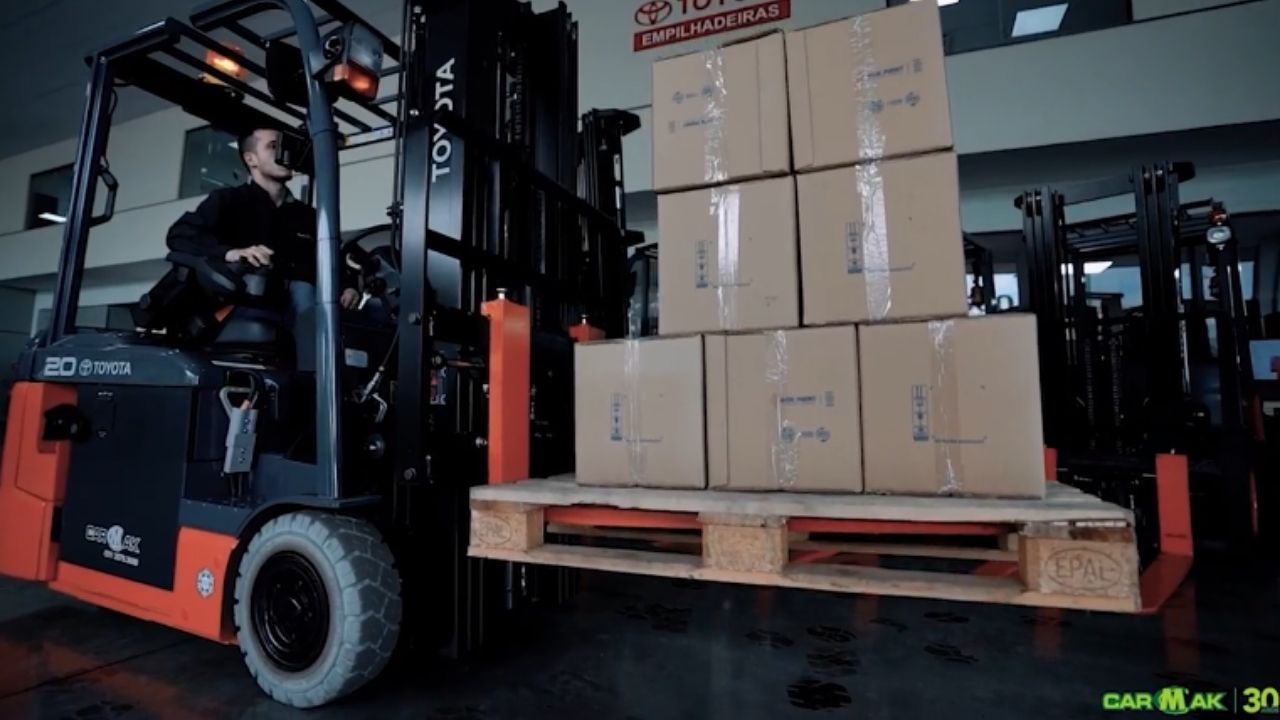
The revenue of R$ 304 million last year reveals the impact of the change in the business model. Rental accounts for about 70% of Carmak’s annual revenue, while sales represent 20% and after-sales cover the rest.
This division shows that forklifts have started to generate recurring revenue, not just occasional sales results. Instead of buying a machine and taking on maintenance, resale, and management, many companies prefer to pay for usage.
The logic attracts companies seeking financial predictability, tax benefits, and focus on their own operations. For industrial clients, outsourcing fleet management can be simpler than buying, maintaining, and then trying to resell used equipment.
The model also allows Carmak to track the lifecycle of the machines. The same forklift can be rented, undergo retrofitting, and return to the market, extending the asset’s utilization for about ten years.
Contracts of 36 to 60 months change the industry’s balance
Carmak’s rental contracts follow cycles of 36 and 60 months. For companies that use equipment every day, this format transforms a heavy purchase expense into a more predictable structure over time.
The company buys about 500 to 560 pieces of equipment per year, divided between sales and rental. This shows the scale necessary to sustain the business, as each machine requires investment before it starts generating revenue.
The challenge lies in balancing growth and cash flow. The purchase of equipment is capital-intensive, and any overly rapid expansion can strain the financial health of the rental company.
The comparison made by Yuri Santos associates the Toyota forklift with a durable vehicle, like a Hilux. The idea is that the equipment withstands long cycles of use, provided it receives proper maintenance and reconditioning.
Meatpacking plants, beverages, and supermarkets drive demand
Carmak’s clients mainly come from the manufacturing industry, with a focus on beverages, meatpacking plants, wholesalers, and supermarkets. These are operations that depend on internal material movement and cannot stop due to a lack of equipment.
In environments like meatpacking plants, rental can make even more sense. A machine adapted to the cold, for example, may lose resale value for the buyer, while rental transfers part of this management to the rental company.
The client pays to keep the operation running, not just to have a machine in the yard. Therefore, availability, maintenance, and quick service become central elements of the contract.
According to Yuri, Carmak works with an availability commitment close to 98% in operations that can run up to 20 or 22 hours a day. This standard requires a technical team, available parts, and a quick response when a machine has a problem.
Presence within the client became part of the service
In larger operations, Carmak does not just deliver forklifts. In a client with more than 100 machines, for example, the company maintains ten people on-site solely to take care of the fleet’s maintenance.
This model brings the rental company closer to the client’s industrial routine. The machine ceases to be an isolated item and becomes part of a complete service, with monitoring, maintenance, and operational guarantee.
This presence is important because a stopped machine is costly. In distribution centers, cold storage facilities, and factories, a forklift failure can delay loading, unloading, stocking, and production.
Therefore, the decision to buy or lease usually involves the logistics area of companies. Logistics coordinators and managers evaluate brand, product, availability, and support before the negotiation proceeds to supplies.
Expansion beyond the South depends on logistics and parts
Carmak was born in Rio Grande do Sul, but its operation spread due to demand. The showroom stores are located in São Leopoldo, Itajaí, and Sumaré, while smaller branches serve other areas.
The operation is concentrated in the South and Southeast, including Rio Grande do Sul, Santa Catarina, Paraná, and São Paulo. According to the report, São Paulo already represents 30% of the business’s results.
Growing across Brazil, however, does not depend solely on selling or renting more machines. The rental has a geographical limit because the cost of sending a mechanic and parts directly influences the final price.
Where the distance is shorter, Carmak can service machines of various sizes. In more distant areas, the account depends on the size of the contract and the ability to maintain SLA, service time, and parts replacement.
Labor became a bottleneck for growth
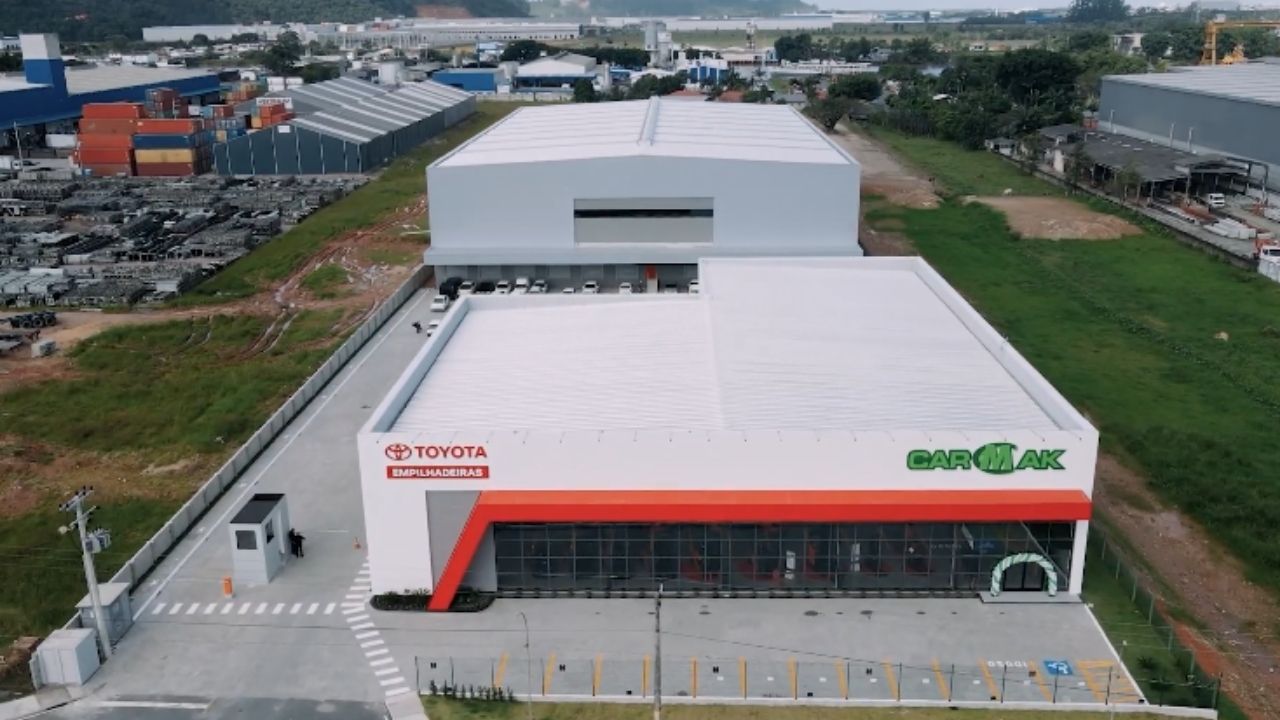
Besides logistics, labor appears as one of the main challenges for Carmak. According to Yuri, there is a lack of qualified people for the operation, which led the company to partner with a technical school to train professionals.
The difficulty makes sense in a sector that depends on maintenance, technical service, and specific knowledge about industrial equipment. It’s not enough to have the forklifts; you need people capable of keeping them running.
This bottleneck can weigh even more when the company tries to grow outside its region of origin. Expanding units and contracts requires trained professionals, available parts, and standardized processes.
The high Selic rate also impacted the cost of capital and slowed down new business in recent years. Even so, the company maintained revenue growth, according to Yuri, although below the historical annual growth rate of 10% to 15%.
Autonomous machines enter the radar for the next phase
For the coming years, Carmak intends to diversify its portfolio beyond the traditional forklift. Yuri mentions opportunities in platforms and autonomous machines, in a sector pressured by the scarcity of operators.
The understanding is that part of the industry will seek equipment capable of operating without a human operator. If the labor shortage continues, automation may cease to be a distant trend and become an operational necessity.
In this scenario, autonomous forklifts may gain space in standardized operations, distribution centers, and factories with high movement flow. The change, however, requires investment, process adaptation, and trust in technology.
The bet reinforces Carmak’s transformation into an intralogistics rental company, not just a machine distributor. The business now involves equipment, service, software, maintenance, and operational efficiency.
Rental market still has room to advance


The machine and equipment rental market moves around R$ 70 billion per year in Brazil, according to the National Association of Equipment, Machines, and Tools Lessors cited by Exame.
The sector comprises more than 50,000 companies and about 350,000 direct jobs. These numbers show that equipment rental has ceased to be a one-off solution and has become a relevant part of the productive economy.
For Yuri, many companies have not yet migrated to rental. The potential would be mainly in regions undergoing industrialization, where new operations need to grow without immobilizing capital in all assets.
Carmak bets on sectors considered more resistant to crises, such as refrigeration, agriculture, and beverages. The logic is that these activities continue operating even in difficult economic scenarios, maintaining demand for internal movement.
Forklift Rental Shows New Industry Logic
The story of Carmak shows how an essential piece of equipment, though not very visible to the average consumer, can sustain a national business worth hundreds of millions of reais. Forklifts operate behind the scenes but move factories, stocks, supermarkets, and logistics centers.
The shift from purchasing to renting reveals a larger change: companies want to reduce capital immobilization, transfer maintenance, and gain predictability. Instead of the machine as an asset, the machine as a service is growing.
For Carmak, the challenge now is to transform regional leadership into national presence without losing service capacity. This requires capital, parts, technicians, profitable contracts, and technology to keep up with the industry.
And you, do you think companies should buy their own machines or does it make more sense to rent equipment like forklifts and leave maintenance to specialists? Leave your opinion in the comments and tell us which model seems more efficient for the industry.


