Portuguese
  Spanish


The Port of Paranaguá, in Paraná, is the largest grain exporter in the southern hemisphere — forty million tons of soybeans, corn, and meal pass through there every year, supplying China, Europe, and Southeast Asia — but the bottleneck that costs Brazilian agribusiness the most is not at the pier, not in the draft, not in the storage capacity: it’s on the track that should connect the productive interior to the port and that hasn’t yet reached where it needs to go.
The real bottleneck: truck where there should be a train
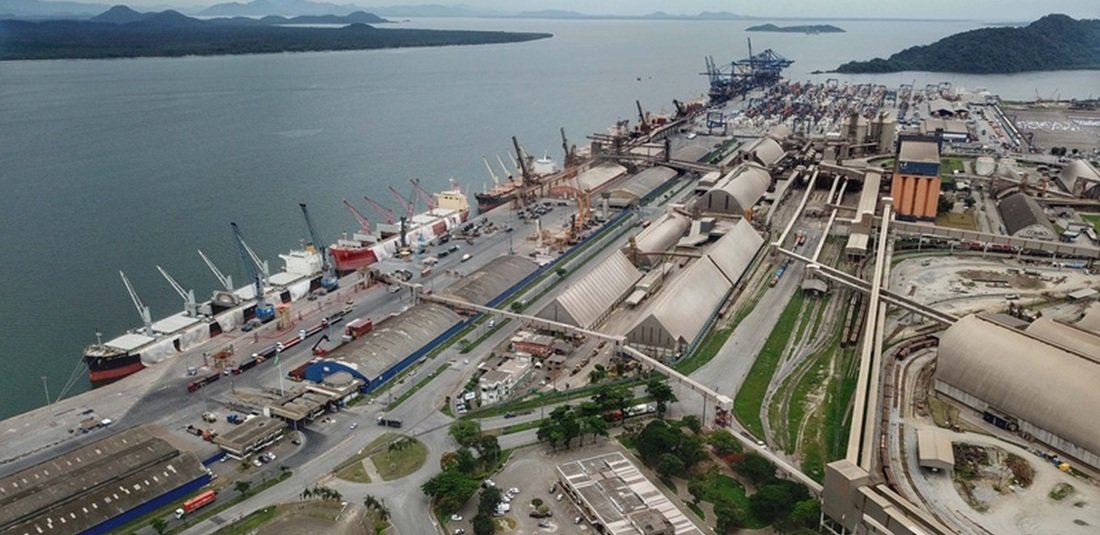
The Ferrovia da Integração do Centro-Oeste — FICO — and the Mato Grosso–Paraná railway connection are projects that have existed on paper for decades. What exists on the ground today is Ferropar, which connects Guarapuava to Cascavel, and the Rumo branch that reaches Londrina. Between these tracks and the productive heart of Mato Grosso, Goiás, and southern Pará, there are hundreds of kilometers that only trucks travel.
A double-trailer truck carries an average of 57 tons of soybeans. A grain train carries between 4,000 and 6,000 tons per composition. To move 40 million tons per year — the volume that passes through Paranaguá — you need 700,000 trucks running or less than 10,000 train compositions. The cost difference per ton-kilometer is between three and five times lower for the train.
When road freight rises — and it always rises, with diesel, labor, and tolls — the producer in Mato Grosso pays this bill directly. The soybeans that leave Sorriso, in Mato Grosso, travel more than 2,000 kilometers by truck to Paranaguá or Santos, consuming in freight the equivalent of 12-15 dollars per ton of soybeans that, in the international spot market, may be worth 350-380 dollars per ton. It doesn’t seem like much, but on a scale, it’s the difference between a positive and negative margin for thousands of producers.
-
Astronomers Detect Excess Alcohol on Interstellar Comet 3I/ATLAS, Revealing Unique Chemical Signature from Another Star System

-
Egg Prices Drop Due to Weak Demand as Poultry Producers Increase Purchasing Power
-
13-Year-Old Californian Girl Wins $25,000 Prize for Creating Low-Cost Water Filter from Discarded Animal Bones

-
Entrepreneur Secures $15 Million to Transform Steel Mill Waste into Concrete Material, Builds Demo Plant in the U.S. with a Goal of 10,000 Tons Annually




What the port did to expand its own capacity
The Port of Paranaguá, managed by Portos do Paraná, has invested significantly over the last ten years: new grain berths, expansion of warehouses, modernization of ship loading systems. The soybean loading rate reached 1.2 million tons per day at peak harvest — a pace that few ports in the world achieve.
The waiting time for ships, which reached 25 days in line in 2012, dropped to less than five days under normal conditions. The depth of the access channel was expanded to support loaded Panamax and New Panamax ships. These are real improvements, made with real investment.
The problem is that the port’s expansion frontier is no longer at the port — it’s in the hinterland. The capacity for docking, storage, and ship loading is being expanded faster than the capacity to bring grain from the interior. If you increase the capacity of a port that is waiting for grain that arrives by truck at a speed that hasn’t increased, you’ve created a different bottleneck.
The project that could change the game
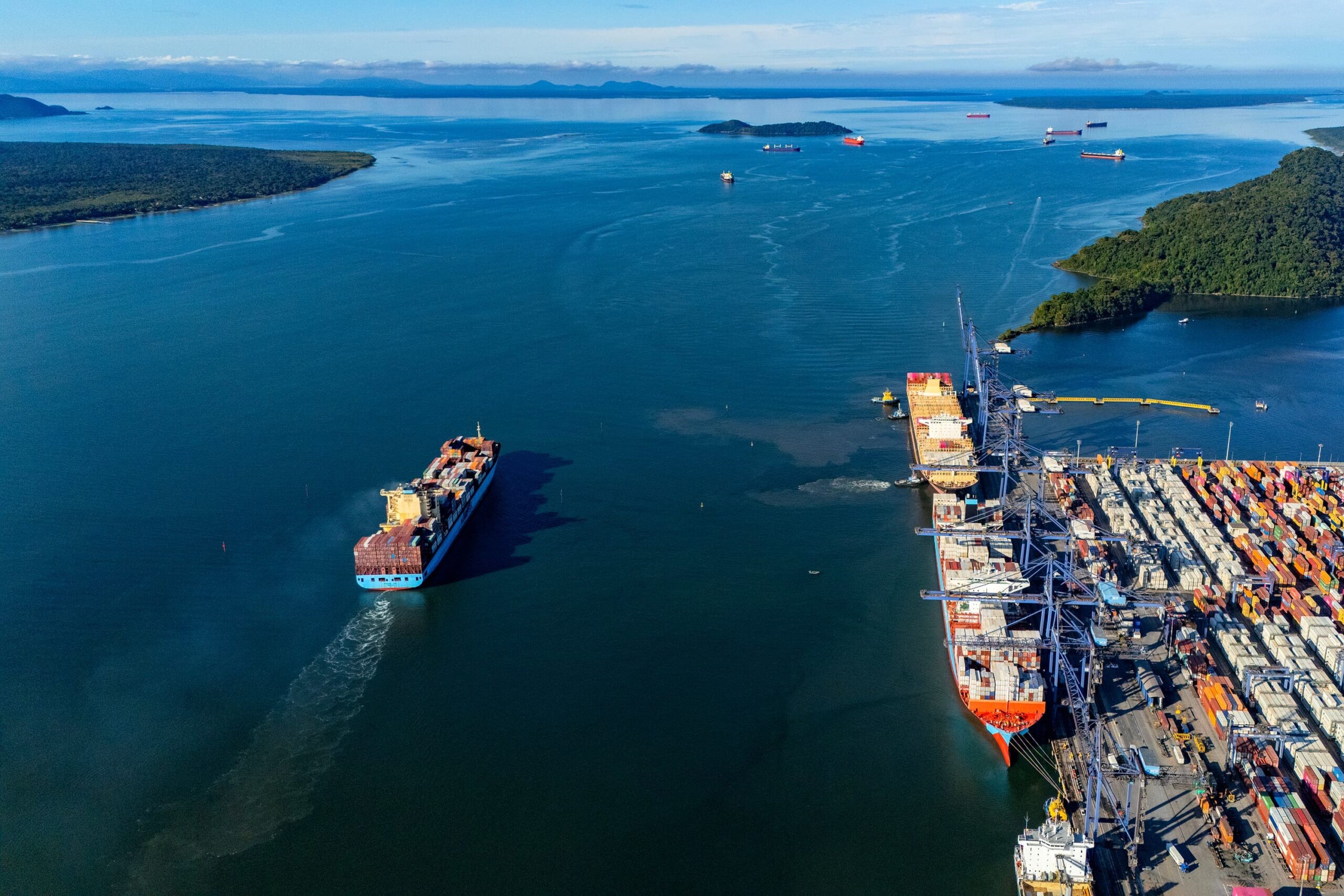
The FICO — Ferrovia de Integração do Centro-Oeste — which would connect Mato Grosso to Paraná via the existing Ferropar to Guarapuava, with an extension to Paranaguá, is in an advanced environmental licensing phase. If approved and built within the projected timeframe, FICO could enter partial operation from 2029-2030 and bring an additional capacity of 20-30 million tons annually to the railway-Paranaguá system.
The challenge is that railway licensing in Brazil takes on average between five and eight years. Each year of delay on the track is another year of truck, diesel, and logistical cost that the producer pays.
The concession of Ferropar to the Comporte Group, which already operates concessioned highways in Paraná, brought some hope of acceleration: the group has a direct economic interest in increasing the transported volume and has the capital to invest in modernizing the existing tracks.
Why Brazil needs to solve this before 2030
China will import between 85 and 95 million tons of soybeans per year until 2030. Brazil and the USA will divide this market in a proportion that depends largely on who can deliver cheaper. In recent years, Brazil has gained Chinese market share because the production cost of the cerrado is lower than that of American corn and soybean farms. But this advantage can be eroded by logistical costs.
If Brazil manages to reduce the internal freight cost by 10-15 dollars per ton with adequate railways, it is a competitive advantage measured in billions of dollars per year in the trade balance. Paranaguá already has the berths. What’s missing is the track that reaches them.
Read also: the waterway that Brazil bets on to escape the expensive truck | the Arco Norte ports that swallowed the record harvest.
Do you think Brazil will solve the agribusiness logistical bottleneck in time to maintain competitiveness in the global grain market, or will truck dependency last for decades? Comment here.