






 Portuguese
  Spanish
  4 min of reading
  0 comments


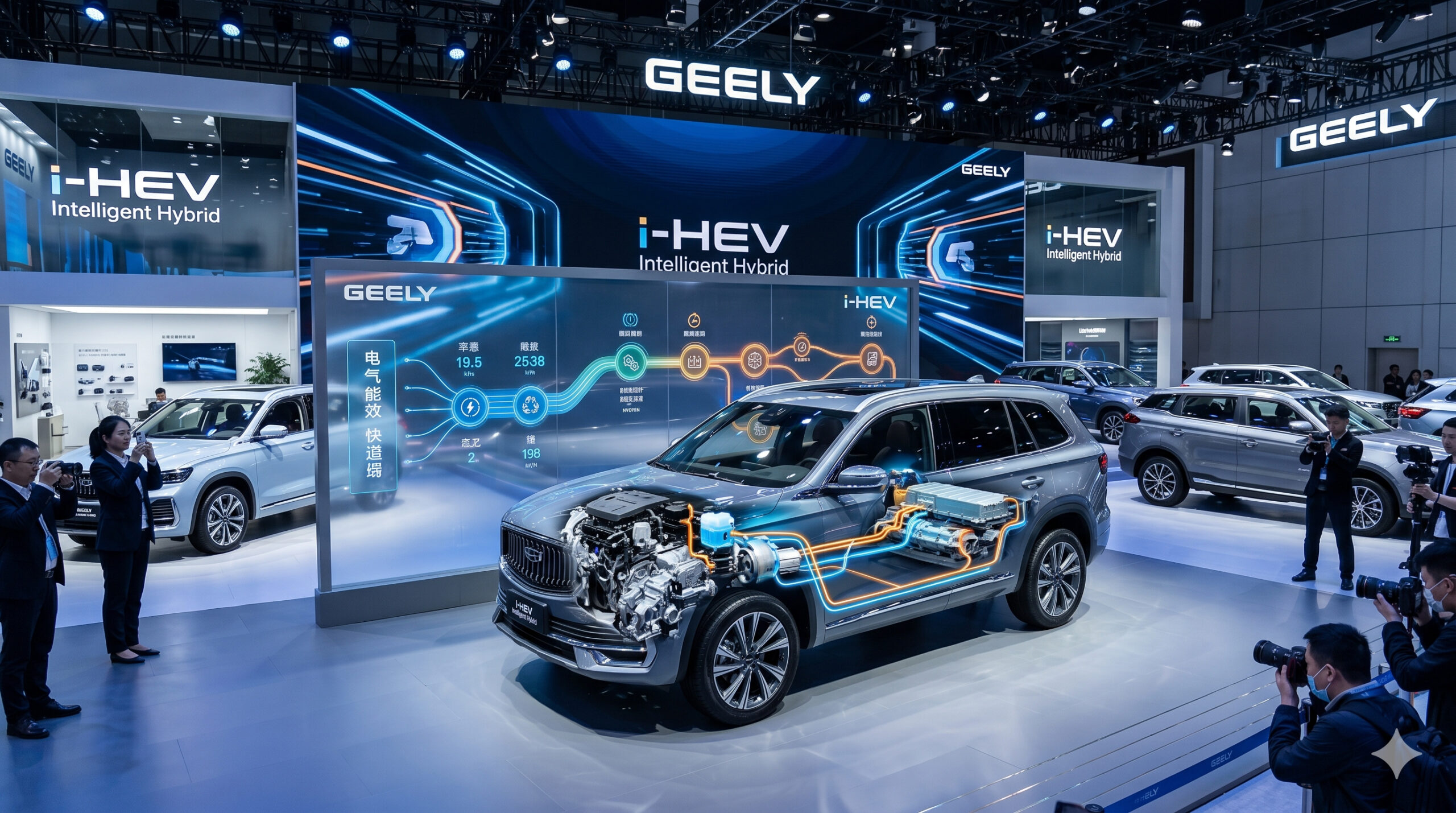
New hybrid system from Geely promises consumption of 2.22 L/100 km and uses artificial intelligence to compete in global market dominated by Japanese brands.
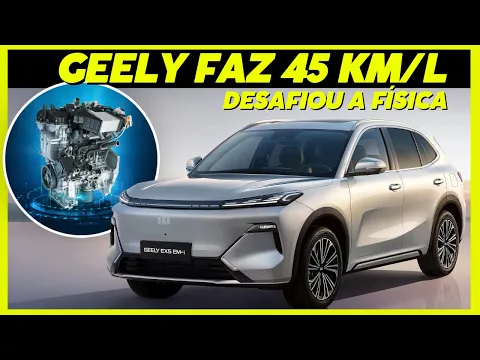
On April 13, 2026, the Chinese Geely announced the new hybrid system i-HEV Intelligent Hybrid, presented as a direct offensive against the dominance of established technologies from Japanese brands such as Toyota and Honda. According to Reuters, based on information released by the automaker itself, a Geely Emgrand equipped with the system recorded consumption of 2.22 liters per 100 kilometers in a test certified by Guinness, a result that placed the innovation among the most aggressive figures ever announced by the company for a conventional hybrid.
However, Geely’s proposal goes beyond reducing consumption. According to Reuters’ report, the i-HEV uses an artificial intelligence-driven energy management system, capable of adjusting the operation of the hybrid system in real-time based on variables such as temperature, humidity, and altitude, in an attempt to redefine the efficiency logic of non-plug-in hybrids.
System uses artificial intelligence to optimize use of electric motor and combustion
The i-HEV Intelligent Hybrid incorporates a control system based on computational intelligence that analyzes, in real-time, different driving variables.
-
New Honda HooRide 125 scooter debuts in China with ADV styling, 17-inch wheels, TFT panel, Smart Key, and fuel consumption of up to 47.17 km/l, aiming to resemble an urban X-ADV with a 125 engine, CVT transmission, and an economical proposal for cities.

-
Volkswagen focuses on ethanol and tests a Saveiro 100% alcohol-powered with a recalibrated engine; the project may ensure tax reduction, targets corporate fleets, and revives technology that lost ground since the arrival of flex-fuel vehicles in 2003.

-
Keeping your foot lightly on the brake pedal while driving may seem harmless, but mechanics warn: this habit generates constant heat, wears out the pads too quickly, and can warp the discs, making braking expensive and dangerous.

-
The YouTuber Mark McCann bought a Bugatti Veyron for almost $1.2 million, but discovered that the supercar’s gearbox is so damaged that even Bugatti itself won’t accept to repair it, and the repair could cost a fortune.


Among the monitored factors are:
- vehicle speed
- terrain incline
- engine load
- driver’s driving pattern
Based on this data, the system automatically decides when to prioritize the electric motor, when to activate the combustion engine, and how to distribute energy more efficiently.

This approach seeks to reduce energy losses typical of conventional hybrid systems, where the transition between engines does not always occur at the ideal moment.
Tests indicate consumption of 2.22 L/100 km under controlled conditions
According to data released by Geely itself, a Geely Emgrand model equipped with the new system achieved a consumption of 2.22 L/100 km in internal tests. Converting this number to the Brazilian standard:
- approximately 45 km/l
This result was obtained under specific testing conditions, which means that real consumption may vary depending on usage, traffic, and driving profile. Even so, the number indicates a significant advance in the energy efficiency of hybrid systems.
Strategy targets Japanese dominance in the hybrid market
The launch of the system occurs in a context of strong global competition. Currently, Japanese companies like Toyota dominate the hybrid vehicle market with technologies such as Hybrid Synergy Drive.
Geely has explicitly stated that the goal of the new system is to challenge this hegemony, expanding its presence in international markets and raising the efficiency standard of its vehicles.
This move is part of a broader strategy of the Chinese industry, which has been heavily investing in:
- electrification
- energy efficiency
- development of intelligent systems
Difference between conventional hybrid and Geely’s approach is in energy control
Traditional hybrid systems operate based on pre-programmed logic, with fixed rules for switching between engines.
In the case of the i-HEV:
- the control is dynamic
- decisions are adjusted in real-time
- the system learns from usage
This difference can represent significant gains in efficiency, especially in urban environments, where driving conditions change constantly.
Expansion of the system should reach multiple models of the brand
Although the system was initially presented in a specific model, the expectation is that it will be gradually integrated into other Geely vehicles. This includes:
- sedans
- SUVs
- models aimed at international markets
The expansion will depend on market acceptance and the company’s production capacity.
Global hybrid market continues to grow even with the advancement of electrics
Despite the growth of electric vehicles, hybrids continue to play a relevant role in the energy transition.
This happens because:
- they do not depend on charging infrastructure
- they offer greater autonomy
- they combine efficiency with practicality
In this scenario, more efficient systems can further enhance the competitiveness of this type of technology.
Competition is expected to react with new generations of hybrid systems
The advancement presented by Geely tends to intensify competition in the sector. Traditional manufacturers are already working on new generations of hybrid systems, seeking greater efficiency, lower consumption, and integration with digital systems.
This movement indicates that the automotive sector continues to transform, with a growing focus on energy optimization. In recent years, China has increased its participation in the development of automotive technologies.
Companies like Geely have begun to invest not only in large-scale production but also in research and development.
The launch of the i-HEV reinforces this trend, showing that the country seeks to occupy a prominent position not only in volume but also in innovation.
New system raises debate about the future of hybrids in the face of total electrification
With the evolution of increasingly efficient hybrid systems, a relevant question arises for the automotive sector: to what extent will this technology continue to be an intermediate step or could it consolidate as a long-term solution?
While the infrastructure for electric vehicles still faces challenges in various regions, systems like the i-HEV show that there is still room for significant advances within the hybrid concept itself, expanding market possibilities in the coming years.




-

1 person reacted to this.