Portuguese
  Spanish


Wind And Solar Generation Registers 26.4% Decline In August, Highlighting Structural And Operational Challenges In The Renewable Energy Sector In Brazil.
Wind And Solar generation in Brazil faces significant challenges in recent years. However, the renewable energy sector shows strong growth, demonstrating its strategic potential.
In August, Itaú BBA and the National Electric System Operator (ONS) reported a 26.4% cut in production from these sources. Furthermore, this number represents an 85% increase compared to the same period last year, thus highlighting a growing operational stress on the country’s energy matrix.
Historically, Brazil has relied heavily on hydropower to meet electricity demand. However, over the last twenty years, the country has rapidly expanded wind and solar sources, driven by increased energy demand and, consequently, the need to diversify the electricity matrix.
-
Engie Secures 10-Year Use of 625 MWh in Batteries to Store Excess Solar and Wind Energy in Spain by 2028

-
Giant Batteries Take Center Stage in Chile Auction as Company Offers 960 GWh of Solar Energy for Nighttime Use, Aiming to Stabilize Solar Power Supply
-
After a Year of Success in Switzerland, Solar Railway Attracts Italy’s Interest for Clean Energy Transformation
-
Robots Clean Solar Panels in Desert Power Plants Without Water, Preventing Energy Losses


Incentive policies, such as renewable energy auctions and financing for solar panel installations, have made these sources more accessible and competitive.
Additionally, the expansion of wind and solar generation has brought significant advancements but has also highlighted the need to improve transmission infrastructure and the management of supply and demand. For example, the phenomenon known as curtailment — which intentionally reduces energy production to balance supply and demand in real time — has become a constant concern.
Therefore, this adjustment prevents overload on the electrical system, but at the same time, it directly impacts the efficiency of renewable sources.
In August, the excessive solar energy generation during Father’s Day, on August 10, caused significant cuts between 11 a.m. and 2 p.m., with interruption peaks reaching 93% of potential production. Furthermore, prolonged periods of cloudiness or weak winds can also reduce wind and solar generation, thus showing how the natural variability of these sources requires detailed planning.
Impacts Of The Decline In Production And Structural Challenges
Solar plants were the most affected, with a 37.9% reduction in production. On the other hand, wind farms experienced cuts of 23.4%, reflecting the greater flexibility of this source compared to solar, but also highlighting the structural limitations of the Brazilian electric sector.
Moreover, the concentration of plants in certain regions and the lack of adequate transmission lines prevent all produced energy from reaching consumer centers. This causes significant losses. Furthermore, investors and companies in the sector face significant economic impacts.
Consequently, many entrepreneurs who invested in the expansion of wind and solar generation struggle to maintain production and recover investments. The cuts reduce potential revenue and increase operational costs.
Thus, the scenario reinforces the urgency of investing in transmission infrastructure, energy storage, and demand management technologies.
Indeed, the evolution of wind and solar generation in Brazil follows global trends. Over the last ten years, the world has been experiencing a gradual transition to renewable sources, driven by concerns about climate change and reducing carbon emissions.
Countries like Germany, the United States, and China heavily invest in wind and solar, combining expansion of installed capacity with the development of smart grids and energy storage systems.
However, Brazil, despite having enormous potential, still needs to overcome challenges to achieve the same level of efficiency and integration of renewable sources. This is mainly due to insufficient transmission infrastructure, the lack of technological integration, and the need for comprehensive public policies.
Infrastructure And Integration Of Renewable Energies
The transmission infrastructure has not kept pace with the speed of wind and solar generation expansion, representing one of the main obstacles. Moreover, many plants are located far from major urban centers, which requires long and sophisticated transmission lines.
Therefore, the lack of investments in this area creates bottlenecks that force ONS to reduce production, even when the energy could be utilized.
This historical problem is due to the prioritization of hydropower and limited attention to distributed sources, which have only grown rapidly in the last decade.
Another critical point is the management of supply and demand. The natural variability of wind and solar production requires intelligent forecasting and control systems.
In the past, the Brazilian electric matrix was structured to handle hydropower, where plants regulate the flow of water and, consequently, energy production.
However, with the arrival of intermittent sources, the sector needed to adapt management to avoid overloads, voltage drops, and supply cuts.
In August, data shows that there is still much to evolve, as solar generation peaks can nearly reduce all potential production.
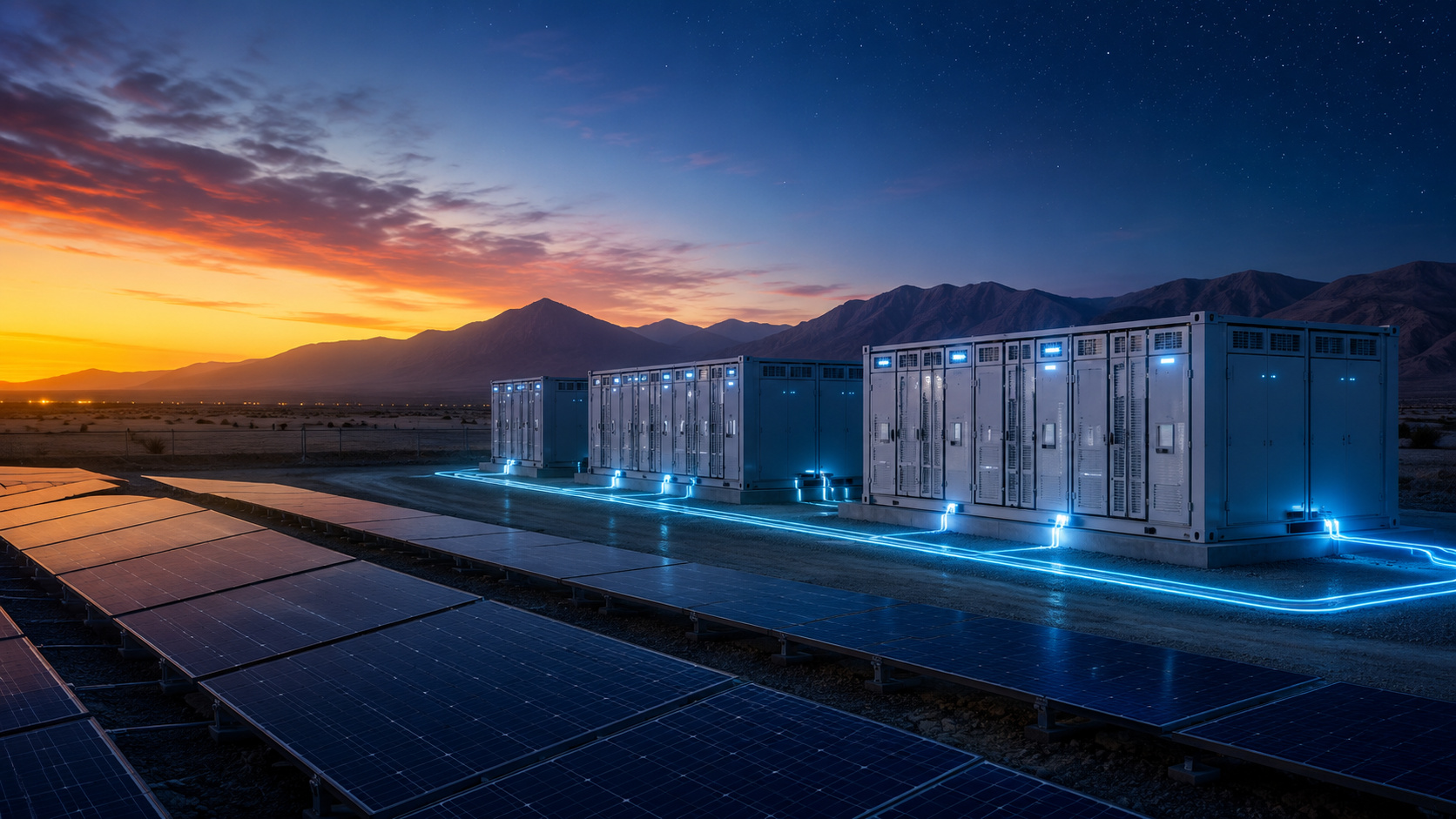
Therefore, investing in storage technologies, such as large-scale batteries, emerges as an essential solution to reduce losses and increase the reliability of the electrical system.
Perspectives And Potential For Expansion
The increase in curtailment highlights the importance of appropriate public policies. Isolated incentives for solar panel and wind farm installations do not work without integrated planning of the energy matrix.
Thus, it is necessary to combine capacity expansion with investments in transmission, storage, regulation, and integration into the national system.
This approach ensures that the energy produced is fully utilized, increasing efficiency and reducing waste.
Despite the challenges, the future of wind and solar generation in Brazil remains promising. The country has favorable natural conditions: consistent winds in various regions of the Northeast and Southeast and high solar incidence across almost the entire national territory.
These factors make sustainable expansion of these sources feasible, as long as the sector keeps up with structural and technological improvements.
Furthermore, the experience of countries that have coordinated investments in smart grids and storage systems shows that it is possible to integrate large volumes of renewable energy without compromising the stability of the electrical system.
Moreover, the growing environmental awareness and the public interest in clean energy can further boost investments in the sector.
Therefore, the 26.4% decline in wind and solar generation in August highlights historical and structural problems of the Brazilian electric sector.
The need for operational adjustments, deficient infrastructure, and challenges of integrating intermittent sources shows that the expansion of renewable energies needs to be accompanied by robust investments and efficient public policies.
Thus, Brazil has the potential to become a global reference in clean energies. However, this depends on a strategic management of wind and solar generation, ensuring that sustainable growth is effective and lasting.