Portuguese
  Spanish


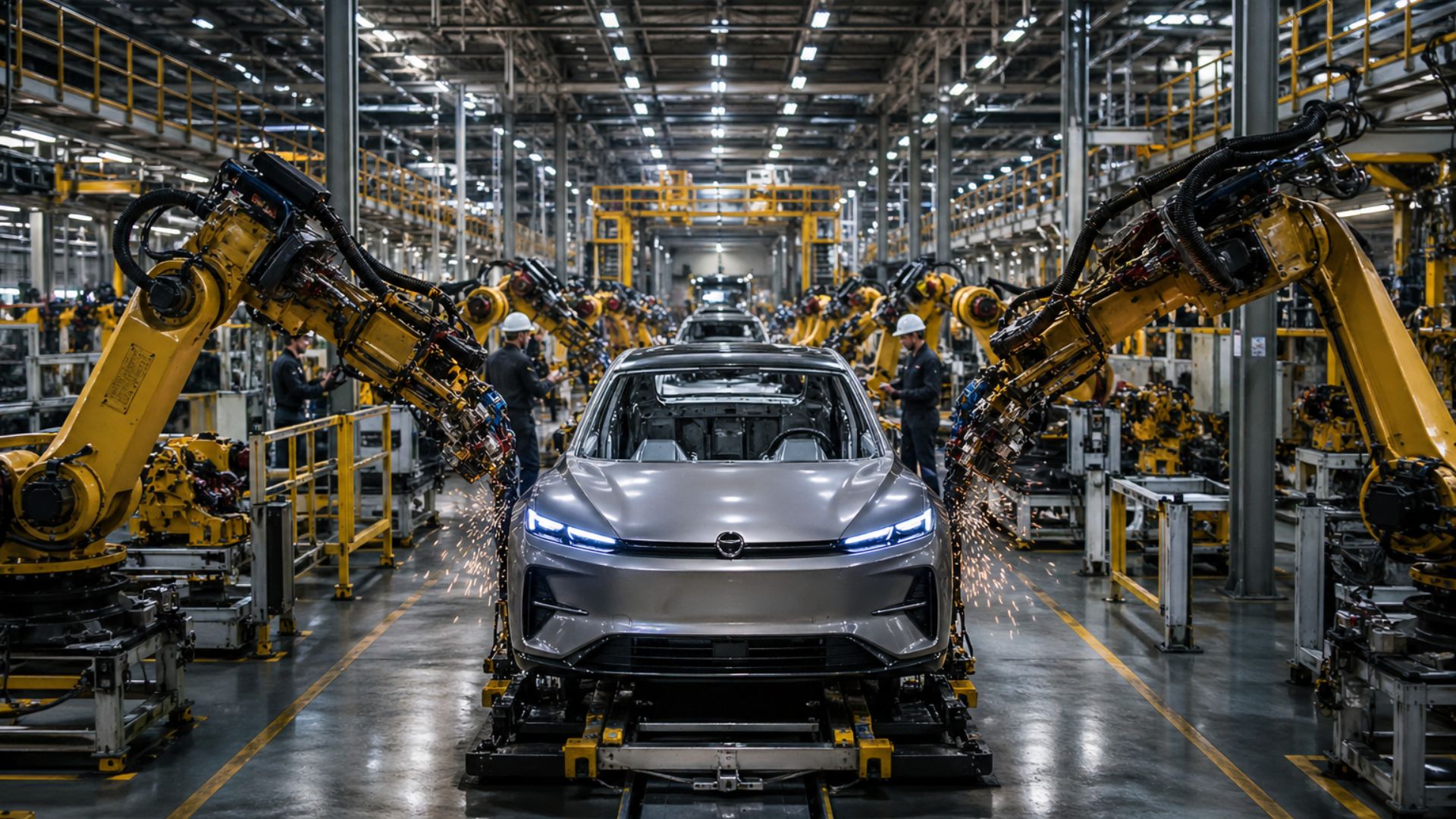

Accelerated advance of Chinese automakers intensifies dispute in the Brazilian electric vehicle market and pressures consolidated leadership with new models, competitive prices, and industrial expansion in the country.
Geely has fully entered the dispute where BYD is currently the main reference among electric cars in Brazil, driven by the EX2, an electric hatchback developed in partnership with Renault and already positioned among the segment’s best-selling models.
In this context of expansion, the brand’s arrival reinforces the offensive of Chinese manufacturers, who have increased their presence, competitive prices, and technology offerings in the national market, altering the competitive dynamic and accelerating the adoption of electrified vehicles across different consumer segments.
At the same time, this advance occurs at a moment when these automakers already represent close to 10% of car and light commercial vehicle sales in the country, according to estimates based on data from Fenabrave and Bright Consulting.
-
British Factory Transitions from Mechanical Parts to Producing 420,000 Electric Power Units Annually, Supplying 70% of Ford’s Electric Cars Sold in Europe

-
Toyota Shifts from Hybrid Cars to Electric Air Taxis with Joby’s 6-Rotor Aircraft, Capable of 322 km/h, Aiming for Mass Production to Electrify Urban Skies

-
Ferrari Unveils Limited Edition 12Cilindri Manuale: 6.5-Liter V12, 830 HP, 0-100 km/h in 2.9 Seconds, Top Speed Over 340 km/h, Only 1,499 Units Available

-
Discover the 2021 Fiat Cronos 1.3: Affordable Maintenance, Reliable Mechanics, and Fuel Efficiency of Up to 15.6 km/l


According to projections cited by Rogélio Golfarb, this share could reach around 35% by 2035, indicating a significant structural change in the Brazilian automotive sector, with a direct impact on industrial strategies, prices, and the offering of new models.
Geely EX2 gains ground among electric vehicles in Brazil
Within this scenario, the EX2 emerges as Geely’s main contender to challenge BYD’s leadership among compact electric vehicles, especially by operating in a price range considered strategic for expanding access to this type of technology.
In March 2026, the model held the third position among the best-selling 100% electric cars in Brazil, trailing only the BYD Dolphin Mini and the BYD Dolphin, both already consolidated in the national market.

Considering the year-to-date figures, Geely’s hatchback also maintained its third position among electric vehicles, totaling 2,474 registrations, a number that demonstrates consistent growth even against competitors with a more established presence.
Meanwhile, the Dolphin Mini led with over 14,000 units sold, which shows that BYD still holds a significant advantage, although it is starting to face more direct competition in a key segment for the expansion of electric vehicles.
Beyond the product itself, Geely’s strength is also associated with the operational model adopted in Brazil, which relies on Renault’s support to expand commercial reach and facilitate access to maintenance and after-sales services.
With this partnership, the brand tends to reduce one of the main barriers faced by new automakers in the country, which is precisely building trust regarding the service network, parts availability, and consumer support.
BYD’s Leadership Faces New Challenges
On the other hand, BYD took the lead in Brazil and consolidated a diversified lineup with models like Dolphin, Dolphin Mini, Song Plus, Song Pro, and Seal, which helped popularize electrified vehicles in the national market.
In addition to commercial expansion, the company acquired Ford’s former factory in Camaçari, Bahia, and plans to expand local production, although the operation is progressing gradually, with stages of implementation and industrial adaptation.
Despite its leadership, accelerated growth has brought operational challenges that are beginning to be perceived by consumers, especially regarding parts availability and repair time in maintenance situations.
Reports of delays in component replacement indicate a common problem for brands that expand sales faster than their after-sales structure can keep up, affecting user experience.
This factor gains additional relevance for drivers who use their vehicle as a work tool, as any prolonged unavailability can directly impact their income and professional routine.
Meanwhile, GWM also occupies a relevant space in the Brazilian market, adopting a similar strategy of local investment to consolidate its presence and increase competitiveness against other automakers.
The company acquired the former Mercedes-Benz factory in Iracemápolis, in the interior of São Paulo, began national production, and strengthened models like Haval H6 and Ora 03, expanding its presence in the electrified segment.
Electric car economics drives change
In this competitive environment, the dispute between BYD, Geely, and GWM is supported by a broader transformation related to the running cost of electric vehicles, which tends to be lower than that of combustion-powered models.
For drivers who cover long distances daily, such as ride-sharing professionals, energy savings can represent significant compensation over the years, helping to dilute the initial investment in purchasing the vehicle.
From a technical standpoint, the electric motor exhibits greater energy efficiency, as it converts a higher proportion of energy into motion, unlike combustion engines, which dissipate a large part as heat.
This characteristic helps explain why the cost per kilometer driven tends to be lower for electric vehicles, although the final result depends on factors such as energy tariffs, fuel prices, charging type, and vehicle usage pattern.
Even so, the feasibility analysis should not be limited to energy consumption; it is necessary to consider other relevant aspects that impact the total cost of ownership over time.
Items such as insurance, depreciation, tire cost, parts availability, battery maintenance, warranty, and access to charging infrastructure need to be evaluated in an integrated manner when making a decision.


Growth of Chinese brands reshapes the automotive sector
In parallel, the advancement of Chinese brands is not restricted to fully electric vehicles, as hybrid and plug-in hybrid models also gain ground and expand the presence of these manufacturers in the Brazilian market.
Highlights include vehicles like the GWM Haval H6, BYD Song Pro, and BYD Song Plus, which combine energy efficiency with greater range, attracting consumers transitioning to electrified technologies.
In March 2026, electrified vehicles reached a record 35,356 registrations in Brazil, representing about 14% of the total light vehicles sold during the period.
This growth pressures traditional automakers, who need to accelerate launches, revise pricing strategies, and increase the level of embedded technology to maintain competitiveness against the advance of new competitors.
At the same time, the arrival of more brands intensifies the competition for technical assistance services, parts supply, financing conditions, and the expansion of the electric charging network in the country.
Although BYD remains the main reference among electric vehicles in Brazil, Geely’s progress indicates that the scenario tends to become more balanced, with a greater diversity of options for the consumer.
In this context, the EX2 has not yet surpassed BYD’s leading models, but it already shows potential to compete for significant space, signaling that the leadership among Chinese automakers in the country should become increasingly competitive.