Portuguese
  Spanish


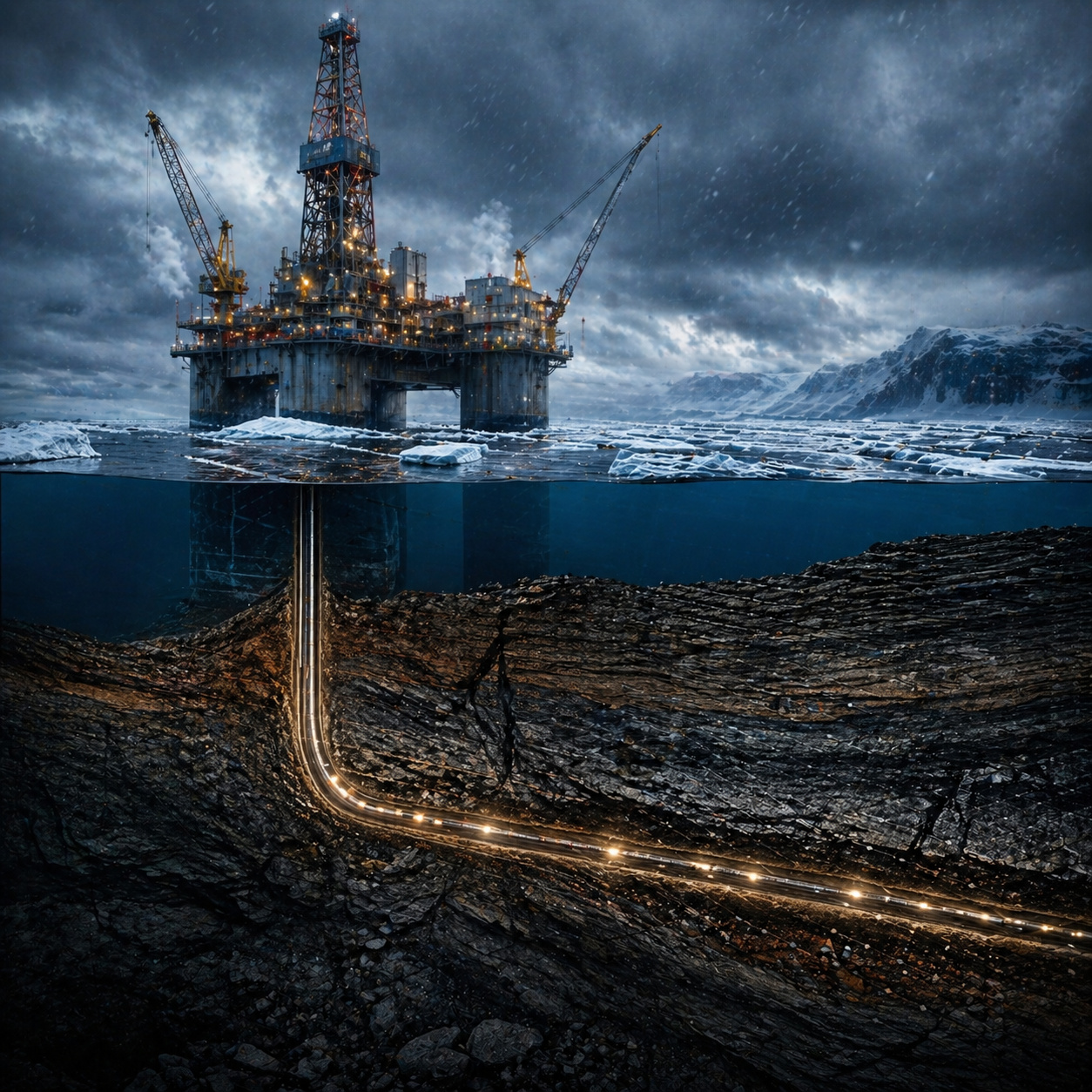


15 km Well in Sakhalin Redefines Limits of Horizontal Drilling and Shows How Russia Reached Extreme Reservoirs with Advanced Engineering.
On November 16, 2017, the Russian oil company Rosneft announced that the Sakhalin-1 consortium had completed, from the Orlan platform, in the Chayvo field, in the Sea of Okhotsk, a well with 15,000 meters in length, described by the company as the longest in the world at that time. The project is located in the Sakhalin Island region, in the far east of Russia, and became a milestone in extended reach drilling by pushing petroleum engineering to a scale rarely seen in offshore operations.
The factor that makes the project extreme is not just the total length, but the lateral displacement: according to Rosneft, the well reached 14,129 meters of stepout, meaning it advanced more than 14 km laterally from a single platform. The company itself classified the drilling as “supercomplex,” with a directional index DDI of 8.0, consolidating Sakhalin-1 as one of the most advanced fronts of horizontal and directional drilling in the oil and gas sector.
Continue reading below to understand how this technology works, why it changed the logic of oil exploration, and what physical limits engineers still face when trying to drill the subsurface on extreme scales.
-
After 79 Months and $145 Million Investment, Nepal Set to Open First 2.7 km Road Tunnel to Ease Traffic in Kathmandu Valley

-
In China, 23 Families Spent Over 4 Years Carving a 1.2 km Road Through a Cliff to Overcome Isolation and Transform a Remote Village

-
Giant 3,600-ton Crane Breaks Two World Records by Installing World’s Largest Single-Piece Forged and Welded Hydrogenation Reactor, Weighing 3,037 Tons, in Chinese Petrochemical Plant in Just Six Days

-
$80 Million Bridge in Brazil Cuts Travel Time from 30 Minutes to 1 Minute, but Audit Reveals Major Flaws


How the 15,000-Meter Drilling in the Sakhalin-1 Project Redefines the Concept of Depth in the Oil Industry
When talking about “the deepest well in the world,” there is a common confusion between vertical depth and total length. In the case of the Sakhalin-1 project, what is at stake is the total length of the well, not the absolute vertical depth.


While the famous Kola Superdeep Borehole in Russia reached 12,262 meters of vertical depth, the Sakhalin-1 well does not descend directly 15 km below the surface. Instead, it follows a controlled trajectory, gradually curving to achieve a long horizontal path.
This approach is called directional or extended reach drilling (Extended Reach Drilling), a technique that allows accessing reservoirs located kilometers away from the drilling platform.
The practical impact of this technology is direct: instead of installing multiple platforms at sea, which would increase costs and environmental risks, it is possible to drill from a single point and reach multiple underground reservoirs.
Orlan Platform and the Extreme Environment of the Sea of Okhotsk Impose Severe Technical Challenges
The record-breaking well was drilled from the Orlan platform, a structure specifically designed to operate in extreme environmental conditions.
The Sea of Okhotsk is known for presenting some of the most hostile environments for offshore operations on the planet. During winter, the region faces extremely low temperatures and intense sea ice formation, which can exert significant pressure on metal structures.

Additionally, the area is subject to strong winds, severe waves, and abrupt climate variations, which require the platform’s engineering to withstand not only the drilling itself but also the highly aggressive external environment.
In this context, drilling a well with 15 km in length is not just an underground engineering challenge, but also a structural and logistical problem on an industrial scale.
15 km Well in Sakhalin’s Horizontal Drilling Technology Allows Reaching Reserves Without Multiplying Platforms
The advancement that made this type of drilling possible is directly linked to the evolution of underground navigation systems.
During the process, sensors installed in the drill bit send real-time data on position, inclination, and direction. This data is analyzed on the surface, allowing for continuous adjustments to the well’s trajectory.
Drilling does not follow a straight vertical line. It begins vertically, then enters a controlled curve phase, and finally extends horizontally within the geological layer of interest.
This level of precision requires integration between different technologies, including:

Measurement While Drilling (MWD) systems,
Logging While Drilling (LWD) real-time geological logging tools,
Downhole motors and advanced rotary steerable systems that allow the drill bit’s direction to be changed even kilometers deep.
The result is an unprecedented ability to access reserves previously considered inaccessible.
Physical limits of ultra-long drilling involve friction, temperature, and extreme pressure
Despite technological advancements, there are clear physical limits that make each additional meter significantly more difficult.
One of the main challenges is friction. As the well extends horizontally, contact between the drill string and the wellbore walls increases dramatically. This generates mechanical resistance, requiring greater force to rotate and advance the drill bit.
Another critical factor is temperature. At great depths, temperatures can exceed hundreds of degrees Celsius, directly affecting the performance of electronic equipment and drilling fluids.

Pressure also increases with depth, potentially reaching extreme levels that require precise control to prevent blowouts, which are uncontrolled releases of oil or gas.
These three factors combined mean that each additional advance in extended-reach drilling represents a significant technical leap, not just an incremental extension.
Previous records show progressive evolution of drilling engineering over the decades
Before the 15,000-meter milestone, other wells had already pushed the industry’s limits. The Sakhalin-1 project itself had previously set records with wells such as Z-42 and Z-44, which exceeded the 12 km total length mark.
These advances reflect a continuous evolution that began in the 1970s and 1980s, when directional drilling was still limited to small trajectory corrections.
Over time, technology evolved to allow highly complex trajectories, with multiple curves and extensive horizontal sections, completely transforming how the industry accesses subterranean resources.
Economic and strategic impact of long-reach drilling in oil exploration
The impact of this technology goes beyond the technical aspect. It redefines the economic model of oil exploration. By reducing the need for multiple platforms, extended-reach drilling lowers operational costs and reduces the environmental footprint of offshore operations.
Furthermore, it allows for the exploration of fields that would previously be economically unviable, especially in remote or environmentally sensitive regions.

In Russia’s case, the Sakhalin-1 project also has geopolitical implications, as it strengthens the country’s ability to explore reserves in strategic regions of the Arctic and the Far East.
This directly connects to the global competition for energy, where technology and access to reserves become critical factors of power.
Difference between true depth and total length causes confusion in “world’s longest well” rankings
An important point that often causes confusion is the difference between vertical depth and total length. The Sakhalin-1 well is the longest ever drilled, but it is not the deepest vertically. That title still belongs to the Kola Superdeep Borehole.
This distinction is fundamental to understanding the technological advancement involved. While Kola sought to reach the interior of the Earth’s crust in a straight line, Sakhalin-1 was designed to reach specific targets over long lateral distances.
Both represent extremes of engineering, but with completely different objectives.
Precision engineering underground shows how the industry has transformed drilling into a high-complexity science
Modern drilling has ceased to be merely a mechanical process and has evolved into a highly integrated discipline, involving geology, physics, materials engineering, data science, and automation.
Each well is planned based on three-dimensional subsurface models, which are continuously updated as new data is collected during drilling.
This allows for dynamic adjustments to the trajectory, increasing efficiency and reducing risks. In the case of the 15,000-meter well, this level of precision was essential to ensure the drill bit remained within the productive zone over kilometers of horizontal extension.
What this record reveals about the future of exploration in extreme environments and remote regions
The advance recorded in the Sakhalin-1 project points to a clear trend in the energy industry: the search for increasingly difficult-to-access reserves. With the depletion of more accessible fields, companies and countries are investing in technologies that allow them to explore deep, remote, or environmentally complex regions.
Extended-reach drilling is one of the main tools in this scenario, as it allows for maximizing production with less infrastructure. At the same time, these advances raise questions about sustainability, long-term costs, and environmental risks, especially in sensitive regions like the Arctic.
Given this scenario, the 15,000-meter drilling is not just a technical record, but a clear indication of how far human engineering is willing to go to access subterranean resources.
Now I want to understand your perspective: do you believe that exploration at increasingly greater depths is an inevitable advance of technology or a sign that the most accessible resources are already running out?