Portuguese
  Spanish


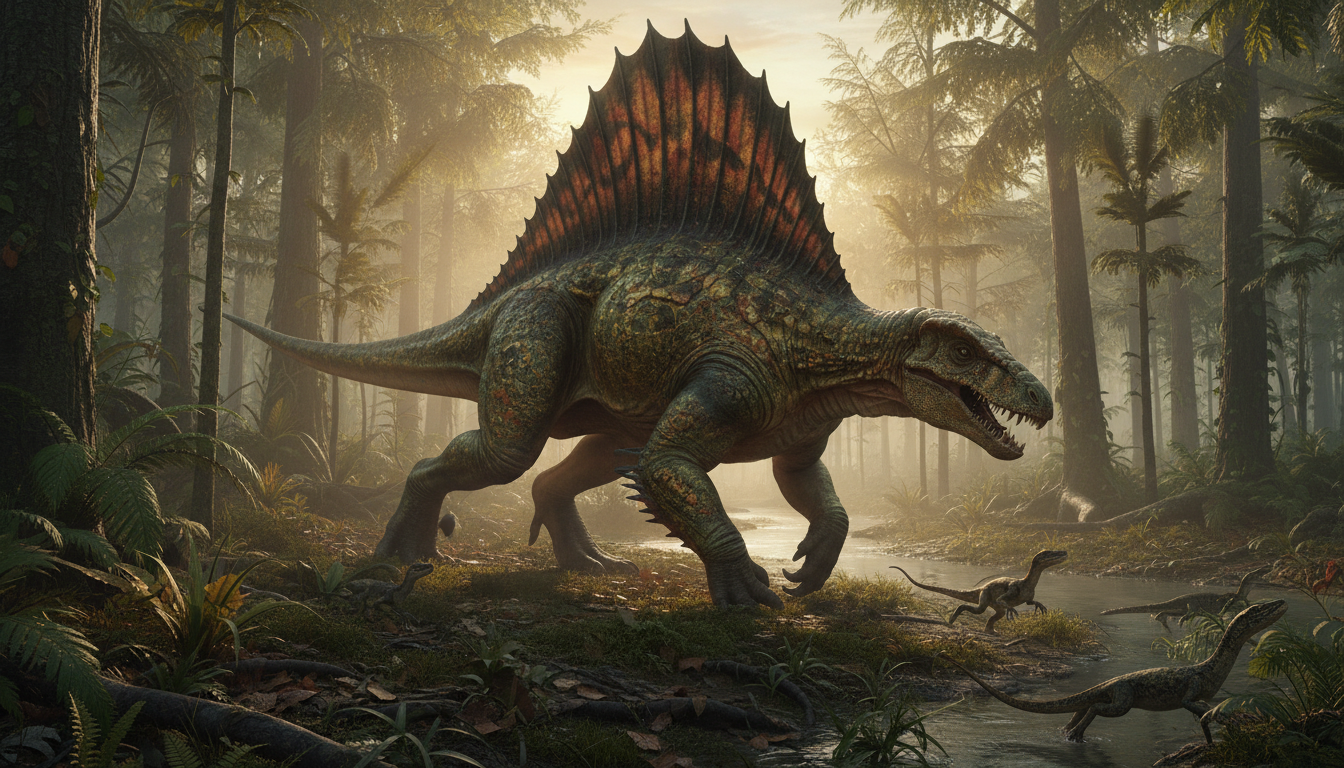


Found in Bromacker, Thuringia, Germany, the MNG 17001 nodule measuring just 5 centimeters contained 41 bone fragments from at least three small reptiles devoured 290 million years ago — a frozen snapshot of the Permian food chain that changes what was known about top predators before dinosaurs
In a small German rock, paleontologists found the oldest recorded evidence of an interrupted meal on land. The fossilized vomit from 290 million years ago presented by the team from the Museum für Naturkunde in Berlin reveals unprecedented details about how top predators behaved 50 million years before the first dinosaurs appeared on the planet.
The nodule, cataloged as MNG 17001, was described in a study published on March 2, 2026 in the journal Scientific Reports, from the Nature group. The discovery came from the paleontological site of Bromacker, in the Inselsberg Geopark, in a region of Thuringia that typically preserves terrestrial fossils with rare quality in the world.
“This nodule is the oldest known example of fossilized vomit in a terrestrial environment — a snapshot of a prehistoric food chain”, stated paleontologist Arnaud Rebillard, the leader of the research. This information is important because, until now, records of this type were almost always marine.
-
For the First Time, Scientists Extract Ancient Human DNA from Cave Art, Revealing Insights into Prehistoric Cave Dwellers

-
Australian Teen Invents Device to Simultaneously Purify Water and Generate Electricity Using Sunlight

-
Archaeologists Uncover Ancient Ruins and Artifacts in Shiloh, Potentially Shedding Light on the Biblical Ark of the Covenant
-
Indian Student Designs Bamboo Houses with Floating Blocks and Recycled Bottles for Flood-Prone Areas; University of Texas Project Aims for Sustainable Housing in Vulnerable Communities





What was inside the 290 million-year-old fossilized vomit
The regurgitalite measures just 5 centimeters in diameter. Behind its discreet size, it holds 41 bone fragments, all less than 2 centimeters.
The fragments belong to at least three individuals, from more than one species. Parts of skull, jaw, and limbs are present.
Thus, the small vertebrates consumed were identified as Eudibamus and Thuringothyris, agile reptilian tetrapods that fed on insects and plant material in the floodplain of the German Permian.
- 41 fragments of bone, all less than 2 centimeters
- At least 3 individuals identified, from different species
- Predator devoured and regurgitated a complete meal in a short time
- The bones came from Eudibamus and Thuringothyris, small and agile prey
- All preserved in sedimentary rock from German floodplains

How German scientists identified the regurgitalite
The first clue was the structure of the nodule. “The compact density of the bones led the team to immediately suspect material expelled by the digestive system, even before detailed analyses”, explained Rebillard.
The scientific confirmation came with a high-precision scanner, capable of scanning the nodule without destroying it. Consequently, the examination revealed alignments compatible with the passage of bones through the digestive system.
Another detail ruled out the hypothesis of coprolite, the technical term for fossilized feces: the low phosphorus content and the absence of typical sedimentary matrix indicate regurgitation, not complete digestion.
Therefore, the material was classified as regurgitalite. It is a form of rare evidence: while coprolites frequently appear in the fossil record, preserved vomit is almost always marine and rarely terrestrial.

Who was the predator behind the fossilized vomit
The big question without a definitive answer is: who ate? The team cannot pinpoint with 100% certainty the identity of the hunter, but narrowed it down to two suspects.
The first is Dimetrodon teutonis, a predator with the iconic dorsal sail and one of the largest terrestrial vertebrates of the early German Permian. On the other hand, the second is Tambacarnifex unguifalcatus, a smaller hunter but with robust jaws and sharp claws.
Both belonged to the group of synapsids, distant ancestors of modern mammals. They appeared in the German Permian ecosystems even before dinosaurs existed as an evolutionary lineage.
“The reading of the regurgitalite indicates that the top predator in the early Permian was not limited to large prey — small vertebrates also made it onto the menu, a ‘generalist’ among carnivores”, the team writes in the study.
This generalist behavior contradicts part of the paleontological literature, which often portrays large Permian predators as specialized hunters of large prey. Other recent studies, such as the reconstruction of Spinosaurus mirabilis in the Sahara, also suggest more flexible diets in ancestral predators.

Why the Bromacker site preserves such rare fossils
The fossilized vomit came from the paleontological site of Bromacker, within the Inselsberg Geopark, in central Thuringia.
The region holds rock layers of seasonal floodplains. When rivers overflowed, fine mud and sediments quickly suffocated animals and organic remains, ensuring rapid burial.
It is this combination of riverine environment and rapid burial that makes Bromacker one of the few places in the world where terrestrial fossils from the early Permian appear in exceptional condition.
The nodule MNG 17001 was prepared by the team from Museum für Naturkunde in Berlin and is currently stored at the Friedenstein Stiftung in Gotha, according to the researchers. Other sites famous for preserving small vertebrates include the one that produced the smallest dinosaur in the world in Argentine Patagonia.

What this discovery changes about pre-dinosaur ecosystems
The fossilized vomit from 290 million years ago is not just a curiosity. As a result, it provides direct evidence of a complete meal, something that isolated bones cannot deliver.
Researchers estimate that the predator ate three prey in a single meal and quickly regurgitated the indigestible pieces before the gastric juice completely dissolved them.
Therefore, top predators of the early Permian functioned more like generalist opportunists than specialists on a single prey. A valuable insight for reconstructing food chains from 50 million years before the dinosaurs.
“The discovery expands what we know about feeding behavior in primitive synapsids”, explained Mark MacDougall, assistant professor of Biology at Brandon University in Canada, in a science communication video.
The paper is open for the scientific community to analyze and replicate. Still, there are important limitations that the team itself lists: the regurgitalite documents a single feeding event and does not allow for generalizing the diet of the entire predatory fauna of the Permian.
It is also worth noting that the attribution of the predator, between Dimetrodon or Tambacarnifex, is still a hypothesis worked on based on indirect comparisons: the size of the fragments, the local species, and the anatomy of the known jaws. Like other surprising discoveries made in Brazil, such as the new 230-million-year-old parrot-beaked rhinoceros, the German find will undergo new analyses in the coming months to refine conclusions. For complete technical details, it is worth accessing the report from O Cafezinho and the coverage from R7 Notícias on the publication in Scientific Reports.