






 Portuguese
  Spanish


World’s Largest Battery Fair CIBF 2026 Brings Together 3,100 Exhibitors in Shenzhen from May 13 to 15 and Sets Historical Industry Record
The 18th China International Battery Fair (CIBF 2026) takes place from May 13 to 15, 2026, at the Shenzhen World Exhibition & Convention Center, according to an official announcement reproduced by Yahoo Finance. The fair gathers more than 3,100 global exhibitors — a new historical record for the world’s main battery hub.
According to the organizers, the CIBF 2026 fair occupies 500,000 m² of exhibition space, hosting manufacturers, supply chain, integrators, and corporate clients. In parallel, the edition is expected to attract more than 200,000 professional visitors. According to the sector, the fair is the annual thermometer of the global industry — setting trends, announcing products, and closing billion-dollar contracts.
The 2026 battery industry scenario is dominated by China: 87% to 90% of advanced cells are produced in the Asian country, according to BloombergNEF data. Therefore, the CIBF gathers the main players: CATL, BYD, EVE Energy, CALB, Gotion, and Sunwoda — all Chinese, all in the world’s top 10.
-
Volvo’s New Loaders Feature Obstacle Detection, Automatic Braking, and 360-Degree Operator View

-
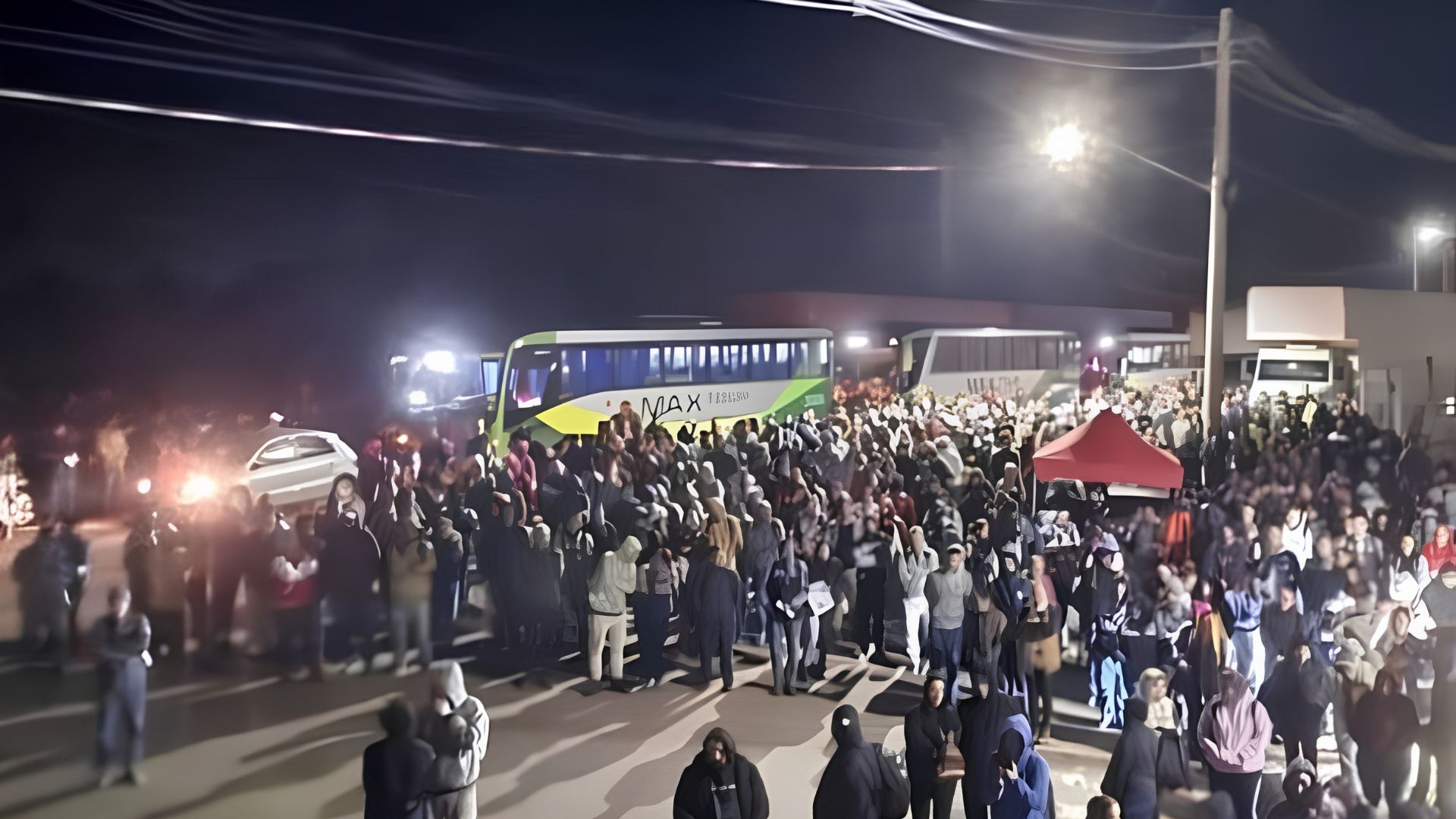
Chinese Manager Accused of Whipping Worker Sparks Protest by 1,200 Employees at Major Brazilian Factory

-
France Revamps 530 Social Housing Units with Large Balconies and Glass Facades Without Demolishing Existing Buildings

-
10-Year-Old Max Makes History with Paris Fashion Show, Launches Own Brand, Hires Staff, and Sets World Record as Youngest Runway Designer




Lithium, Sodium, Solid-State: The 3 Major Technological Bets in Shenzhen
Firstly, lithium iron phosphate (LFP) batteries dominate the market for economical electric vehicles. Secondly, sodium-ion batteries entered commercial production in 2024 with CATL and BYD, offering a cheaper alternative for stationary storage. Thirdly, solid-state batteries are the next frontier of innovation.
According to CATL, the company launched in May 2026 its first semi-final solid-state battery for vehicles with 500 Wh/kg energy density. In comparison, current LFP batteries have 160 Wh/kg, and NMC batteries have 250 Wh/kg. Consequently, solid-state can triple the range of electric cars.
In parallel, BYD announced on the first day of the fair a new “Super Cell” platform with 200 Wh/kg in LFP — a category record. Similarly, Gotion launched a semi-solid-state battery with 360 Wh/kg for aeronautical use. Consequently, the technological leap announced at CIBF 2026 could redefine the electric mobility market by 2028.

The Chinese Dominance: How Shenzhen Became the World’s Battery Capital
Shenzhen has been China’s technological capital since the 1990s. Firstly, the city hosts the headquarters of BYD, Huawei, Tencent, DJI, and dozens of electronics manufacturers. Secondly, the integrated industrial ecosystem allows a battery to go from the factory straight to electric car assembly 50 km away.
According to the China Battery Industry Association, the Chinese battery industry generated US$ 270 billion in revenue in 2025. In comparison, the US and Europe together generated US$ 50 billion. Similarly, China holds 74% of the global production capacity of lithium cells.
In parallel, Chinese dominance extends to the upstream chain: 80% of global lithium refining, 70% of cobalt refining, and 60% of nickel refining take place on Chinese soil. Therefore, the US and Europe have created “displacement” programs for the chain: Inflation Reduction Act in the US and EU Critical Raw Materials Act.
Major Announcements from CIBF 2026 So Far
Several innovations have already been presented on the first day of the fair. Firstly, CATL launched Shenxing Plus, an ultrafast charging 4C battery that charges 400 km in 10 minutes. Secondly, BYD revealed Blade 2.0, an evolution of the battery that equips Han, Seal, and Tang with an additional 100 Wh/kg.
According to analysts, EVE Energy announced a new factory of 50 GWh/year in Hubei, which will be the world’s largest single plant when inaugurated in 2027. Similarly, Sunwoda presented a battery for logistics drones with 1,000 life cycles and sustained high-intensity discharge.
In parallel, Gotion announced a partnership with Volkswagen to supply batteries in Europe, with a factory in Goerlitz, Germany. Consequently, the fair is not just a showcase — it closes billion-dollar commercial contracts. To understand the scale, contracts signed at CIBF 2025 totaled more than US$ 30 billion.
- 3,100 global exhibitors — fair record
- 500,000 m² of exhibition space
- 200,000 professional visitors expected
- May 13-15, 2026 — event window
- Shenzhen World — location in southern China
- 18th edition of CIBF — since 2007
The Battery Cold War: US Tries to Reduce Dependency
Chinese dominance causes geopolitical concern. Firstly, the US IRA (Inflation Reduction Act) allocates US$ 369 billion for domestic battery incentives. Secondly, the tariff on Chinese batteries imported by the US rose to 100% in 2024.
According to Wood Mackenzie analysis, battery factory projects in the US total 440 GWh/year in planned capacity by 2030. Similarly, Europe has more than 1,300 GWh/year of projected capacity. In comparison, China will have 4,000 GWh/year in the same period — almost 3 times the US + Europe.
In parallel, Korean giants like LG Energy Solution, Samsung SDI, and SK On are trying to increase their global participation. On the other hand, they face a cost disadvantage of 20-30% compared to the Chinese. Therefore, Korean-American industrial partnerships (LG + GM, SK + Ford) gain strategic importance.

Impact for Brazil and the Lithium of the Jequitinhonha Valley
Brazil entered the lithium race late but has strategic reserves. Firstly, the Jequitinhonha Valley in Minas Gerais hosts significant deposits. Secondly, CBL (Companhia Brasileira de Lítio) has been operating a mine in Araçuaí since 1992.
According to IBRAM, Brazil produced 27,000 tons of lithium carbonate in 2025 — equivalent to 3% of world production. Similarly, projects by Sigma Lithium (Grota do Cirilo) and Lithium Ionic aim to triple production by 2028. Consequently, the country could become a relevant lithium supplier for batteries.
In parallel, Brazilian companies like WEG are studying entering the stationary battery assembly market for the domestic market. Consequently, Aneel is discussing regulatory frameworks for grid storage. To give an idea, Brazil has only 100 MW of grid battery today — compared to 5 GW in California.

Note on Intellectual Property Protection
Although the CIBF is an international showcase, there is tension over intellectual property protection. Firstly, several Western companies have reported attempts to copy technology. Secondly, there are restrictions on technology transfer via the US EAR (Export Administration Regulations).
On the other hand, the Chinese industry is investing heavily in its own R&D. According to official data, CATL spent US$ 3.4 billion on R&D in 2025 — more than Tesla and Volkswagen combined. Similarly, Chinese patent filings in battery technology surpassed 40,000 filings in 2024. Other energy transition coverage is available in the Click Petróleo e Gás archive. Will the US and Europe be able to reduce Chinese dependency on batteries by 2030?


