






 Portuguese
  Spanish
  4 min of reading
  0 comments


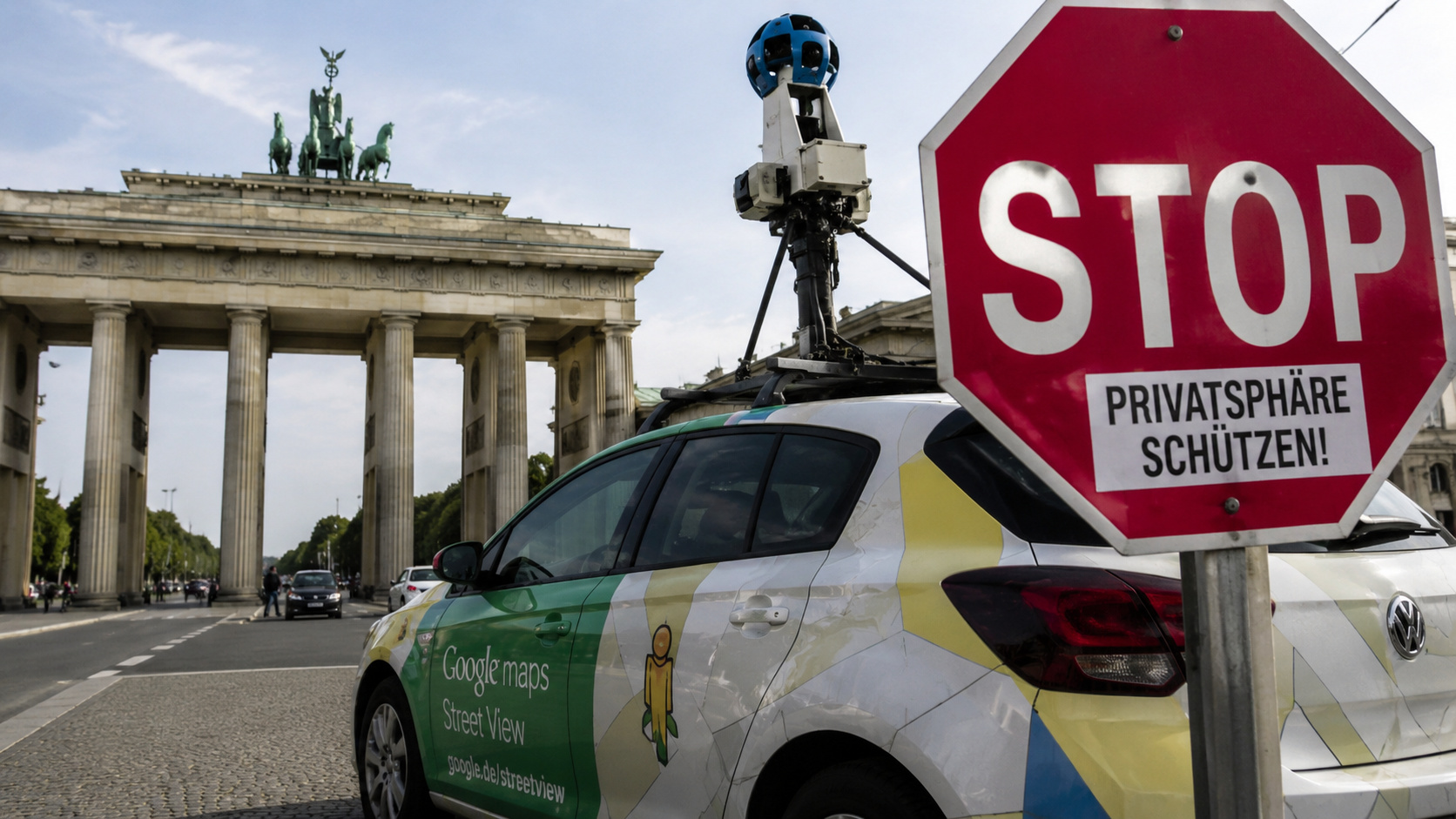
European country halted Google Street View’s advance for years after backlash against camera cars, thousands of blurred houses, and one of Europe’s biggest digital privacy disputes, a topic that still influences debates on technology, online exposure, and personal data protection worldwide
Germany became one of the world’s biggest symbols of resistance to **Google Street View**. While the service rapidly advanced in various countries, entire streets in German territory remained without updates for over a decade due to strong public backlash related to **digital privacy**.
The issue gained international repercussion because it involved thousands of residents, political pressure, and an intense debate about the exposure of daily life on the internet. **The investigation was published by PetaPixel, an international portal specializing in photography and visual technology.**
The country that practically disappeared from Google’s visual map
The advance of **Google Street View** in Germany encountered much greater resistance than in other European countries. The service, known for recording street images with camera-equipped cars, began to be seen by part of the population as a threat to privacy.
-
Goodbye to the microwave: the appliance present in 96% of Brazilian kitchens is starting to lose space to a single device capable of heating, baking, broiling, and preparing recipes like a microwave, electric oven, and air fryer, occupying practically the same spot on the counter.

-
13-year-old Indian girl impresses the world by leading the planting of 200,000 trees in over 120 locations and gaining international recognition while still in childhood.

-
Coral reefs gain new hope after scientists identify 165,000 km² with potential to resist heat in 71 countries, serve as living recovery banks, and protect food, jobs, and coastlines of nearly 1 billion people under climate threat.

-
An American giant could disappear in five years: Utah’s Great Salt Lake has already shrunk by two-thirds, exposing a bed full of arsenic, and scientists are calling its collapse an “environmental nuclear bomb” about to explode over a city of more than a million people.





The concern involved the exposure of facades, residences, and daily habits of residents. The discussion quickly moved beyond the technological sphere and became part of a cultural dispute over the limits of image collection in cities.
More than **100,000 people** requested that their homes be blurred in Street View images. The high number ended up becoming one of the most striking episodes in the platform’s history in Europe.
Google halted Street View expansion in 2011
Public pressure had a direct impact on the service’s operation. Google halted the expansion of **Street View in Germany** in 2011, leaving the country without new street images for many years.
The case drew attention because it practically created a visual void within the European digital map. While other regions received frequent updates, several German cities remained with old or incomplete records.
**PetaPixel, an international portal specializing in photography and visual technology, detailed that the issue became one of the biggest confrontations between technology and privacy on the European continent.**
Privacy debate became a cultural issue in the country
German resistance to Street View was not limited to just technology. The issue gained political and social dimension, reinforcing Germany’s image as one of the strictest countries regarding personal data protection.
The presence of camera-equipped cars generated distrust among part of the population. Many residents believed that public images could facilitate excessive exposure of private life.
The discussion also involved authorities and regulators concerned about data storage and the reach of international digital platforms within the country.
Blurred houses became a symbol of the dispute against Google
Images with blurred residences ended up becoming a visual hallmark of **Google Street View in Germany**. In many regions, properties appeared blurred after requests made by the residents themselves.
The scenario drew attention because it contrasted with the experience offered in other countries, where the service operated normally with few such restrictions.
The measure showed the extent of concern regarding privacy and reinforced how the issue held real weight in German daily life.
Street View resumed receiving updated images years later
After a long period without significant expansion, Street View resumed receiving more recent images in Germany many years after the halt initiated in 2011.

The return of updates showed a gradual change in the country’s digital landscape, although the debate about privacy remains strong among residents and local authorities.
The German case is still seen as one of the most striking examples of popular resistance against large technology companies and urban image collection.
German case became a global reference in digital privacy
Germany’s long absence from Google Street View transformed the country into a global reference when the subject involves data protection and online privacy.
The popular reaction thus showed that even tools considered common can provoke major cultural and political discussions. The episode also revealed how the use of urban images can generate real impacts on the functioning of global platforms.
Did you already know this story involving Germany and Google Street View? Leave your opinion in the comments and share this publication with other people interested in technology and digital privacy.









Be the first to react!