Portuguese
  Spanish


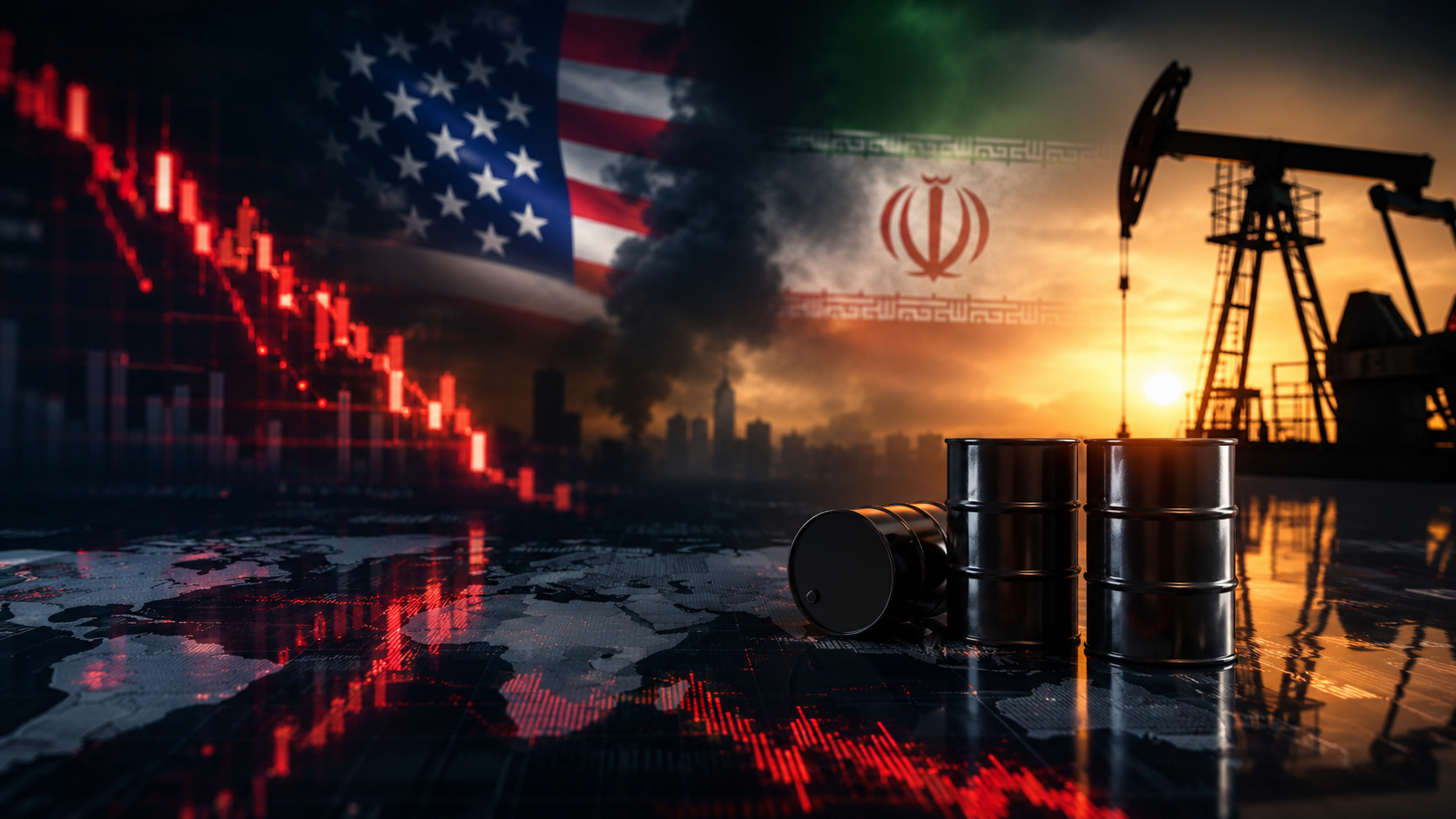

The global economy returned to operate under strong tension after the increase in uncertainties involving the United States and Iran. This Monday (11), the Ibovespa registered a fall due to greater risk aversion in international markets, while oil prices advanced again amid fears of a worsening geopolitical crisis in the Middle East.
Furthermore, the lack of progress in negotiations between the two countries increased investors’ concern about inflation, energy costs, and global economic slowdown. As a consequence, international stock markets began to operate in a cautious mood, reinforcing the movement of flight from assets considered riskier.
Global economy feels impact of Middle East tensions
The escalation of tensions between the United States and Iran rapidly increased concern in financial markets.
-
Brazil’s Federal Revenue Auction: iPhone 13 for $95, PlayStation 4 for $80, and Volkswagen Jetta for $2,600 Among 232 Lots Available

-
Tech Giant Oracle Lays Off 21,000 Employees and Invests $70 Billion in Artificial Intelligence

-
Chilean Giant Acquires St. Marche, Expanding from Discount to Premium Supermarkets in São Paulo’s High-End Retail Market
-
After 60 Years of Selling Cheap Milk, Brazilian Family Invests in $4,000 Equipment to Transform Farm’s Milk into Premium Sweets, Producing 2 Tons Daily and Aiming for $6.4 Million


This happens because the Middle East plays a strategic role in the global oil supply. Thus, any instability in the region usually causes a strong reaction in stock markets, currencies, and commodities.
Furthermore, investors fear possible impacts on maritime routes, oil exports, and the global energy flow.
For this reason, the market began to closely follow the diplomatic developments between the two countries.
Ibovespa operates lower with greater risk aversion
The Ibovespa retreated amid increased investor caution.
In times of international instability, financial operators usually reduce exposure to emerging markets and higher-risk assets.
Furthermore, companies linked to consumption, retail, and inflation-sensitive sectors end up facing additional pressure.
In this scenario, the Brazilian market followed the negative movement observed in international stock markets.
Oil rises and increases inflation concern
International oil prices rose again after the increase in geopolitical tensions.
This occurs because investors began to consider risks of interruption in the global supply of the commodity.
Furthermore, oil has a strong influence on transportation costs, fuels, and industrial production.
Consequently, the commodity’s advance rekindled concerns related to global inflation and energy costs.
World economy fears slowdown
The increase in oil prices usually generates concern about the pace of the world economy.
When energy and fuels become more expensive, companies face increased operational costs and consumers start spending more.
Furthermore, high inflation reduces purchasing power and hinders economic growth.
Therefore, experts state that the current geopolitical instability could increase risks of economic slowdown in different countries.
International stock markets also face pressure
The cautious mood did not only affect the Brazilian market.
Furthermore, stock markets in Europe, Asia, and the United States also began to operate with greater volatility.
Investors sought assets considered safer, such as gold and U.S. government bonds.
Meanwhile, equity markets recorded losses in different sectors of the global economy.

The relationship between oil and economy
Oil continues to be one of the most important commodities for the world economy.
Furthermore, fluctuations in the commodity’s price directly affect inflation, industrial production, and logistical costs.
When the barrel price rises rapidly, various economic sectors end up suffering an impact.
In this context, investors monitor the energy market as one of the main indicators of global economic stability.
What worries investors
Investors are primarily monitoring the possibility of an escalation of the conflict between the United States and Iran.
Additionally, the market fears possible economic sanctions, trade restrictions, and disruptions to maritime transport in the region.
Among the main concerns are:
- Prolonged oil price hike
- Increase in global inflation
- Economic slowdown
- Interest rate pressure
- Greater market volatility
Therefore, the scenario continues to demand caution from investors.
Brazilian economy may also feel the effects
Even far from the conflict, the Brazilian economy may also suffer indirect impacts.
The increase in oil prices can raise fuel prices and put pressure on inflation in the country.
Furthermore, high interest rates and international instability usually affect investments and the performance of the Brazilian stock market.
Experts state that emerging markets tend to suffer more in times of strong risk aversion.
The impact on fuels
The international rise in oil prices has a direct effect on fuels in different countries.
When the barrel price rises, gasoline, diesel, and transport tend to become more expensive.
Furthermore, higher logistical costs end up influencing the prices of food and industrial products.
Consequently, consumers and businesses face a generalized increase in expenses.
The role of geopolitics in the economy
Geopolitics exerts an ever-increasing influence on the global economy.
International conflicts, trade disputes, and diplomatic tensions can rapidly alter the behavior of financial markets.
Furthermore, investors usually react immediately to any risk involving major energy producers.
In this scenario, political stability has become an essential factor for global economic balance.
Financial market monitors next steps
The next diplomatic moves between the United States and Iran are expected to continue influencing stock markets and commodities in the coming days.
Additionally, investors are monitoring official statements, international negotiations, and possible economic measures related to the conflict.
Meanwhile, analysts are evaluating possible scenarios for oil, inflation, and global economic growth.
For this reason, volatility is expected to remain high in the short term.
Global economy faces scenario of uncertainty
The current environment shows how geopolitical tensions continue to directly impact the world economy.
Furthermore, the rise in oil prices reinforces concerns about persistent inflation and a slowdown in economic growth.
In this context, central banks, governments, and investors are closely monitoring international developments.
At the same time, financial markets continue to operate with greater caution given the uncertainties related to the Middle East.
What experts expect now
Experts believe that the behavior of the global economy will depend mainly on the evolution of diplomatic negotiations.
Additionally, the market will continue to monitor:
- Oil price
- Central bank decisions
- Global inflation
- Economic growth
- Tensions in the Middle East
All these factors are expected to directly influence stock market performance and investor sentiment.


Economy remains sensitive to international tensions
The fall of the Ibovespa shows how the global economy remains highly sensitive to geopolitical crises and fluctuations in the energy market.
Furthermore, investors continue to react quickly to any sign of international instability.
As long as tensions between the United States and Iran persist, the market is expected to continue operating with strong caution.
Finally, the scenario reinforces how oil, geopolitics, and the economy remain deeply connected, influencing inflation, investments, and growth prospects worldwide.