Portuguese
  Spanish


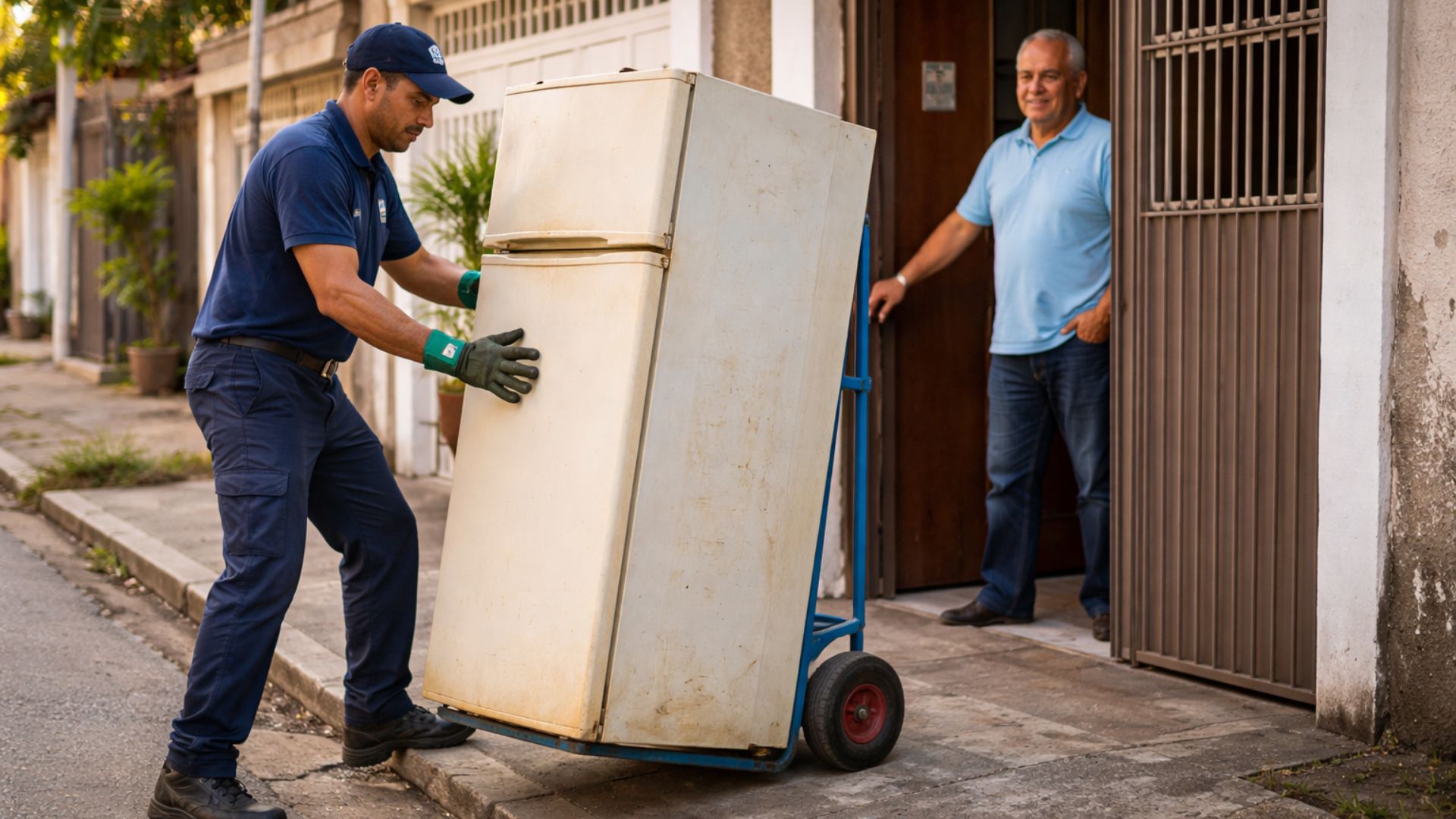

National initiative bets on free removal of old refrigerators and financial incentives for appliance renewal, uniting recycling, reverse logistics, and household economy in a model that seeks to reduce environmental impacts and facilitate correct disposal in Brazil.
Whirlpool, owner of the brands Brastemp, Consul, and KitchenAid, launched in April 2026 a partnership with Dow to expand the reverse logistics of refrigerators in Brazil, with free home pickup of appliances over 30 kilograms and the promise of discounts for those who exchange the old equipment for a new one.
The proposal targets an old problem in the sector: the disposal of large appliances, which are expensive to transport and more complex to recycle.
The project foresees an initial investment of R$ 3 million and also involves the participation of the Akatu Institute, which will work on environmental education and conscious consumption.
-
German Sailor Found Mummified on His Boat in the Philippines, Leaving Scientists Puzzled by an Unbelievable Detail

-
Brazilian Couple Trades Motorhome for “Houseboat” Adventure on Historic Welsh Canal with Unique Challenges
-
Neon Blue Glow in Brazilian Waters Captivates Locals and Goes Viral, Unveiling Rare “Sea Fire” Phenomenon
-
Forgotten Map Leads Diver to Shipwreck with Gold, Rare Jewels, and Secrets Hidden for Nearly 350 Years


According to Dow, the initiative was designed to increase the collection and recycling of refrigerators on a national scale, combining logistics, community engagement, and recovery of materials that typically require specialized technical treatment.
Free home collection and disposal of refrigerators in Brazil
In practice, the program seeks to address the point where many consumers give up on correct disposal: the removal of the product.
For larger items, such as refrigerators, stoves, and washing machines, the operation itself collects the item from the customer’s residence, at no charge.
This model is already part of Brastemp’s reverse logistics structure and now receives reinforcement with the new partnership specifically aimed at refrigerators.
The difficulty is not small.
Unlike mobile phones, cables, and other lightweight electronics, a refrigerator requires transportation that is compatible with weight, volume, and safe handling.
In many cases, the cost of removing the appliance from the consumer’s home discourages proper disposal and ends up pushing disposal towards improvised solutions, without a guarantee of environmentally correct treatment.
The new operation aims to eliminate precisely this economic and logistical barrier.
Another central point is the coverage. The expectation reported by outlets that announced the initiative is for national operation, reaching over 5,500 municipalities, with support from logistics partners, including the Postal Service.
Although the complete implementation schedule was still under development at the project’s announcement, the proposal was presented as an expansion of the already existing free disposal structure offered by the brand.
Refrigerator recycling and circular economy in practice
The collection stage is just the beginning.
Refrigerators and freezers require careful decontamination before being dismantled and recycled, as they contain materials of different natures and may hold substances that should not go to regular disposal.
Brastemp itself states that refrigerants and other components need proper disposal to avoid impacts on the climate, soil, and water.
This is where Dow comes into play.
The company claims that its polyurethane division will work on expanding the collection and recycling of refrigerators, focusing on material recovery and advancing the circular economy in the home appliance sector.
In practice, this includes the treatment of components and the reuse of parts that can return to the production chain, instead of going to landfills or irregular disposal.
The logic behind the project is that of the circular economy.
After removal, the equipment is sent to operators and processing centers capable of separating, decontaminating, and directing each material appropriately.
The goal is to reduce waste, prevent pollution, and transform part of what was once waste into reusable input for new industrial uses.
Discount for trading in an old refrigerator for a new model
In addition to free collection, the program relies on a trade-in discount mechanism to attract consumers.
Customers who request the removal of used refrigerators can receive up to 20% off, although recent campaigns indicate variable percentages, usually between 5% and 10%, depending on commercial conditions.
This detail is relevant because trading in the equipment tends to weigh on the household budget, especially in a scenario of more expensive credit and more sensitive installment purchases for the consumer.
By linking proper disposal to a commercial advantage, the manufacturer tries to transform a stage that was previously seen as a hassle into part of the journey of purchasing a new home appliance.
Brastemp has already been operating its own free reverse logistics system for products of any brand, with over 15,000 voluntary delivery points in the country for smaller items and home collection for equipment over 30 kilograms.
With the partnership announced in 2026, the strategy now places greater emphasis on refrigerators, precisely because they involve high environmental complexity, removal costs, and potential for material recycling.
Energy consumption and impact on the electricity bill
The renewal of the refrigerator stock also has an indirect effect on energy consumption in households.
There are newer models with better energy performance, including appliances rated among the highest efficiency levels available on the market.
Although actual savings vary according to usage, capacity, and technology, replacing an old refrigerator with a more efficient model can reduce waste over time.
For the companies involved, the program also serves as a response to increasing pressure for concrete post-consumption solutions.
The expansion of reverse logistics, the recycling of complex materials, and the attempt to create a habit of returning used products have become a more visible part of the competition for image, innovation, and consumer relationships.
In this context, facilitating home pickup can weigh as much as the discount at the time of purchase.
The movement centers on a question that, for years, has been pushed to the end of the chain: what to do with a large, heavy, and technically difficult-to-dispose-of appliance when it is no longer useful.
By taking on collection, linking returns to commercial benefits, and reinforcing the recycling of components, the initiative aims to transform a consumer pain point into a regular part of the white goods replacement market.