Portuguese
  Spanish


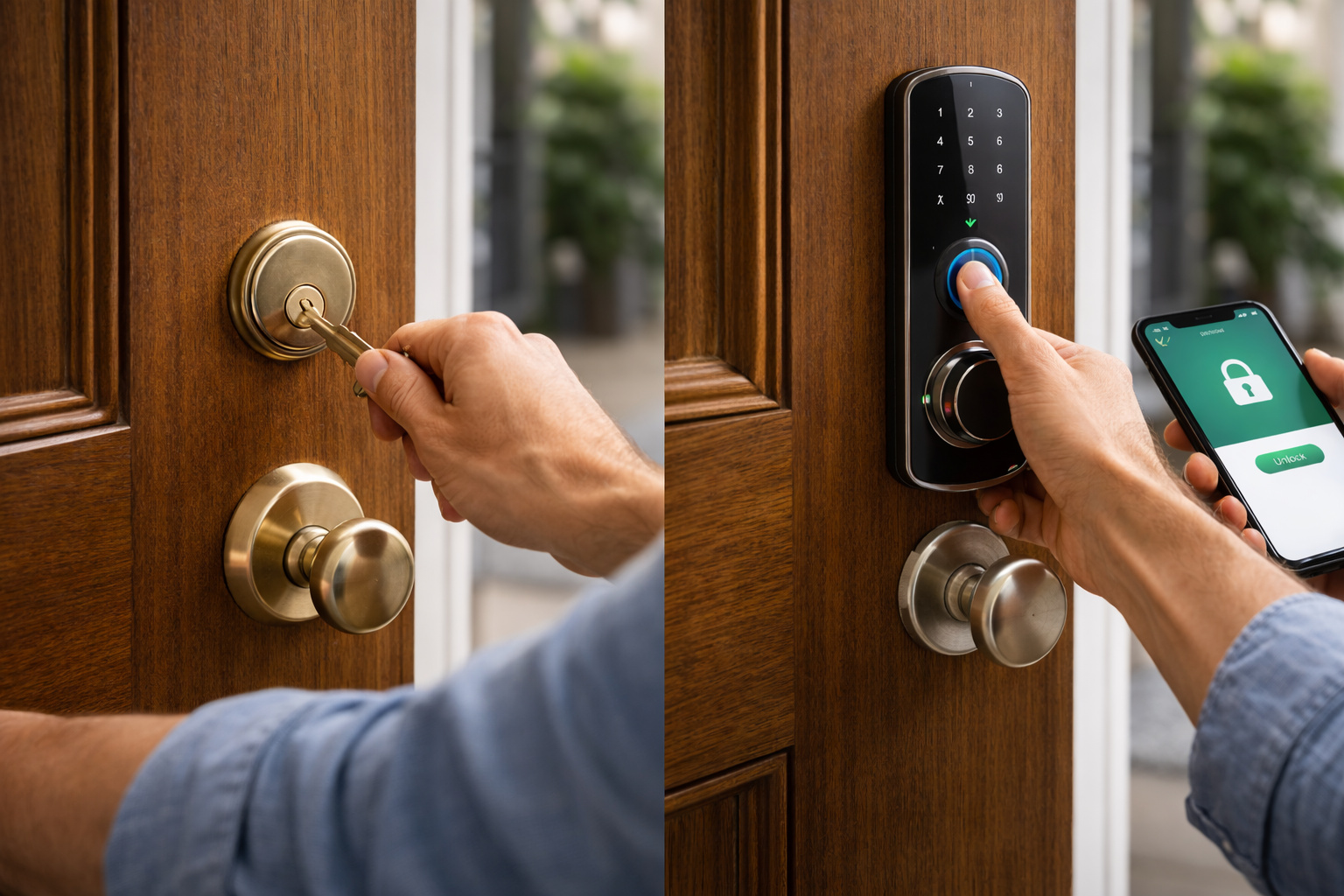

Smart locks advance in Brazil with biometrics, app, temporary passwords, and up to 10 months of autonomy, changing access to homes.
In January 2026, Electronic Security Magazine reported that the Brazilian electronic security and smart home market entered a turning point, with advancements in digital locks and increased demand for advanced biometrics, simplified installation, and greater durability. In this movement, manufacturers like Intelbras are already selling models in Brazil that replace physical keys with digital authentication systems, combining biometrics, passwords, proximity tags, and app control.
In the technical specifications of the MFR 7001 lock, the company states a capacity for up to 100 biometrics, up to 100 tags, powered by four AA batteries with an average autonomy of 10 months, and access management via the app, with entry reports, dates, and times. In practice, these features demonstrate how residential access in Brazil is beginning to clearly shift to a connected model, where entry and exit from the property are monitored and controlled digitally.
The central point of this transformation is clear: access to the residence no longer depends on a physical object subject to loss, duplication, or forgetfulness and is now controlled by traceable and configurable digital systems.
-
The industrial waste that even recyclers didn’t want has gained value in the interior of Bahia: two entrepreneurs invested R$ 2.8 million to transform 350 tons per year of foam, rubber, and plastic into boards that can replace wood and MDF.

-
What is a red flashlight used for, after all? See why it is so commonly used at night.

-
He has never read a line of code, but he already knows how to work: the French company UMA presented in Paris the Northstar, its first AI-powered humanoid robot designed for factories and warehouses, capable of copying tasks just by observing an employee in action.

-
A young Kenyan engineer collects plastic waste from the streets and transforms it into robots that translate physics lessons into sign language in real-time, a machine made with old bottles that teaches what was missing to deaf children left out of science.




Replacement of physical keys eliminates historical vulnerabilities of traditional access
For decades, the residential access model based on physical keys remained virtually unchanged, despite evident limitations. Keys can be lost, copied without control, and shared without record, creating vulnerabilities that are difficult to monitor.
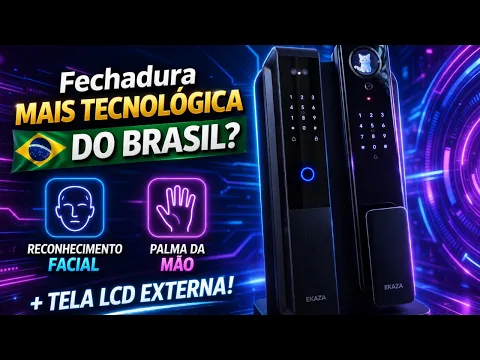

With the introduction of smart locks, this model begins to be replaced by a system where access can be configured, limited, and recorded. Passwords can be changed at any time, biometrics can be added or removed, and temporary credentials can be created for specific situations.
This change eliminates the irreversible access logic of the physical key and introduces a dynamic model, in which control can be continuously adjusted.
Biometrics and multiple opening methods expand usage flexibility
One of the main differentiators of smart locks available in Brazil is the multiplicity of authentication methods. The user can choose from different ways to open, depending on the situation.

Biometrics allows for quick and direct access, without the need to remember passwords or carry devices. Numeric passwords offer a practical alternative, while proximity tags facilitate use by different residents. The app control allows for remote door opening.
This diversity of options increases flexibility and adapts the system to different usage profiles within the same residence.
Temporary passwords create a new access model for visitors and service providers
Another relevant feature of these locks is the ability to create temporary passwords. This type of functionality allows access to be granted for a specific period, without the need to hand over a key or the physical presence of the resident.
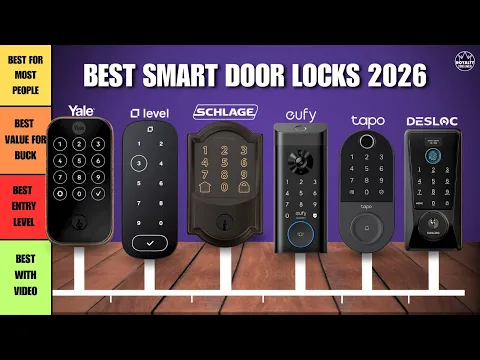
This is especially useful for situations such as service provider entry, short-term rentals, or occasional visits. After the defined period, the password automatically ceases to function.
Access is no longer permanent and becomes conditional on time and necessity, increasing control over who enters the residence.
Access reports introduce traceability in door usage
Unlike traditional locks, which do not offer any type of record, smart models allow tracking of access history. This includes information such as entry time and method used to open the door.
This type of data can be accessed via an app, providing a detailed view of the lock’s usage over time.
The door of the house is no longer a blind spot and starts generating data that allows for monitoring and analysis.
Autonomy with common batteries facilitates adoption without the need for additional infrastructure
Despite the technological complexity, many smart locks available in Brazil operate on battery power, usually of the AA type. The autonomy can reach about 10 months, depending on the frequency of use.
This model eliminates the need for a direct connection to the electrical grid, simplifying installation and allowing replacement on existing doors.
The technology adapts to the current structure of the house, without requiring electrical changes or construction.
Remote control expands usage possibilities and integration with routine
The integration with mobile applications allows the user to control the lock remotely, as long as there is an internet connection. This enables opening the door for visitors even when not present, as well as checking the status of the lock in real-time.
This feature also allows integration with other smart devices, increasing the level of automation in the home. Access to the house is no longer local and can be controlled from anywhere.
Growth of the connected home drives adoption in Brazil
The expansion of smart locks is directly related to the growth of the so-called connected home in Brazil. The increase in the use of smart devices, combined with greater internet availability, creates a favorable environment for the adoption of these technologies.

National manufacturers have expanded their portfolios, offering products with different levels of complexity and price, which contributes to the popularization of the segment. Residential security becomes part of a broader ecosystem of home automation.
Although smart locks bring significant advancements, they also raise discussions about digital security. Like any connected device, they may be subject to risks related to hacking or software failures.
Therefore, manufacturers invest in encryption systems, authentication, and firmware updates to reduce vulnerabilities. Security is no longer just physical and also involves digital aspects.
Transition occurs gradually, but the trend points to the replacement of the traditional model
Despite the growth, the complete replacement of traditional locks still occurs gradually. Factors such as cost, familiarity with technology, and perception of security influence the consumer’s decision.
However, the trend indicates that the digital model is expected to gain ground in the coming years, following the evolution of home automation. Access through physical keys is beginning to lose ground to more flexible, traceable, and integrated systems.