






 Portuguese
  Spanish


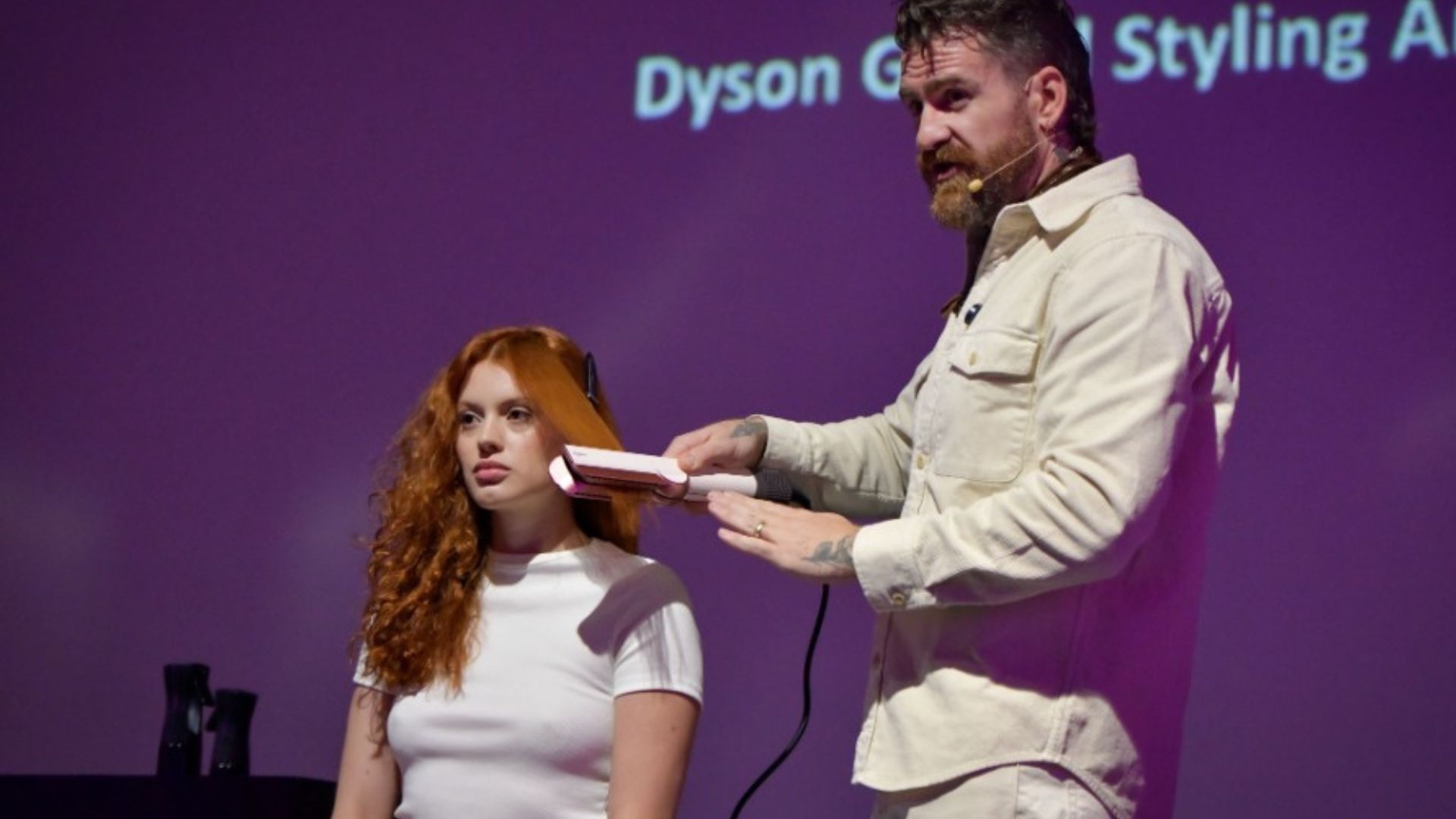

Dyson Airstrait uses heated airflow to dry and straighten wet hair without hot plates, combining a dryer and straightener in a single device.
Dyson introduced one of the most unusual beauty gadgets in recent years by launching the Dyson Airstrait, a device designed to dry and straighten hair simultaneously using only controlled airflow. Unlike traditional straighteners, the equipment does not use hot plates to press the strands, but high-pressure air jets directed at a precise angle to align the hair while removing moisture.
According to Dyson, the device was designed to work directly on wet hair, eliminating the need for a separate drying step before straightening. The proposal attracted attention because it attempts to replace two common household routine devices, a dryer and a thermal straightener, with a single system based on airflow engineering.
The launch also reinforced the British company’s strategy of applying technologies originally linked to motors, fluid dynamics, and thermal control to personal care products.
-
Over 200 Cities in Southern Brazil on Storm Alert as Cyclone Near Uruguay Brings Heavy Rain, Hail, and Winds Up to 100 km/h

-
Archaeologists Discover 2,300-Year-Old Beer in Sealed Bronze Vessel from Ancient Chinese Tomb

-
35,000-Year-Old Saber-Toothed Tiger Cub Found Intact in Siberian Permafrost, Whiskers, Claws, and Skin Preserved Since the Ice Age
-
Scientists Uncover “Amazon Stonehenge” with 127 Giant Rocks, Shedding Light on Indigenous Solar Observations Before European Arrival




The Dyson Airstrait uses high-pressure airflow to dry and align strands simultaneously
The operation of the Dyson Airstrait is based on heated air jets projected at an angle of approximately 45 degrees along the strands. According to Dyson, this flow creates controlled tension in the strands while removing water and promoting hair alignment during the drying process.
Unlike conventional straighteners, the device does not rely on extremely hot plates directly compressing the hair. The company claims that the system was developed precisely to reduce continuous exposure to very high temperatures normally associated with traditional thermal straightening.


The equipment uses the Dyson Hyperdymium motor, designed to generate high-speed airflow within a relatively compact body. Thermal sensors constantly monitor the air temperature to prevent excessive overheating during use.
Dyson’s proposal is to combine a dryer and thermal straightener in a single usage step
One of the main promises of the Airstrait is to reduce the number of steps needed to straighten hair. In traditional routines, many people first completely dry their hair using a dryer and then use a straightener to align and reduce waves.
In the new system, Dyson claims that the process can happen simultaneously. The damp hair is positioned between the arms of the device while the airflow removes the water and directs the strands to a more aligned position.
According to the company, the device has specific modes for wet and dry hair, as well as different temperature and airflow speed settings. The goal is to adapt the operation for different hair types and moisture levels.
The proposal attracted attention because it transforms a process normally divided into multiple tools into a single electronically controlled step.
Dyson claims that the device reduces thermal damage associated with conventional flat irons
The British company highlights that the Airstrait was developed to minimize exposure to extreme temperatures often found in traditional straighteners. Many flat irons operate above 200 °C, while the Airstrait works with continuous control of heated airflow.

According to Dyson, internal sensors monitor the temperature dozens of times per second to maintain thermal stability. The company claims this helps reduce damage associated with repetitive overheating of hair fibers.
The brand’s discourse relies on a growing trend in the beauty industry: developing devices that try to balance hair styling with less thermal aggression to the strands.
Even so, hair care specialists note that any process involving heat can cause some level of structural alteration in the hair depending on the frequency of use, thermal intensity, and condition of the strands.
The Hyperdymium motor is one of the central pieces of the technology used by Dyson
The Dyson Airstrait uses the Hyperdymium motor, a technology developed by the company to generate high airflow speed in compact dimensions. According to Dyson, the motor spins at extremely high speeds to produce sufficient pressure capable of aligning the strands without the need for traditional heated plates.
The same concept had already been used by the company in devices like the Supersonic hair dryer and the Airwrap styler. The difference in the Airstrait lies in the shape of the airflow and the attempt to combine drying and straightening simultaneously.

The engineering of the device directly depends on aerodynamic control. Instead of physically pressing the hair, the system tries to use the behavior of the air itself to guide the strands in a certain direction.
This type of approach differentiates Dyson from conventional manufacturers who traditionally focus more on thermal resistance and heated surfaces.
The device reignited the debate about practicality, time, and thermal damage in the domestic routine
The Airstrait’s proposal gained traction mainly among consumers interested in reducing routine time. By promising to dry and straighten simultaneously, the device attempts to address a very common demand related to domestic practicality.
Another important factor is the growing concern about damage caused by excessive heat. Many people have started seeking alternatives that reduce prolonged exposure to high temperatures during frequent hair styling processes.
Dyson bets precisely on this combination of convenience, engineering, and damage reduction to justify the product’s premium positioning.
At the same time, the high price and technological focus reinforce that the device was primarily designed for the premium consumer segment and not to compete directly with entry-level conventional flat irons.
The Dyson Airstrait shows how even simple everyday tools are being redesigned with motors, sensors, and airflow engineering
For decades, flat irons worked basically on the same principle: two heated plates pressing the strands to temporarily alter their structure. The Airstrait tries to break this logic by replacing direct thermal contact with high-speed aerodynamic control.
The idea of using only airflow to align wet hair seemed unlikely a few years ago, but the advancement of compact motors, thermal sensors, and electronic control allowed the creation of a system that combines drying and styling in a single device.
The result is a device that seems closer to a technological gadget than a traditional flat iron. And this helps to show how even common household tasks are entering a new phase dominated by automation, sensors, and advanced engineering applied to everyday life.


