Portuguese
  Spanish


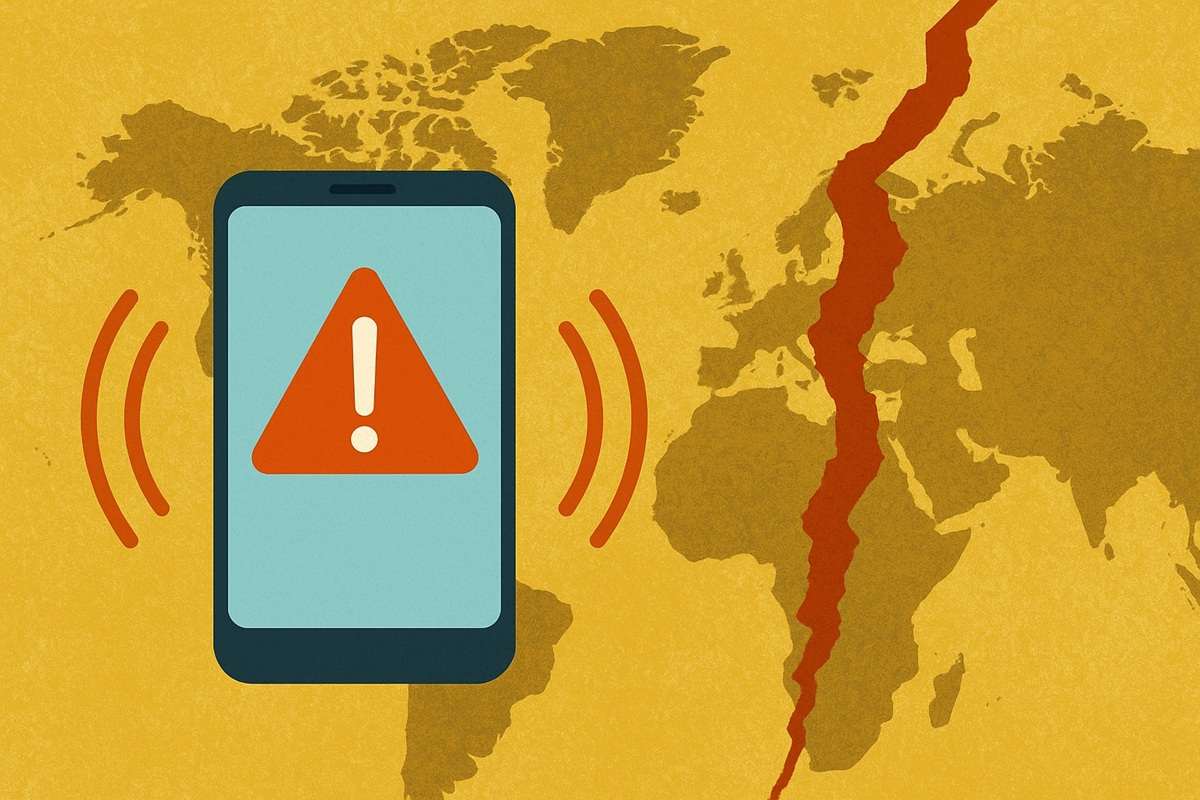


Google Transformed Android Phones Into Earthquake Sensors. With Technology That Uses The Accelerometer of Devices, The System Is Already Active in 98 Countries and Sends Seismic Alerts Seconds Before The Tremor Starts.
Google Developed A System That Transforms Android Phones Into Earthquake Sensors. The Technology, Called Android Earthquake Alert (AEA), Is Already Active in 98 Countries and Is Capable of Sending Seismic Alerts Up to One Minute Before The Tremor.
The Proposal Is Simple: Utilize The Accelerometers of Phones to Detect Ground Movements and Notify People in Advance.
How Cellular Detection Works
The System Uses The Accelerometer Present in Millions of Android Phones. This Sensor, Usually Used to Rotate The Screen or Count Steps, Can Also Pick Up Signals From Seismic Waves.
-
She spent 73 years breathing inside an iron lung, survived the aftereffects of polio, and became the last woman in the United States dependent on the equipment before dying at 78 years old.

-
Brazilian students created a $1 filter using pine bark, cotton, and 3D-printed parts to clean cassava wastewater, reduce the toxicity of a hazardous waste, and transform contaminated water into biofertilizer.

-
Astronaut from Artemis II steps down after mission to the Moon and decision surprises after a record of 406,771 km, a historic 10-day journey, and an unprecedented achievement for Canada.

-
A fossil kept for years in a small museum in Montreal concealed 450-million-year-old soft tissue, a discovery that has only happened once before in history.


When a Phone Detects Suspicious Acceleration, It Sends The Data to Google’s Servers.
If Multiple Devices Register The Same Pattern of Movement at The Same Time and Location, The System Considers That An Earthquake Is Occurring.
Then, It Issues An Alert Via Push Notification — Without Requiring The Installation of Any Additional Application.
Quick and Automatic Alerts
The Alert Arrives Between 5 and 60 Seconds Before The Tremor, An Adequate Time to Seek Shelter or Leave Dangerous Areas.
The Notifications Appear Even With The Phone on Silent Mode. The Notification Includes Information Such As Estimated Intensity and Recommendations Like “Protect Yourself” or “Stay Away From Structures.”
Everything Happens Automatically. The User Just Needs to Have An Android Phone with An Operating System from Android 5.0, Updated Google Play Services, Location Enabled (Even in “Device Only” Mode), and Access to The Internet via Mobile Network or Wi-Fi.
Results Already Registered
From 2021 to 2024, The Android Earthquake Alert System Issued 1,279 Alerts. One of The Most Notable Cases Was The 7.8 Magnitude Earthquake in Turkey and Syria in February 2023. At That Time, Over 500,000 People Received Early Warnings.
Despite This, The System Faced Failures. The Algorithm Underestimated The Magnitude of The Event, Which Limited The Reach of The Initial Alerts. After Analysis, Google Updated The Algorithm. With The New Adjustments, The Same Earthquake Could Generate Up to 10 Million Immediate Alerts.
Low False Alarm Rate
One of The Highlights of The Technology Is Its Accuracy. In Over 1,200 Detected Events, Only Three Generated False Alarms. Two of These Errors Were Caused By Storms That Confused The Sensors. This Low Error Rate Is Essential to Maintain User Trust and Avoid Notification Saturation.
The System Does Not Aim to Replace National Systems, But Functions as An Important Complement — Especially in Regions Where There Are No Early Warning Structures.
Coverage in Nearly 100 Countries
The Android Earthquake Alert Is Already Operational in 98 Countries. Although Google Has Not Released A Complete Official List, There Are Confirmations in Various Regions Around The World. In Latin America, The System Operates in Mexico and Countries Like El Salvador, Guatemala, Costa Rica, and Nicaragua Through Initiatives Supported by Google.
In North America, It Is Active in The United States and Canada. In Europe, There Are Records of Operation or Testing in Greece, Italy, Romania, Spain, Switzerland, France, Germany, Austria, Netherlands, Bulgaria, Luxembourg, Lithuania, Norway, and Denmark.
In Asia, Countries Like The Philippines, Japan, Taiwan, South Korea, Israel, India, and China Are Already Using or Testing The System. It Is Also Present in Central Asian Nations Like Kazakhstan, Kyrgyzstan, Tajikistan, Turkmenistan, and Uzbekistan. In Oceania, New Zealand Is One of The Countries with The Service in Operation.
Countries That Already Have National Systems, Such as Japan and Italy, May Use The Android Earthquake Alert as Support or in Testing Phases.
Technology as A Protection Tool
The Great Advantage of AEA Is Its Ability to Form A Distributed Seismic Network from Existing Devices.
In Regions Without Detection Infrastructure, Millions of Phones Become A Mesh of Sensors Capable of Collecting and Sharing Data in Real Time.
Currently, The System Issues About 60 Alerts Per Month and Reaches Approximately 18 Million Users Worldwide.
These Numbers Indicate Growing Usage and A Trend Towards Expansion of The Technology, Especially in Areas With High Seismic Risk.
Even Without Physical Sensors Installed in The Ground, The Android Earthquake Alert Has Already Saved Lives and Continues to Evolve.
With Increasingly Accurate Algorithms and Growing Coverage, The System Expands The Protection of Millions of People, Transforming A Simple Phone Into A Powerful Ally Against Natural Disasters.
Study Published in Science.