






 Portuguese
  Spanish


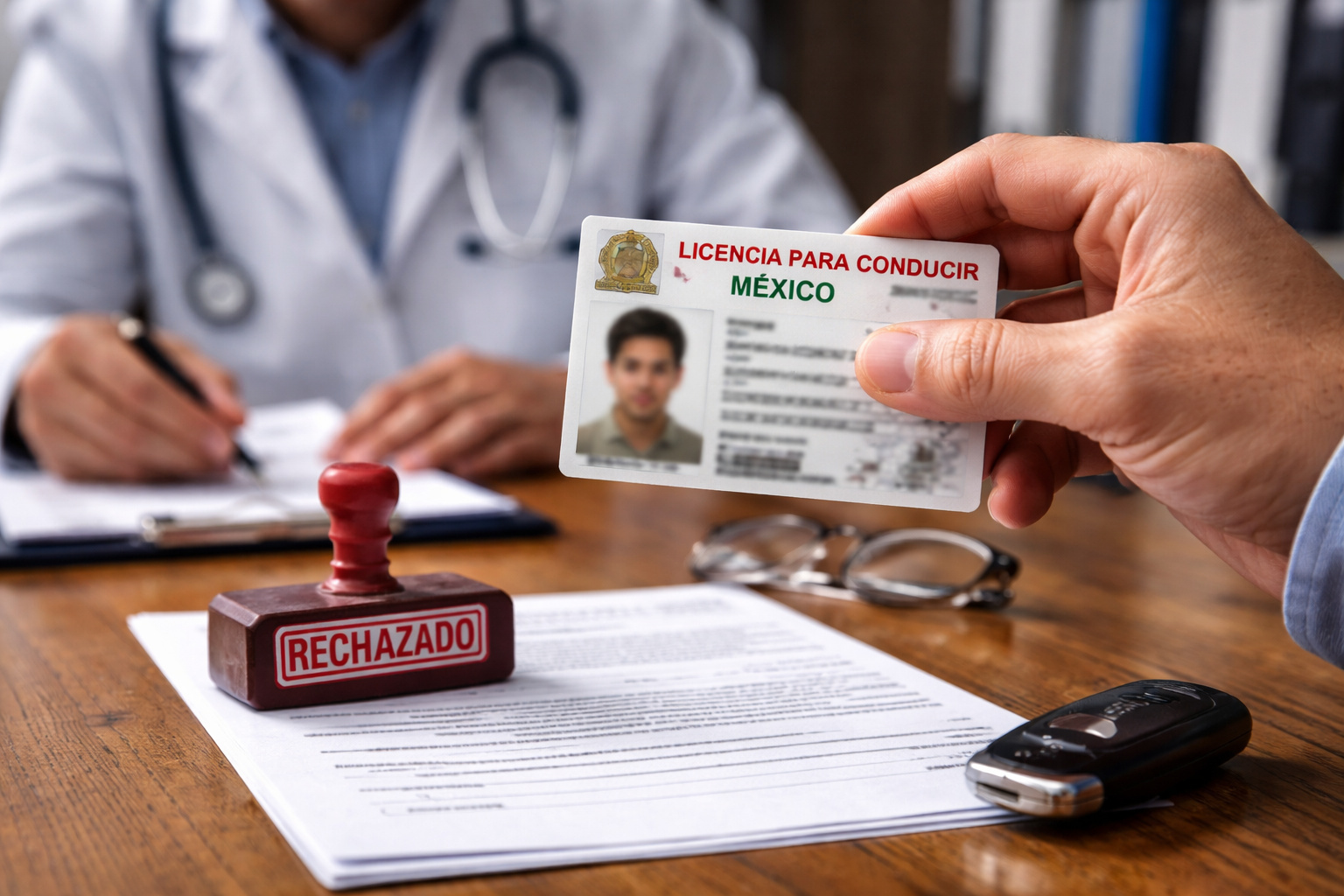

Stricter medical criteria now guide who can drive in the country, with total focus on accident prevention and collective protection
A technical guideline aimed at road safety has recently been reinforced by Mexican authorities, drawing attention to who can operate vehicles in the country.
The driver’s license is not treated as an automatic right, but as an authorization conditioned on the demonstration of adequate physical and cognitive ability.
The clinical criteria have been updated by traffic agencies and the Secretaría de Infraestructura, Comunicaciones y Transportes (SICT), following recommendations from the World Health Organization (WHO).
This measure is part of a preventive strategy aimed at reducing accidents associated with undiagnosed or uncontrolled medical conditions.
Clinical criteria now determine who can drive
Licensing depends on the assessment of three essential abilities: sensory perception, cognitive processing, and motor response.
These elements determine whether the driver can interpret the environment, make quick decisions, and react accurately.
When there is significant impairment in any of these aspects, the person may become ineligible to obtain or renew their driver’s license.
The central goal of the authorities is to prevent risks before they turn into accidents.
Neurological diseases are among the main restrictions
Among the most critical diagnoses are degenerative diseases of the nervous system.
Advanced-stage Alzheimer’s is not limited to memory loss, as it causes spatial disorientation and difficulty reading signs.
This condition compromises the ability to react to unexpected situations on the road.
Severe Parkinson’s also poses a high risk, as it causes constant tremors, muscle stiffness, and slow reflexes.
These limitations make driving unsafe under any technical criteria.
-
Collector adapts forklift electric motor in a Kombi Corujinha pickup, hides 16 batteries under the bed, and makes the Brazilian classic run silently with up to 90 km of range.

-
Goodbye traditional vacuum: Samsung surprises and launches 2-in-1 robot with steam, AI that recognizes floors and stains, self-cleaning station, hot air drying, automatic emptying, water refill, and app control.
-
Brazil is transforming acerola waste discarded by the pulp industry into an ambitious and surprising project that could forever change the way the country utilizes one of the most invisible by-products of the fruit sector.
-
Scientists have created a colossal digital twin to predict tsunamis in real time, a simulation of 55.5 trillion unknowns run on 43,520 GPUs that reduced 50 years of calculation to 0.2 seconds and could change the defense of coastal cities.


Loss of consciousness increases risk and can prevent licensing
Disorders that cause sudden loss of consciousness are considered high risk by authorities.
Uncontrolled epilepsy is an example, as episodes can occur unpredictably.
This condition poses a direct threat to the driver and others.
In the absence of proven control over a long period, disqualification tends to be permanent.

Vision problems reduce reaction capacity in traffic
Ophthalmological criteria go beyond basic visual acuity and include the analysis of peripheral field and adaptation to brightness.
Conditions such as partial blindness, glaucoma with significant loss of visual field, and advanced macular degeneration compromise environmental perception.
These limitations reduce the ability to identify pedestrians, vehicles, and lateral obstacles.
Even when the driver believes they are fit to drive, the risk of failing to detect dangers remains high.
Cardiovascular diseases are also included in the analysis
Severe heart pathologies are also considered in the driving assessment.
Cases with a risk of syncope, severe arrhythmias, or decompensated heart failure can lead to sudden loss of vehicle control.
These situations pose an immediate danger on the road.
The guidelines adopted follow international medical recommendations and are applied based on preventive criteria.
Prevention guides decisions and reinforces collective safety
The policy adopted by Mexican authorities is strictly preventive and not punitive.
The focus is on protecting life and reducing accidents related to physical and cognitive limitations.
The ability to drive directly depends on the individual’s functional capacity.
In this context, to what extent should health conditions determine the right to drive vehicles?


